
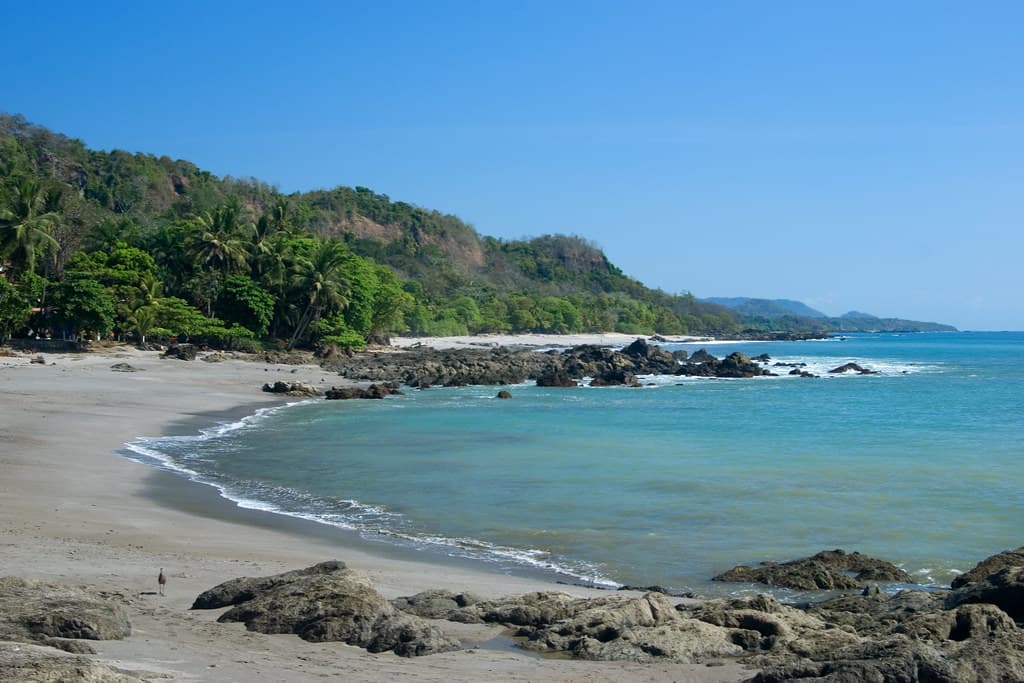
Playa Florida announces itself quietly—a turnoff between two weathered gates, a dirt track that ends where the sand begins, pale and fine-grained, the color of old pearls. The gulf unfolds in layers: turquoise near shore, then deeper blue, then the smudged outline of islands you can name if you ask a local. You spread your towel beneath a buttonwood tree and listen to the water whisper over stones.
“It sits in Tambor's shadow, quieter and less visited, a refuge for those who find the main beach too crowded.”
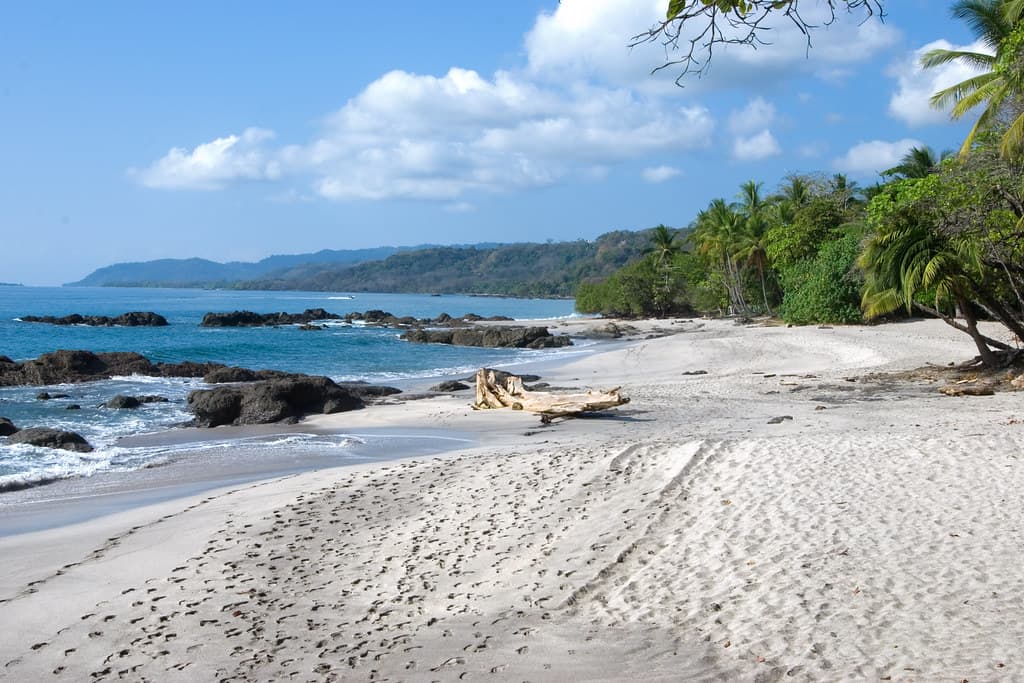 Credit: Flickr
Playa Florida — photo by Saomik
The beach runs maybe three hundred meters, bookended by rocky outcrops where iguanas bask and hermit crabs scuttle in tidal pools. You wade in and the bottom stays shallow, the water warm as bathwater, and you can walk almost to the reef line before it reaches your chest. There are no jet skis, no banana boats, no vendors selling coconuts—just a handful of houses set back from the sand and the occasional dog trotting past, tongue out, unbothered.
Stay through the afternoon and you'll notice how the light shifts, how the heat softens into something drowsy and forgiving. A fishing boat motors by, slow, trailing a wake that takes minutes to reach the shore. You'll swim again before you leave, floating on your back, eyes closed, the sun warm on your face, and you'll understand why the locals come here when they want to forget the rest of the peninsula exists.


