
Counting the waves…
Counting the waves…

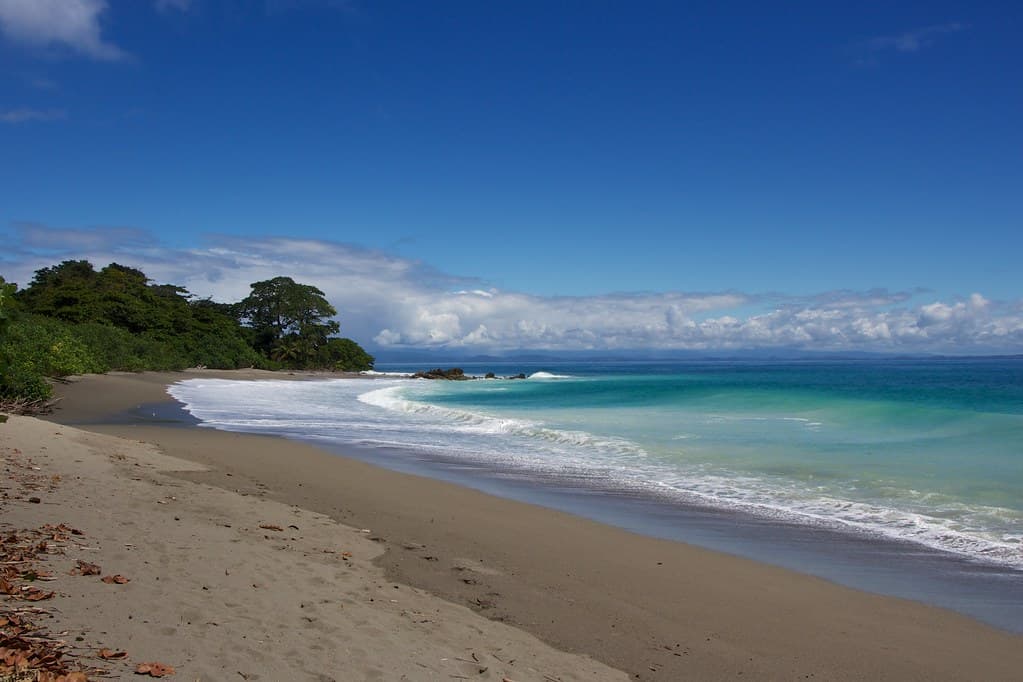
Playa Backwash earned its name honestly. This is a high-energy shore break where the waves suck sand off the bottom and hurl it back in churning, hydraulic chaos. The beach itself is narrow, maybe fifty meters wide at low tide, hemmed in by jungle so thick it feels less like a backdrop and more like a living wall. Strangler figs wrap themselves around ceiba trunks; lianas drip from the canopy; and the air hums with insects and the calls of unseen birds. Surfers who know the place check it on big south swells, when the sandbar shifts and a brief, punchy left peels off the southern rock. It's a fast ride, over almost before it begins, but the barrel potential is real for those willing to risk the closeout. The paddle-out is a slog—waves break hard and often, stacking up in sets of five or six, and the backwash off the steep beach creates confused chop that slaps you sideways. Beginners have no business here. There are no services, no trails beyond the access path, and no other beachgoers unless you count the ghost crabs scuttling across the sand at dusk. The jungle presses so close that you can hear monkeys crashing through branches while you're shoulder-deep in the surf. It's the Osa at its most compressed and intense—wilderness and ocean colliding in a space barely wide enough for both.
Places, rentals, tours and events within walking and driving distance of Playa Backwash.
Photos
Playa Backwash is primarily a surf beach with strong currents and waves that can be challenging. It's generally not recommended for casual swimming, especially for inexperienced swimmers or children. The beach gets its name from the backwash effect of the waves. If you're an experienced surfer, the conditions can be excellent, but always assess the ocean conditions before entering. During calmer periods in the dry season, wading may be possible, but caution is always advised at this remote location.
The best time to visit Playa Backwash is during Costa Rica's dry season, typically December through April, when you'll encounter the best weather and fewer crowds. This period offers more consistent surf conditions and easier access via unpaved roads. The wet season (May-November) brings heavy rainfall that can make the jungle roads difficult to navigate. Early mornings provide the best light for photography and wildlife spotting in the surrounding Osa jungle, while avoiding the midday heat.
Playa Backwash is located near Cabo Matapalo on the Osa Peninsula, accessible via rough dirt roads that typically require a 4x4 vehicle, especially during the rainy season. From Puerto Jiménez, drive south toward Cabo Matapalo; the journey takes approximately 45-60 minutes. The final stretch involves navigating through jungle terrain on unpaved roads. Local knowledge is helpful, so consider asking for directions at your accommodation. Some visitors arrange guided surf trips or transportation through local lodges.
The Cabo Matapalo area offers scattered eco-lodges, small hotels, and vacation rentals, though options are limited compared to more developed beach areas. Most accommodations are tucked into the jungle within a few kilometers of Playa Backwash. Many lodges offer meal plans, which is convenient given the remote location. There are very few restaurants in the immediate area, so staying at a lodge with food service or bringing supplies from Puerto Jiménez is advisable. The nearest town with more services is Puerto Jiménez.
Playa Backwash stands out for its authentic local surf culture and dramatic wild Osa jungle backdrop that comes right down to the sand. Unlike more tourist-oriented beaches, this remains a true local's spot with minimal development and a raw, untouched character. The combination of challenging surf conditions and dense rainforest creates an adventurous atmosphere. Wildlife sightings are common, with monkeys, macaws, and other jungle creatures often visible from the beach, offering a rare blend of quality surf and pristine nature.