Counting the waves…
Counting the waves…

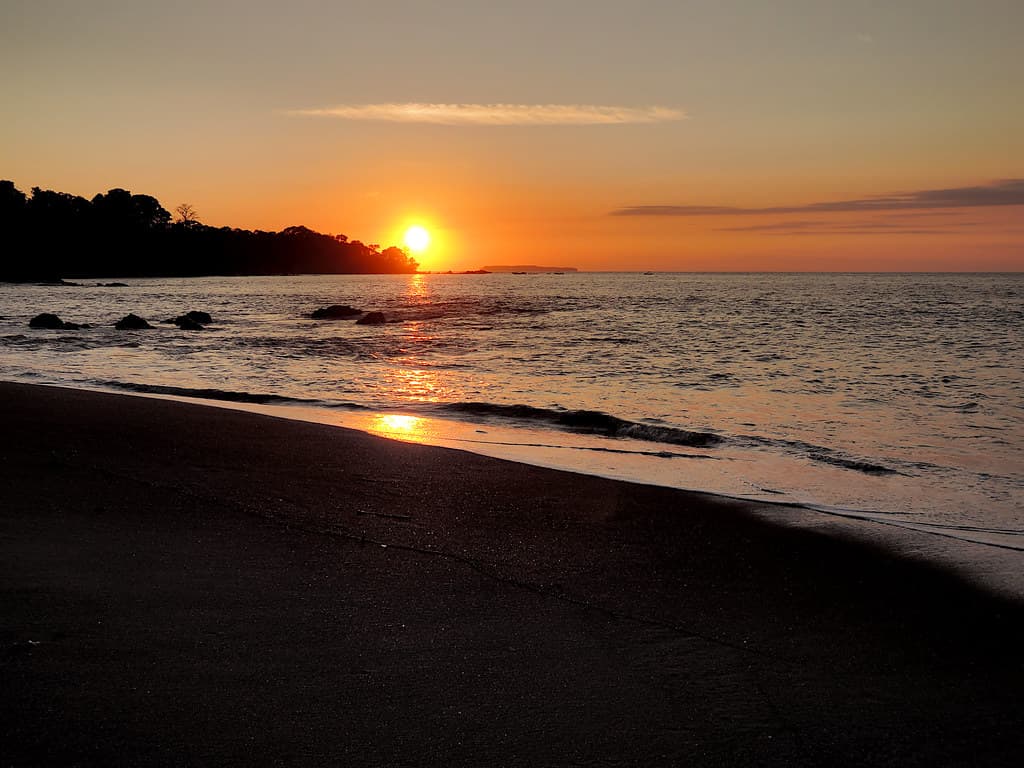
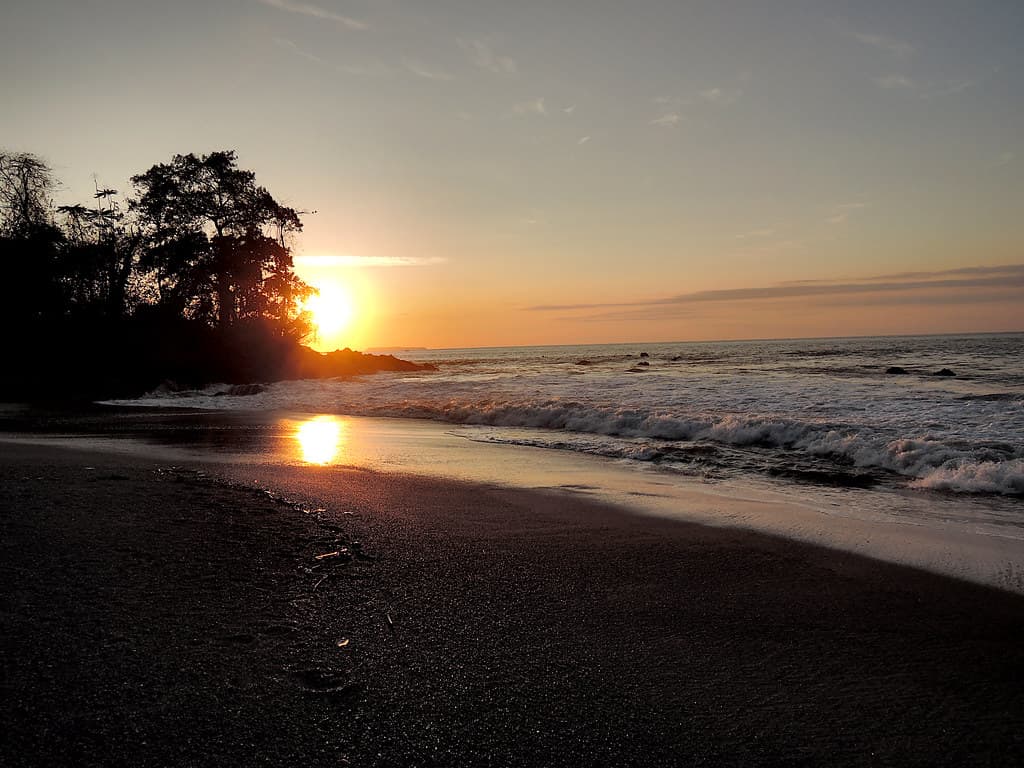
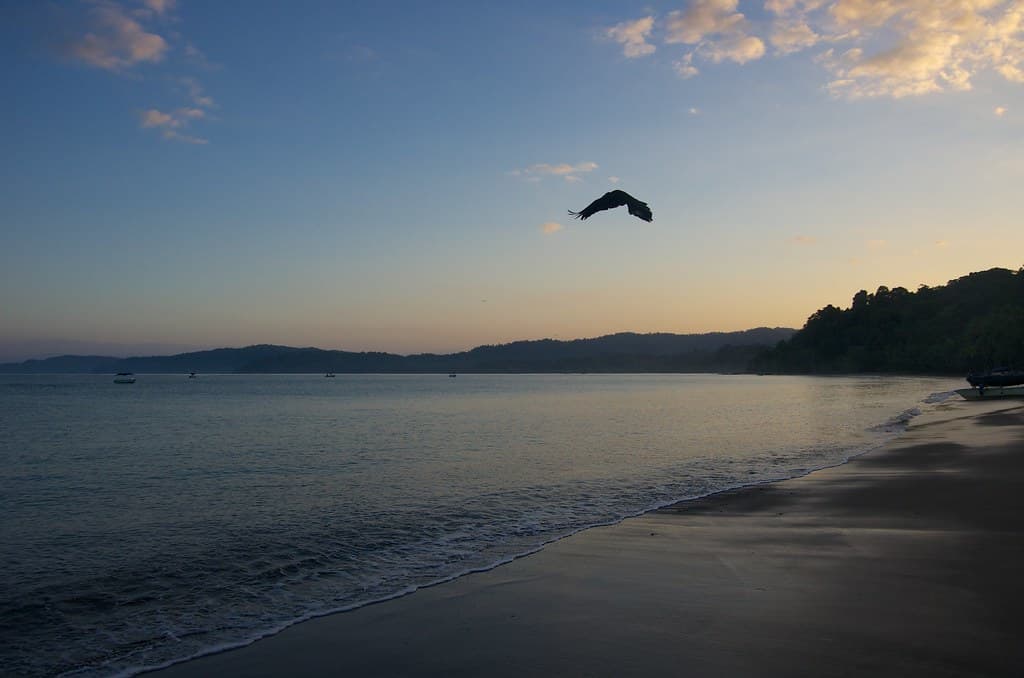
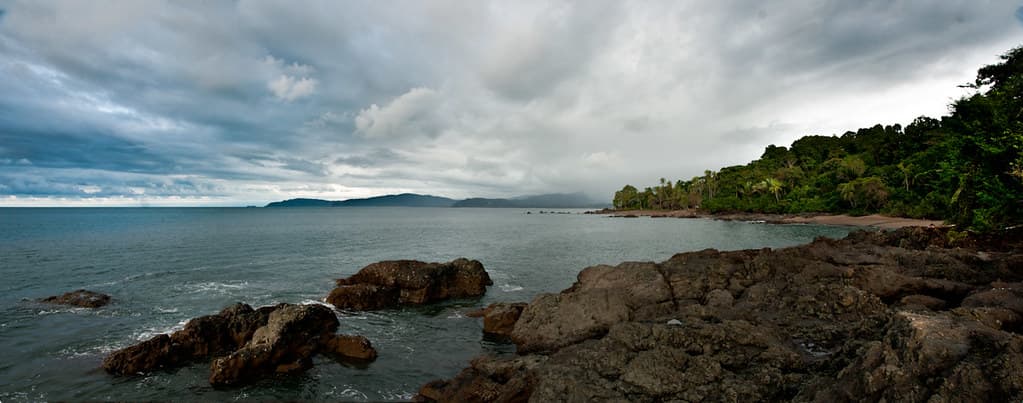
You descend wooden steps slick with moss and humidity, the jungle so close that morpho butterflies flutter past at eye level. Las Caletas materializes as a graceful crescent—perhaps sixty meters end to end—framed by sea almonds and backed by primary forest that rises straight into Corcovado's foothills. The sand here is darker than Drake's main beach, flecked with mica that glints under the equatorial sun. At low tide, tide pools collect rainbowfish and hermit crabs; at high, gentle waves lap a few feet from the tree line. This is a beach for lingering, not conquering. You spread a towel under the almonds, crack open a novel, and let the hours dissolve. Lodge staff appear mid-morning with thermoses of coffee and sliced papaya, then vanish back up the trail. A pair of pelicans fishes the shorebreak; farther out, a pod of dolphins stitches a seam across the bay. The water is swimmable—warm, mild surf, no riptides—and you wade in up to your chest, feeling the tension drain from your shoulders with each gentle swell. By evening, the beach belongs to the guests of the three small lodges that share this stretch of coast. You gather for sundowners on a driftwood log, comparing notes on the day's Corcovado hike or snorkel trip. The light goes amber, then violet, and someone lights tiki torches that flicker against the darkening trees. Dinner is served family-style at long tables overlooking the cove—grilled dorado, black beans, stories swapped in three languages.
Places, rentals, tours and events within walking and driving distance of Playa Las Caletas.
Photos
Playa Las Caletas generally offers calmer swimming conditions than open Pacific beaches due to its protected cove setting. The waters are typically gentler, making it suitable for swimming, though conditions vary with tides and seasons. No lifeguards are present, so assess conditions carefully before entering. The beach's location near eco-lodges means some assistance may be available compared to completely isolated beaches. Snorkeling is possible in calm conditions. Always swim during daylight hours and be aware that remoteness means emergency services are distant should problems arise.
December through April represents the optimal period with dry weather, calm seas, and excellent visibility. This coincides with Drake Bay's high season when boat access is most reliable and eco-lodges are fully operational. May through November brings more rain but also fewer crowds and lower prices at nearby lodges. For the best combination of weather and tranquility, visit January through March. Mornings typically offer the calmest water and best lighting. Since this is a low-key cove, you'll find it peaceful even during peak season compared to popular beaches.
Playa Las Caletas is accessed primarily by boat from Drake Bay village or by foot from nearby eco-lodges north of Drake Bay. Water taxis can arrange drop-offs, or you may kayak from Drake Bay if conditions permit. Some lodges in the immediate area provide direct trail access to the cove for their guests. There is no road access to this section of coast. The boat ride from Drake Bay typically takes 10-20 minutes. Coordinate return transportation in advance, especially if arriving independently, to avoid being stranded at this remote cove.
Several eco-lodges are situated near Playa Las Caletas, north of Drake Bay village, offering accommodation and meal services. These typically range from comfortable to upscale, with most operating on all-inclusive or meal-plan basis due to the remote location. There are no restaurants or facilities directly on the beach itself. Drake Bay village, accessible by boat, provides additional lodging, restaurants, and basic supplies. If day-tripping to the cove, bring food, water, and supplies as the beach has no amenities. Most visitors access Las Caletas while staying at nearby lodges.
Playa Las Caletas offers a low-key, intimate cove experience distinct from Drake Bay's busier beaches. Its location near eco-lodges provides a balance between accessibility and seclusion, appealing particularly to couples seeking romantic, peaceful settings. The cove maintains a natural, undeveloped character while being closer to accommodation than truly remote beaches. The protected setting and relatively calm waters make it more suitable for relaxed swimming and snorkeling than exposed coastline. It's ideal for travelers wanting tranquility without the extreme remoteness of boat-only beaches farther from any facilities.