Counting the waves…
Counting the waves…
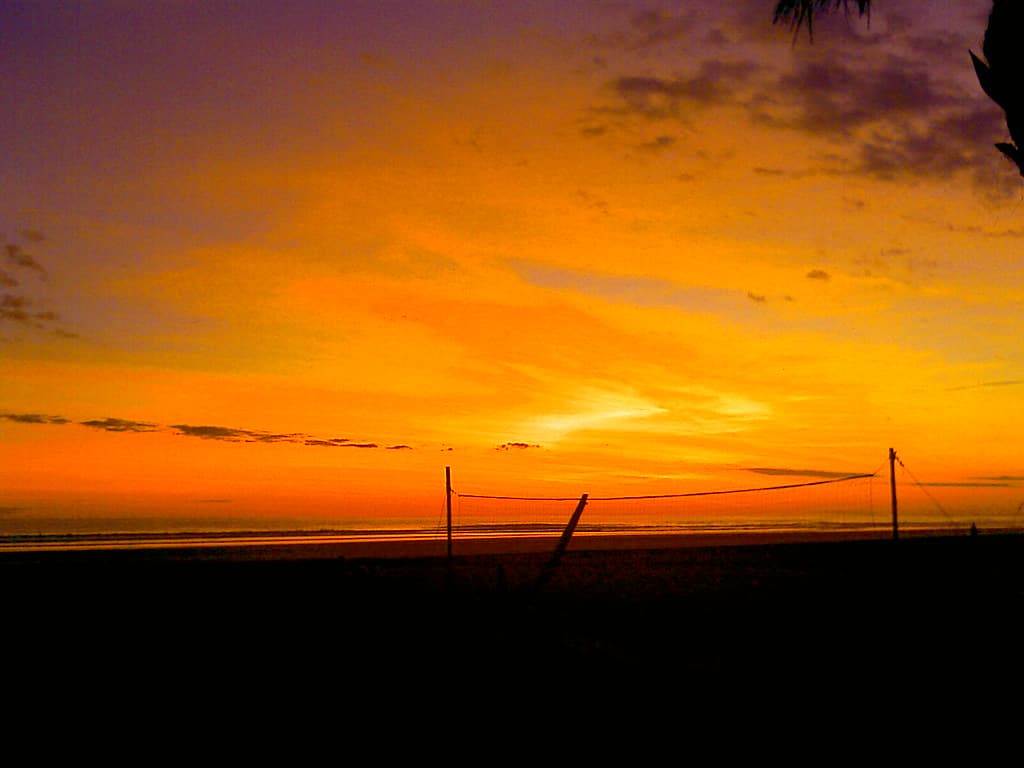
You park where the dirt road dissolves into sand and stone, then hike past wind-sheared palms bent landward by decades of onshore gusts. The beach reveals itself in sections: first a narrow strip of charcoal sand, then the headland itself, a jumble of basalt boulders worn smooth by waves that hit like demolition hammers. Tide pools trapped between rocks hold anemones and hermit crabs, their shells clicking against stone as swells refill each basin. Surfers paddle out beyond the point, threading the channel between submerged reef and exposed rock to reach a right-hander that peels on south swells. You watch them from the boulders, counting seconds between sets, noting how each wave refracts around the headland and folds into a barrel before collapsing onto the inside shelf. The water is the color of strong tea, tannin-stained by rivers draining the coastal hills. Sunset here is a ritual locals mark by the week. You scramble onto the highest boulder as the sun drops toward the Osa Peninsula, the sky cycling through amber, magenta, and finally a bruised purple that makes the breaking waves look black. Frigatebirds coast the updrafts along the cliff face, and the last light catches the spray from each breaking set, turning it briefly golden before darkness swallows the point.
Places, rentals, tours and events within walking and driving distance of Punta Mala Beach.
Photos
Swimming at Punta Mala Beach requires caution due to its rocky nature and strong Pacific currents. The rugged shoreline creates unpredictable wave patterns and riptides that can be dangerous, especially for inexperienced swimmers. There are no lifeguards on duty. The beach is better suited for experienced surfers and tide pool exploration rather than casual swimming. Always check conditions locally, avoid swimming alone, and be particularly careful during high tide when waves crash against the rocks with significant force.
The dry season from December through April offers the best weather with less rainfall and clearer skies for enjoying sunsets. However, visiting during the green season (May-November) means fewer crowds and a more secluded experience, though you'll encounter occasional afternoon showers. Early mornings and late afternoons provide the best lighting for photography and cooler temperatures. Sunset viewing is particularly spectacular year-round. For surfing, swells are generally more consistent during the rainy season, attracting local wave riders to this rugged coastline.
Punta Mala Beach is located near Esterillos along the Central Pacific coast, accessible by car from San José in approximately 1.5-2 hours via Route 27 and the Costanera Sur coastal highway. Look for local access points near the Esterillos area; the beach requires navigating some unpaved roads and may need local directions. A 4WD vehicle is recommended during rainy season. Public buses run along the Costanera Sur, though you may need to walk from the main road to reach the shore depending on exact access points.
Punta Mala Beach itself is undeveloped with no facilities directly on-site. However, the nearby Esterillos area offers various accommodation options ranging from budget cabinas to vacation rentals and boutique hotels. Local sodas (small restaurants) and beachfront eateries can be found in Esterillos Este and Oeste, serving traditional Costa Rican cuisine and fresh seafood. For more dining and lodging variety, Jacó is approximately 20-30 minutes north, offering everything from hostels to resorts and international restaurants.
Punta Mala Beach stands out for its rugged, rocky character that contrasts sharply with the sandy beaches typical of Costa Rica's Pacific coast. The dramatic shoreline creates scenic tide pools worth exploring at low tide and serves as a defining geographical feature of the Esterillos coastline. Its hidden nature means far fewer tourists compared to nearby popular beaches, offering authentic local atmosphere. The combination of rocky outcrops, consistent surf, and stunning sunsets attracts photographers and those seeking a more raw, natural coastal experience away from developed resort areas.