
Counting the waves…
Counting the waves…

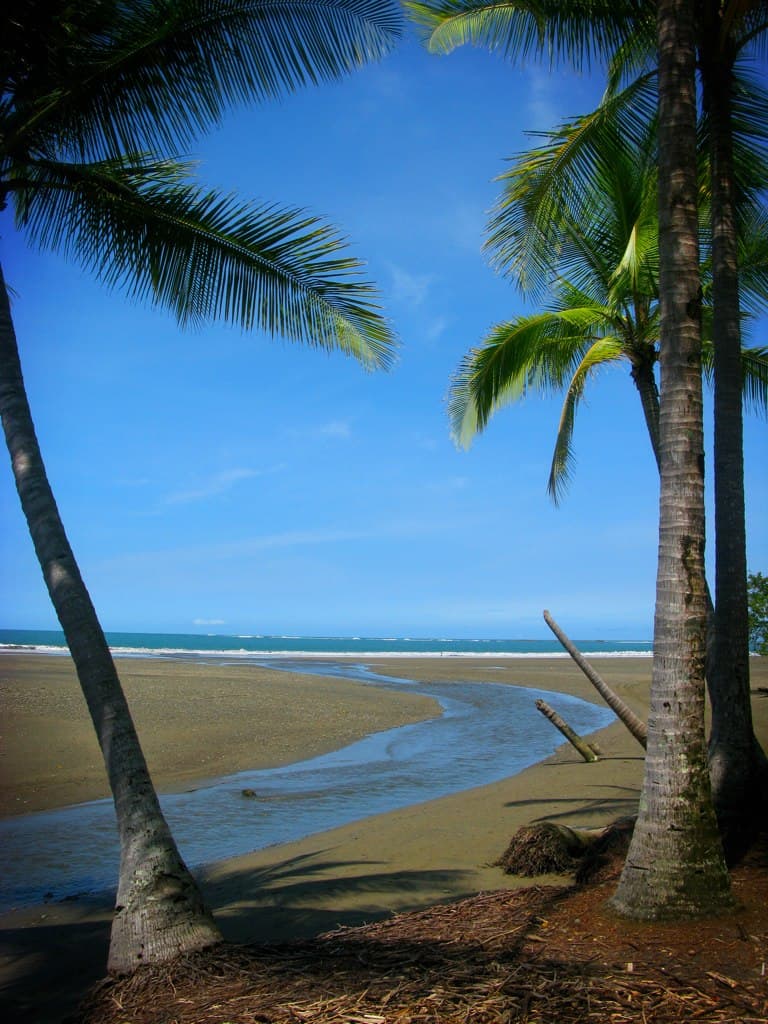
You enter through Marino Ballena's northern access, following the trail until the forest opens onto a wide, clean beach. The sand runs finer here than at Uvita's whale tail—fewer shells, more uniformity—and the slope is gentle enough that low tide exposes fifty meters of beach. Driftwood logs punctuate the upper beach like sculpture, bleached bone-white and smooth from years of waves. The water stays calmer than the exposed Pacific coast, protected somewhat by the offshore reef systems that give Marino Ballena its name. You can swim without fighting serious surf, though the currents still demand respect. Families spread blankets in the almond-tree shade, and snorkelers wade out to the rocky zones where parrotfish graze and sergeant majors flash their stripes. During whale season, tour boats anchor offshore and passengers lean over railings, waiting for the breach that may or may not come. The beach empties as you walk south, away from the main access point. You'll pass tide pools trapped among volcanic rocks, hermit crabs dragging mismatched shells, and the occasional stranded jellyfish pulsing weakly in a puddle. The sound changes the farther you walk—less family chatter, more wave rhythm and bird calls. By the time you reach the far southern end, you might have this entire stretch to yourself, which feels impossible given the beach's proximity to the highway and Uvita village.
Places, rentals, tours and events within walking and driving distance of Playa Ballena.
Photos
Playa Ballena, located within Marino Ballena National Park, generally offers calmer swimming conditions than nearby surf beaches, though conditions vary with tides and seasons. The beach is relatively protected, with gentler waves in many areas, making it more family-friendly. However, no lifeguards are present, so swimmers should remain cautious and aware of currents. At low tide, shallow areas and tide pools appear, suitable for wading. During high tide or larger swells, exercise more caution. Always supervise children closely and avoid swimming alone. Check local conditions before entering the water.
The dry season (December to April) offers the best weather with sunshine and calm seas, ideal for beach activities and whale watching. Humpback whales migrate through these waters from July to November and December to April, making these periods special for marine observation. The green season (May to November) brings fewer crowds, lush landscapes, and lower prices, though afternoon rain is common. Low tide reveals the famous whale-tail sandbar formation, best viewed from elevated positions. Early mornings provide cooler temperatures and better light for photography of the scenic coastline.
Playa Ballena is part of Marino Ballena National Park, located just south of Uvita along the Costanera Sur highway. The main park entrance is well-marked in Uvita; follow signs to the national park. There is an entrance fee for the park. From the entrance, you can drive or walk to different beach sections; parking is available. The beach stretches several kilometers, with access at multiple points. From San José, it's approximately a 3-4 hour drive south. Local buses serve Uvita, and taxis can take you to park entrances from town.
Uvita town, located immediately adjacent to Playa Ballena and Marino Ballena National Park, offers a good range of accommodations from budget hostels to boutique hotels and vacation rentals. The area has grown to serve tourists while maintaining a relaxed vibe. Restaurants, cafes, sodas, and small grocery stores are available in Uvita, with options ranging from local Costa Rican cuisine to international fare. Some beachfront properties offer direct park access. Food is not sold within the national park itself, so bring snacks and water for beach days. Reservations recommended during peak seasons and whale-watching periods.
Playa Ballena is famous for a natural sandbar formation that, at low tide, extends into the ocean in the shape of a whale's tail when viewed from above. This distinctive feature is iconic and highly photogenic, making it popular on social media. The formation is best appreciated from elevated viewpoints or drone photography, though walking on it at low tide is a unique experience. The whale-tail shape is fitting given the beach's location in Marino Ballena National Park, named for the humpback whales that migrate through these waters. Timing your visit with low tide is essential to see this natural phenomenon.