Counting the waves…
Counting the waves…
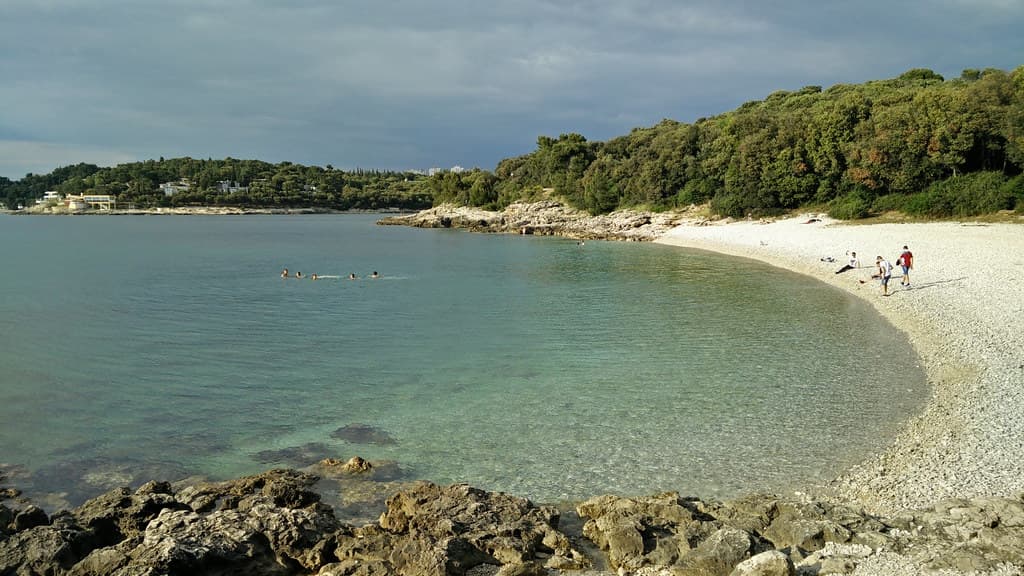
The trail down is more goat path than staircase—loose stones and gnarled tree roots that require hands as much as feet. When you finally drop your pack on the flat rocks rimming Mala Kolumbarica, you'll understand why most beachgoers never make it this far. The cove cuts into Kamenjak's southern flank like a bite taken from the coastline, its walls striped with white limestone and rust-colored mineral veins. You enter the water from sun-warmed rock slabs, the kind of entry that makes you gasp and laugh at the same time. Two meters out, the bottom vanishes into cobalt shadow. Shoals of silver damselfish dart between submerged boulders encrusted with sponges and sea urchins. If you swim to the cove's mouth, you can peer down at rock formations that look like melted candle wax, their surfaces alive with tiny crabs and translucent shrimp. Above water, the scene tilts toward elemental—no umbrellas, no showers, just geology and biology doing their thing. Pines release their resin-thick scent in the afternoon heat. By four o'clock, shadows creep across the rocks, and the water takes on a moody, ink-dark quality that makes every stroke feel like you're swimming through liquid sapphire. You'll leave with scraped knees and salt-crusted hair, already planning your return.
Places, rentals, tours and events within walking and driving distance of Mala Kolumbarica Beach.
Photos
Swimming at Mala Kolumbarica requires caution as this is a wild, undeveloped cove in Cape Kamenjak nature park. There are no lifeguards, and the rocky entry can be challenging with sharp stones and sea urchins present. The water is typically clear and calm, but conditions can change. Strong swimmers and snorkelers will enjoy the pristine environment, but it's not ideal for weak swimmers or small children. Wear water shoes for protection, check weather forecasts before visiting, and never swim alone. The remote location means emergency services would take longer to arrive.
For fewer crowds, visit in May, June, or September when weather remains pleasant but peak tourist season hasn't arrived or has passed. Even in July and August, weekday mornings see significantly fewer visitors than weekends. The cove's remote location within Kamenjak park naturally limits crowds compared to developed beaches, but it has gained Instagram fame. Arriving early morning or late afternoon offers the most solitude and spectacular light for photography. Off-season visits provide near-total privacy but verify weather conditions carefully as the exposed location can become rough during storms.
Reaching Mala Kolumbarica requires effort as it's located within Cape Kamenjak nature park, south of Premantura. From Premantura village, drive or cycle approximately 5 kilometers through the park on unpaved roads—there's a park entrance fee for vehicles. Park at designated areas and hike the final stretch, following trails toward the western coast. The paths can be rough and poorly marked, so GPS or offline maps are helpful. Cycling is popular and eco-friendly. No public transport serves the area. Bring water, snacks, and supplies as there are no facilities at this wild cove.
Mala Kolumbarica itself has no facilities—it's a completely wild cove within a protected nature park. You must bring all food, water, and supplies with you. The nearest restaurants and accommodation are in Premantura village, about 5-6 kilometers away, offering seafood restaurants, konobas (taverns), and various apartments and small hotels. Some beach bars operate elsewhere in Kamenjak park during summer, but none at this specific cove. Plan accordingly by packing a picnic, plenty of water, and sun protection. The lack of development is precisely what makes this location special for nature lovers.
Mala Kolumbarica is renowned among snorkelers for its exceptionally clear turquoise water and diverse marine life, thanks to its protected status within Kamenjak nature park. The rocky underwater landscape creates habitats for various fish species, sea urchins, and occasionally octopuses. The cove's sheltered position often provides calm conditions ideal for exploring underwater. The pristine, undeveloped environment means less sediment and pollution, resulting in outstanding visibility. The dramatic rocky formations both above and below water make it highly photogenic. However, the same rocks and sea urchins require careful navigation and proper footwear.