Counting the waves…
Counting the waves…
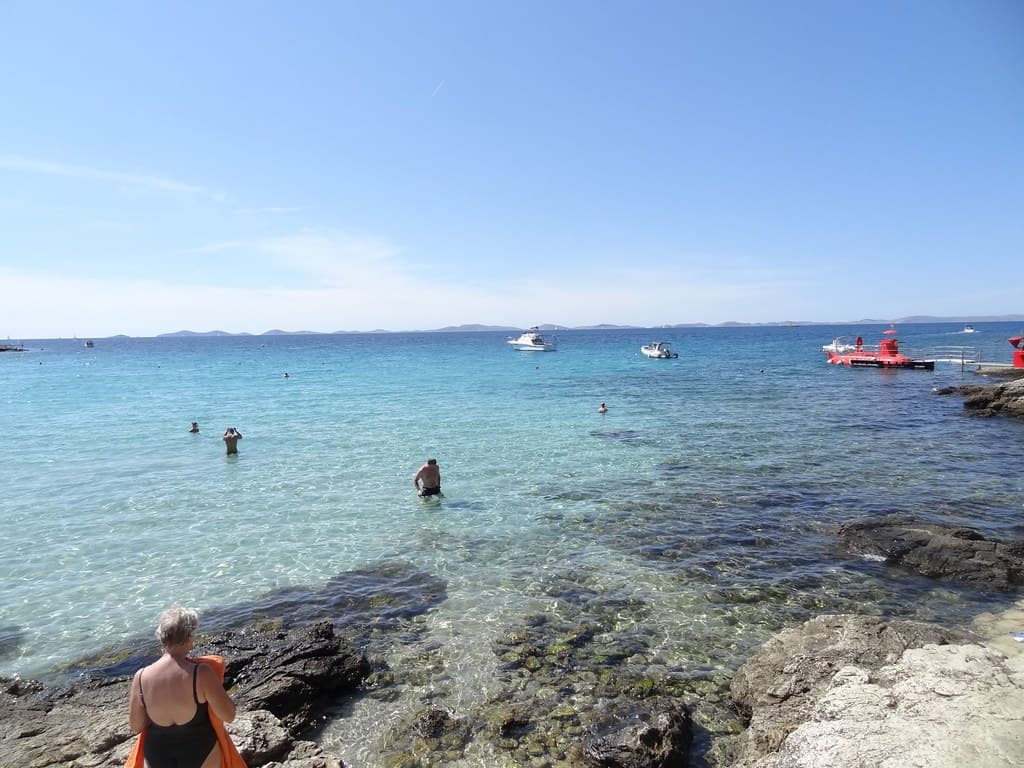
The Kornati archipelago consists of nearly ninety islands, most of them bare rock and macchia with no permanent residents. Opat sits on Kornat Island's eastern shore, a small indentation where erosion has created a pebble beach between stone outcrops. Sailboats and motorboats anchor in the bay throughout summer, their crews rowing dinghies ashore for swimming breaks between island-hopping legs. You'll step into water so transparent that the pebbled bottom seems magnified, every stone distinct even at depth. The beach itself is minimal—fifteen meters of smooth white pebbles, no facilities, no shade except what your boat's awning provides. Behind the shore, the land rises sharply into the karst plateau that characterizes the Kornati: gray-white limestone, low evergreen shrubs, the skeletal remains of old stone walls built by shepherds who once grazed sheep here. A hiking trail leads up from the beach to one of the island's old farmsteads, now abandoned but still standing, offering views across the archipelago's signature island-studded seascape. The national park designation means strict rules: no collecting shells or stones, no disturbing vegetation, no anchoring on seagrass. But it also means the beach looks much as it has for centuries—untouched, elemental, a place where geology and water meet without human interference. You'll share the bay with other boaters, but the etiquette is respectful distance. Swimmers drift in the channels between islands, snorkelers explore the rocky margins, and by late afternoon most boats weigh anchor for the next cove, leaving Opat to the gulls and the evening light.
Places, rentals, tours and events within walking and driving distance of Opat Beach.
Photos
Swimming at Opat Beach is generally safe in calm conditions, though the beach's remote location in the Kornati archipelago means no lifeguards or immediate assistance. The pebble beach has clear water with good visibility, allowing you to see the seabed. Currents are typically moderate, but conditions can change, so assess weather and sea state before swimming. Since the beach requires boat access and is isolated, ensure someone knows your plans. Bring adequate water and sun protection, as shade and facilities are minimal in this wilderness setting.
The best time for Opat Beach is June or September when weather is excellent with fewer boats in the Kornati archipelago, enhancing the peaceful atmosphere. July and August offer the warmest conditions but attract more sailing traffic to the islands. Sea temperatures are warmest from July through early September. Since boat access is required, calm sea conditions are important—summer months generally provide the most reliable weather. The Kornati National Park season typically runs April through October, with May and September offering pleasant conditions and notable solitude.
Opat Beach is accessible only by boat, as the Kornati Islands are an uninhabited archipelago. Options include joining organized boat tours from Zadar, Šibenik, or nearby islands, chartering a private boat, or sailing your own vessel. Many tour operators offer day trips to the Kornati National Park that include swimming stops at beaches like Opat. If sailing independently, be aware that national park entry fees apply and proper navigation is essential in this island-studded archipelago. The journey from mainland ports typically takes 1.5-3 hours depending on departure point.
The Kornati Islands are uninhabited with no accommodation except for boat mooring. A few licensed konobas operate seasonally on certain islands, serving fresh seafood to boaters, though not necessarily close to Opat Beach. Most visitors arrive on day trips or chartered boats with packed provisions. If sailing independently, bring all necessary food, water, and supplies. Some overnight visitors sleep aboard their boats in protected anchorages. The nearest conventional accommodation and restaurants are on inhabited islands like Murter or on the mainland in Šibenik or other coastal towns.
Opat Beach is distinctive as a recognized stopping point within the spectacular Kornati National Park, one of the most beautiful archipelagos in the Mediterranean. Its location near classic boat anchorages means it represents the quintessential Kornati experience—dramatic island scenery, crystal-clear waters, and profound remoteness. The pebble beach offers scenic swimming surrounded by the archipelago's characteristic barren limestone islands. Unlike easily accessible beaches, reaching Opat requires genuine effort and planning, making it special for those seeking wilderness and unspoiled natural beauty accessible only from the water.