

Božava feels like the Adriatic before tourism rewrote the script—a working fishing village where the beach exists because villagers have always swum here, not because developers planned it. The shoreline curves along the harbor's edge, pebbles ranging from marble-sized to your fist, worn smooth by decades of wave action. You pick your way to the water's edge and feel the stones shift and click beneath your weight, a sound like dice rattling in a cup.
“The working harbor setting delivers authentic village rhythm where fishing boats share space with your afternoon swim.”
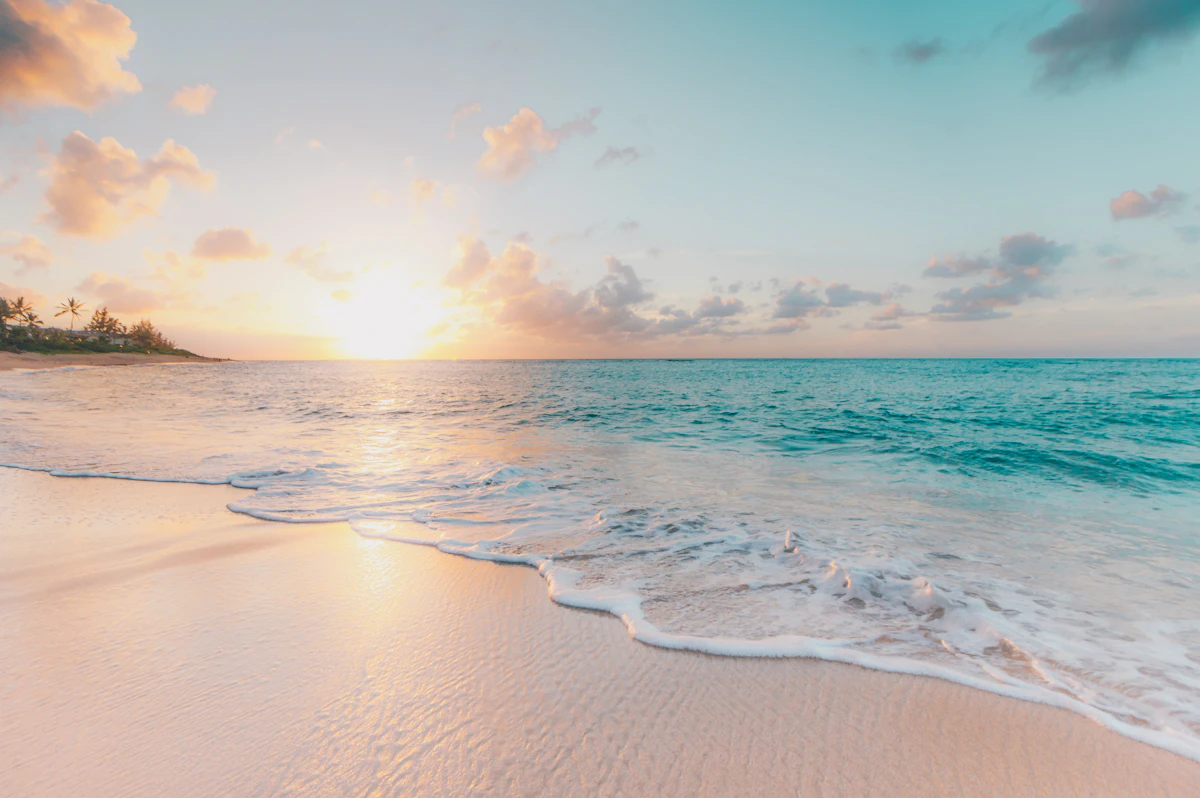 Credit: Unsplash
Aerial view of turquoise tropical bay
The water accepts you with a sharp intake of breath—cooler than the island's southern beaches because northwestern exposure brings deeper currents close to shore. You adjust within minutes and push off, swimming over pebbled bottom where sunlight creates shifting patterns of caustic curves. Small fish hover near rocks daubed with algae; you can make out individual scales from the surface. The harbor wall extends into deeper water, and local teenagers use it as a diving platform, their shouts echoing off village houses painted in fading ochre and salmon.
Božava lacks beach bars and umbrella rentals—you bring what you need or buy supplies at the single village market. A narrow concrete walkway borders the beach, where elderly women set up folding chairs to watch grandchildren swim. The afternoon ferry arrives with a diesel rumble, and passengers disembark while you're still floating, watching the small drama of island arrival unfold. By evening the pebbles radiate stored heat, and you sit listening to rigging clank against masts in the dying breeze.


