Counting the waves…
Counting the waves…

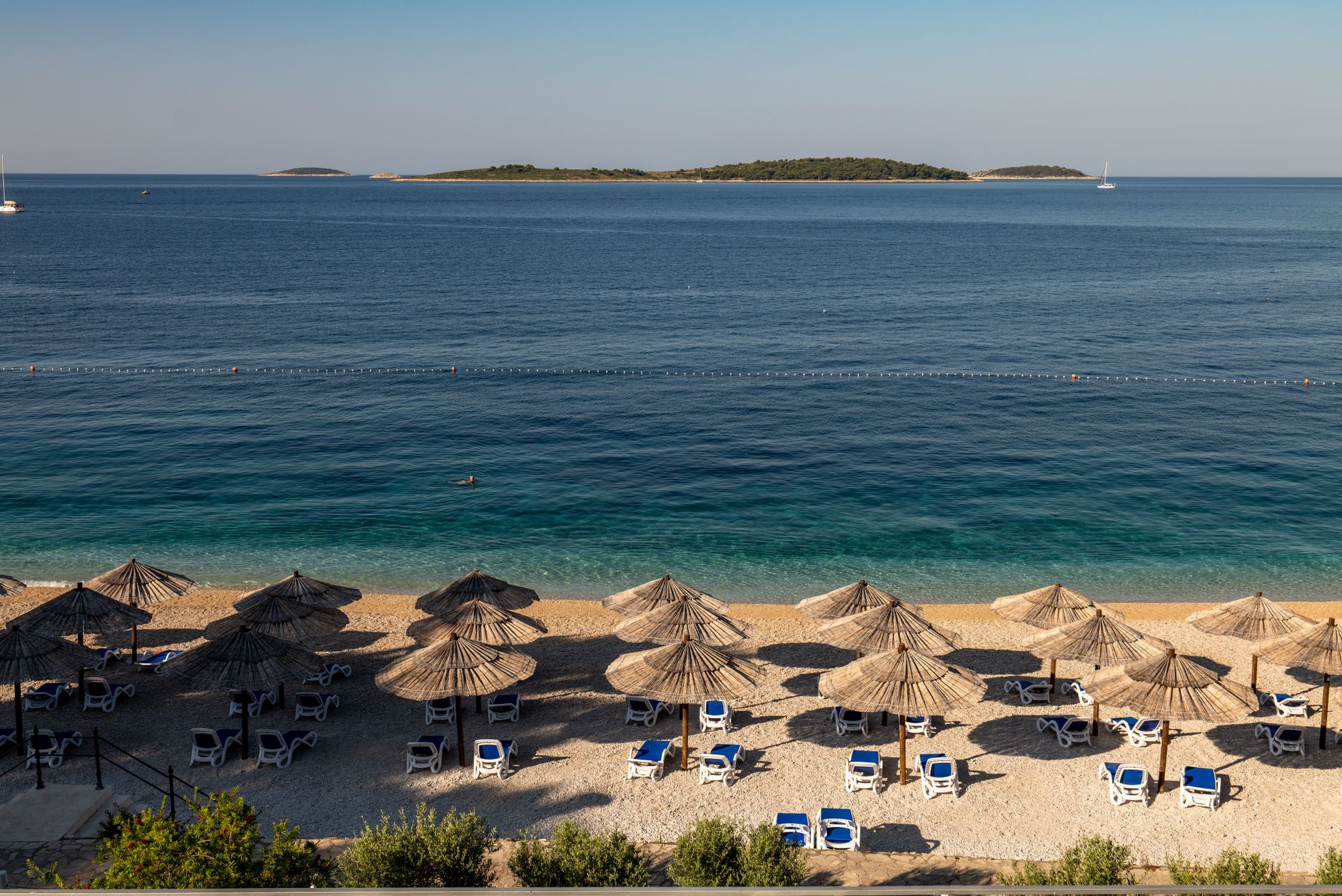
You wade in and the water barely reaches your thighs twenty paces from shore. The lagoon floor is pale sand ribbed by tidal memory, and the Adriatic here glows in shades between aquamarine and jade depending on cloud cover overhead. Families cluster near the natural inlet where the bay narrows, children crouching to examine hermit crabs navigating the shallows, while inflatable rings drift in lazy orbits near the deeper center. Pine needles crunch underfoot on the approach path, and the scent mingles with wild rosemary growing in crevices between limestone outcrops. By late afternoon, the white-and-red striped Veli Rat lighthouse becomes a sundial shadow stretching across the bay's eastern rim. Locals arrive with coolers and folding chairs, claiming spots beneath the sparse canopy where branches offer dappled shade. As the sun descends, the water takes on a molten quality, bronze and amber bleeding into the lingering turquoise. The sheltered position blocks wind but not the evening glow, and the bay becomes a mirror holding the sky's last performance. Cicadas begin their electric chorus in the maquis, a constant thrum that underscores the slap of gentle wavelets against moored fishing skiffs.
Places, rentals, tours and events within walking and driving distance of Pantera Bay Beach.
Photos
Pantera Bay Beach is excellent for families and less confident swimmers due to its sheltered lagoon setting and shallow waters. The bay's protected position means calm conditions with minimal waves and currents, even when the open sea is choppy. The gradual, shallow entry allows children to wade safely, and the turquoise clarity makes it easy to see the bottom. However, the beach is relatively undeveloped, so there are no lifeguards. Always supervise children and bring appropriate sun protection as natural shade may be limited.
For the best experience with fewer crowds, visit Pantera Bay Beach in June or September when weather remains pleasant but tourist numbers drop significantly. Weekdays are quieter than weekends throughout the season. Early mornings and late afternoons offer more solitude even in July and August. The beach's somewhat remote location on Dugi Otok means it never gets as crowded as mainland Croatian beaches, but those seeking true tranquility should avoid the peak weeks of late July and early August when European vacations coincide.
After arriving on Dugi Otok by ferry from Zadar, Pantera Bay is located near Veli Rat on the island's northwestern tip. You'll need transportation—either a rental car, scooter, or bicycle—as public transport options are limited. From Brbinj or Zaglav ferry terminals, it's approximately 20-30 kilometers, depending on your route. The final approach may involve unpaved roads, so check local directions. Some visitors arrive by private boat, as the bay is accessible from the sea. Plan your journey carefully and allow extra time for navigation.
Pantera Bay Beach is relatively undeveloped with minimal facilities, so come prepared. There are no beach bars, restaurants, or shops directly at the bay—bring your own food, water, and sun protection. The nearest amenities are in Veli Rat village, a short distance away, where you'll find limited dining options and small shops. Public toilets and changing facilities are not available at the beach itself. This lack of development preserves the beach's natural beauty but requires advance planning. Consider packing a cooler and beach umbrella.
Pantera Bay's stunning turquoise color results from the lagoon's unique geography and seabed composition. The shallow, sandy bottom reflects sunlight, creating the characteristic bright blue-green hue. The sheltered bay configuration limits sediment disturbance, maintaining exceptional water clarity. The combination of white sand, limestone geology, and the Adriatic's naturally clear waters intensifies the color effect. This same shallow depth that creates the beautiful color also makes the bay warm quickly in summer, offering comfortable swimming temperatures. The turquoise waters are particularly photogenic during midday sun.