Counting the waves…
Counting the waves…
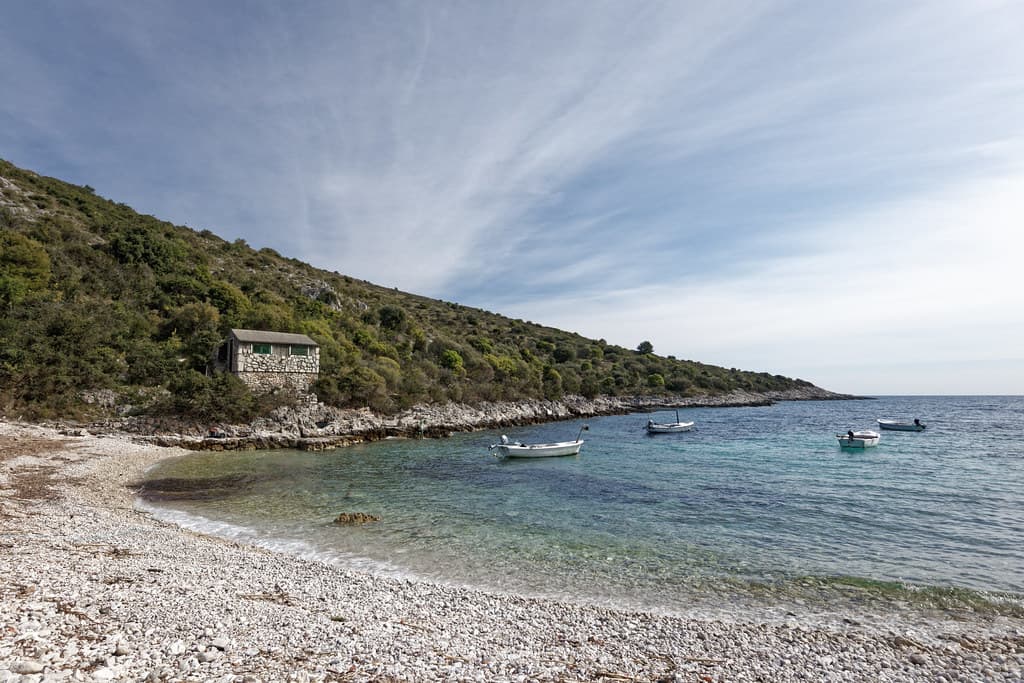
The approach by boat reveals Lokvina in stages: first the gap in the coastline, then the white pebble crescent, finally the shallow shelf where your keel hovers over urchin-speckled rock. Rava holds fewer than a hundred year-round residents, and Lokvina feels even more remote—no tavern, no jetty, just a sliver of shore framed by wild rosemary and the occasional collapsed stone wall. You wade in over smooth stones that clatter underfoot, the Adriatic here a shifting palette of cobalt and jade depending on cloud cover. By mid-afternoon the sun bakes the hillside behind you, releasing the scent of immortelle and warming the shallows enough for a long, lazy float. Swallows dart low over the surface; a fisherman checking lines in a wooden gajeta waves but doesn't linger. Bring everything you need—water, shade, provisions—because Lokvina offers only geography and quiet. The satisfaction here is in the edit: no music, no umbrellas, just the lap of wavelets and the slow drift of your thoughts. When you pull anchor and motor back toward civilization, the cove folds back into the island's stony profile as if you were never there.
Places, rentals, tours and events within walking and driving distance of Lokvina Beach.
Photos
Swimming at Lokvina Beach is generally safe in calm conditions, with clear waters typical of the Adriatic. The cove offers some natural protection from winds and waves, making it more sheltered than exposed coastlines. However, there are no lifeguards, emergency services, or facilities on this remote island beach. The rocky seabed requires care when entering the water—water shoes are recommended. Check weather forecasts before visiting, as conditions can change quickly. The isolation means help is far away in emergencies, so swim conservatively and never alone.
The best time to visit Lokvina Beach is between June and September when seas are calm and weather is reliable for boat travel. July and August offer the warmest water but may bring occasional sailing groups to this hidden cove. For maximum solitude, visit in June or September when boat traffic is lighter. Avoid visiting during bura (strong northeasterly wind) conditions, which can make the boat journey uncomfortable and potentially unsafe. Always check marine weather forecasts, as this remote location requires good conditions for safe access and enjoyment.
Lokvina Beach is accessible only by private boat, as Rava Island has limited public ferry service and the beach itself has no road access. You can charter a boat or water taxi from Zadar or arrange transport through yacht charter companies operating in the region. Sailors navigating the Kornati area often stop here as an anchorage point. Some organized boat excursions from larger islands occasionally include Rava, though schedules vary. The journey requires planning and suitable weather conditions. GPS coordinates are helpful for navigation, as the cove is not always clearly marked on basic maps.
Lokvina Beach has no facilities whatsoever—no restaurants, shops, toilets, or freshwater sources. Visitors must bring everything they need, including drinking water, food, sun protection, and any other supplies. The nearest settlement with basic amenities is Rava village, which has a small konoba and limited provisions, but it requires boat transport from Lokvina. This is a true wilderness beach experience. Sailors and boaters should be completely self-sufficient. Pack out all trash, as there are no waste disposal facilities. The isolation is part of the appeal for those seeking untouched nature.
Lokvina Beach represents one of the Adriatic's most unspoiled and overlooked anchorages, precisely because Rava Island receives minimal tourism infrastructure and attention. Unlike the popular Kornati National Park nearby, Rava remains off most tourist maps despite similar natural beauty. The cove offers exceptional privacy and a genuine sense of discovery that's increasingly rare in Croatia. The crystal-clear waters and natural setting remain pristine due to limited visitor numbers. It's ideal for experienced sailors and adventurers seeking authentic solitude rather than amenities. The beach rewards those willing to make the extra effort to reach it.