Counting the waves…
Counting the waves…
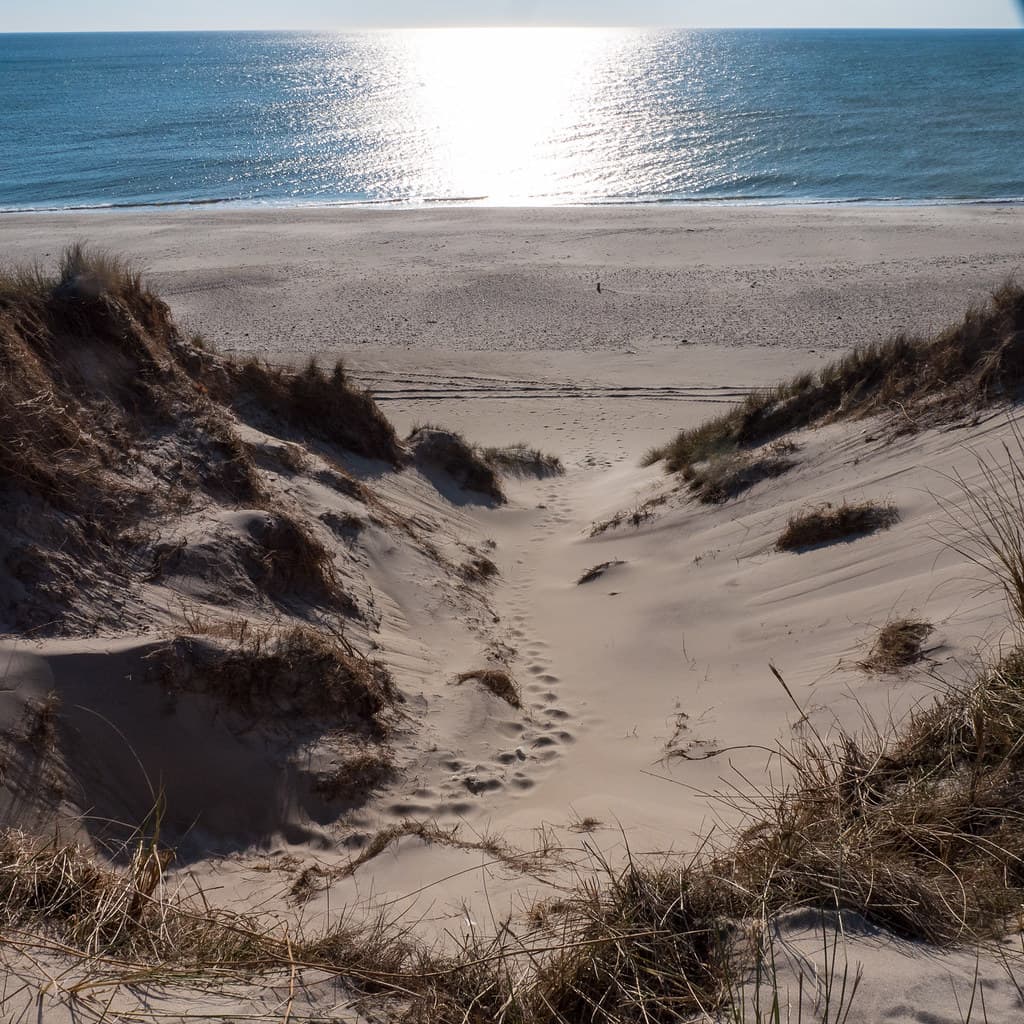
Fjand Beach unfurls along Jutland's weather-beaten shoulder, a spare and elemental ribbon of coast where marram grass bends eastward under the prevailing westerlies. The shoreline here refuses drama—no cliffs, no rock stacks—just miles of sand interrupted by drift logs and the occasional concrete bunker half-buried since 1945. The dunes behind you roll in tawny waves, their flanks stitched with heather that blooms violet in late summer. You come here for the absence of infrastructure: no kiosks, no lifeguard towers, no beach clubs painting umbrellas across the sand. The path from the small gravel lot threads through dune hollows where sand martins nest in April, then deposits you on a beach wide enough that high tide feels like a rumor. Oystercatchers work the tideline, and if the wind drops at dusk, the sun sinks into the North Sea with the muted glow of hammered copper. Local fishermen still haul nets from aluminum dinghies in the shallows north of the access point, and on autumn evenings you'll see Danes walking retrievers along the firm sand left by the ebb. The water stays cold—15°C in August—but that doesn't stop the hardy few who wade in after a sauna at one of the scattered summer cottages tucked into the dune belt. Fjand asks nothing of you except that you meet it on its own quiet terms.
Places, rentals, tours and events within walking and driving distance of Fjand Beach.
Photos
Fjand Beach is an unsupervised North Sea beach where swimming requires caution due to potential currents, waves, and undertow. There are no lifeguards on duty, so swimmers should be confident and aware of their abilities. Conditions vary with wind and tide, and the exposed west coast can be rough. Families with small children should focus on paddling in shallow areas. Always assess conditions before entering the water and never swim alone. The beach is generally more suited to walking and nature appreciation than bathing.
Visit between May and September for the most comfortable weather, though Fjand Beach remains wonderfully uncrowded even during Danish summer holidays. Sunset visits are particularly rewarding as the sun descends over the North Sea horizon. For maximum solitude, come on weekdays or during shoulder seasons (April-May, September-October). The beach offers a peaceful atmosphere year-round, but wind protection is advisable as the coast is very exposed. Early mornings provide excellent opportunities for beachcombing and bird watching in the dunes.
Fjand Beach is accessed via the small settlement of Fjand, located north of Vedersø Klit on Denmark's northwest coast. A car is necessary as public transportation is virtually non-existent in this rural area. From larger towns like Holstebro or Lemvig, follow local roads toward the coast and Fjand village. Parking areas are available near the beach, though signage may be minimal. The beach is reached via paths through the dune systems, requiring a short walk from where you park.
Fjand is a quiet area primarily featuring summer cottages and holiday homes available for weekly rentals. There are no hotels or restaurants directly at the beach. Visitors should plan to self-cater, bringing groceries from larger towns like Holstebro or Lemvig where supermarkets are available. Some vacation rental properties offer full kitchen facilities. The area caters to Danish holidaymakers seeking peaceful, self-sufficient retreats. For dining out, you'll need to drive to nearby towns with restaurants and cafes.
Fjand Beach offers exceptional tranquility and a low-profile character that appeals to travelers seeking authentic, non-commercialized coastal Denmark. Its location north of Vedersø Klit provides deeper coverage of the west coast's quieter stretches. The dune landscapes are pristine and scenic, ideal for photography and nature walks. Unlike busier beaches with facilities and crowds, Fjand rewards visitors who appreciate solitude and raw coastal beauty. It's particularly valuable for those exploring the full diversity of Northwest Jutland's coastline beyond the main resort areas.