Counting the waves…
Counting the waves…
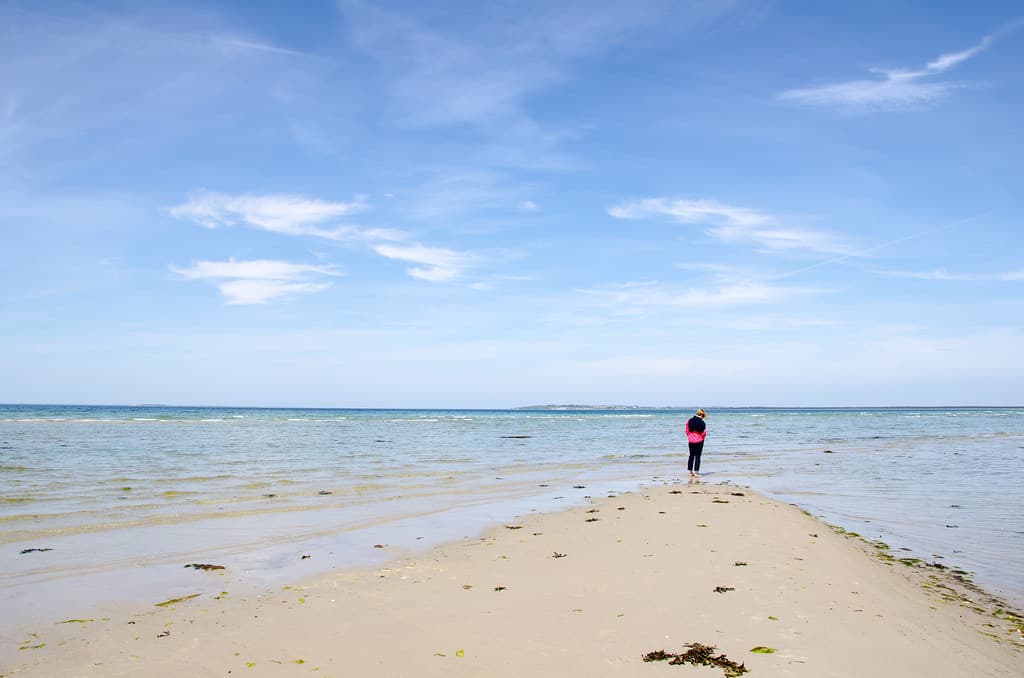
You reach Kanhave Strand along a narrow road that winds through farmland, the scent of grass giving way to brine as you near the water. The beach stretches in a gentle arc, its sand fine and pale, pressed firm by the tide. Behind you, the earthworks of the Kanhave Canal—a Viking-age passage dug to let ships cross the island—rise in grassy mounds. The engineering is humble, unadorned, yet it anchored trade routes a millennium ago. The water here is shallow, warming quickly under summer sun. Children wade out thirty meters and still touch bottom. Kayakers launch easily from the strand, paddling north toward Besser Rev or south along the coast where heathland meets shore. You spread your towel on sand that holds no footprints before noon, and the only soundtrack is the lap of wavelets and the occasional tractor rumbling past nearby fields. There are no beach clubs, no vendors. You bring what you need—sandwiches, a thermos, a book—and the island obliges with simplicity. By late afternoon, the light turns amber, casting long shadows from the canal's ancient banks. You rinse sand from your feet in water that tastes faintly of the Baltic, pack up, and leave the strand as empty as you found it.
Places, rentals, tours and events within walking and driving distance of Kanhave Strand.
Photos
Kanhave Strand is generally well-suited for families with young children due to its calm waters and sandy bottom typical of Samsø's protected shores. The beach has shallow areas where children can wade safely, though there are no lifeguards present. Parents should always supervise children in the water. The low-key, quiet atmosphere means fewer crowds and distractions. Check weather conditions before visiting, as winds can affect water conditions. The beach's proximity to the historic Kanhave Canal area offers educational opportunities for families.
Kanhave Strand is best visited from May through September when temperatures are mild and swimming is comfortable. July and August offer the warmest water and air temperatures, though weekdays remain uncrowded even in peak summer. Late spring (May-June) and early autumn (September) provide pleasant weather with even fewer visitors, ideal for peaceful beach walks. Winter visits are possible for hardy souls interested in coastal scenery, but swimming is only for cold-water enthusiasts. The area's historical sites are accessible year-round.
Reaching Kanhave Strand requires taking a ferry to Samsø island from either Hou (northeast) or Kalundborg (west). The beach is located in northern Samsø near the Kanhave Canal. From ferry terminals, you'll need a car, bicycle, or taxi, as the beach isn't within walking distance. Samsø is bicycle-friendly with rentals available near ports, making cycling a popular transport option. The island's compact size means beaches are relatively close together. Roads are well-maintained and signposted for easy navigation to coastal areas.
Kanhave Strand has minimal facilities as it's a low-key, undeveloped beach. There are no restaurants, shops, or vendors directly at the beach, so bring your own food, water, and beach supplies. The nearest services are in Nordby or Tranebjerg, both short drives away, offering cafes, grocery stores, and accommodation options including holiday rentals, camping, and guesthouses. Many visitors rent holiday homes across Samsø for multi-day stays. The beach area itself focuses on natural beauty rather than commercial development.
Kanhave Strand's proximity to the historic Kanhave Canal adds cultural significance to your beach visit. The canal is a Viking-age defensive structure dating back roughly a thousand years, built to control maritime traffic around Samsø. Visible remains of this ancient engineering project provide historical context and exploration opportunities beyond typical beach activities. The combination of natural coastal beauty and archaeological heritage makes this area unique among Danish beaches. Information boards near the canal explain its historical importance, enriching your understanding of the landscape.