Counting the waves…
Counting the waves…
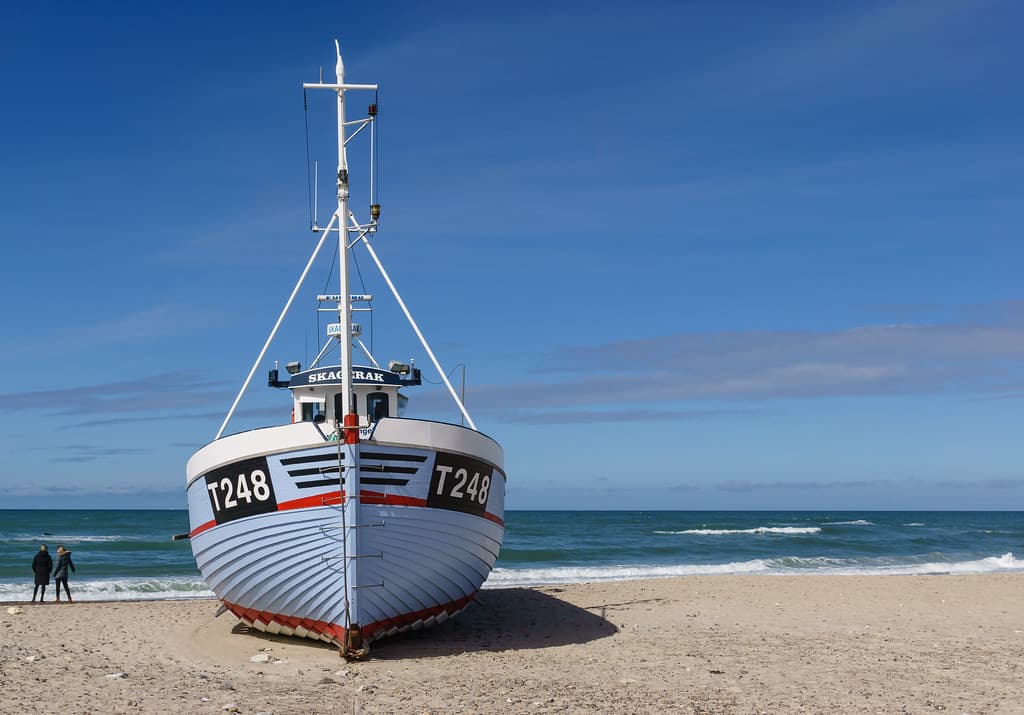
The drive through Thy National Park ends at a gravel lot beside a cluster of white-painted fishing houses, their timber walls bleached by decades of coastal weather. Beyond them, dunes roll toward a beach that stretches north and south in a line so uninterrupted you'll struggle to spot another soul, even in summer. The sand here is firm and pale, ribbed by tides, and the North Sea arrives in muscular sets that please surfers and send spray high enough to taste on your lips. Marram grass anchors the dunes in waves of silver-green, bending and recovering with each gust. The fishing houses—some converted to spartan holiday rentals, others still holding nets and tackle—frame the seaward view like a postcard from the 1950s. Walk south and the beach widens; head north and you'll find the sand narrowing against steeper dune faces where rabbits vanish into burrows. Sunset here is a production of apricot and pewter, the low Danish light stretching shadows across wet sand and turning the foam gold. You'll want a windbreaker even in July. The water never gets warm, but that's part of the contract—this is a beach that asks you to meet it on its terms, and rewards you with a solitude rare anywhere on Europe's coasts.
Places, rentals, tours and events within walking and driving distance of Lyngby Beach.
Photos
Swimming is possible at Lyngby Beach, but conditions require caution and experience. The North Sea here can produce strong currents, cold temperatures, and powerful surf, particularly appealing to experienced swimmers and surfers. No lifeguard service operates on this remote beach. The beach is part of Thy National Park's wild coastline, so facilities and safety infrastructure are minimal. Only swim in calm conditions, stay alert to changing weather, and supervise children at all times. Many visitors prefer walking and surfing to swimming in these exposed waters.
Lyngby Beach rewards visitors year-round, depending on interests. Summer (June to August) offers the warmest weather for beach walks and exploration, though water remains chilly. Spring and autumn are ideal for solitude, birdwatching, and dramatic light. Winter attracts storm-watchers and hardy walkers who appreciate the raw power of North Sea weather. For surfing, autumn and winter bring bigger swells. Sunset visits are spectacular any season. The beach's remote Thy National Park location means crowds are rarely an issue, even in summer.
Lyngby Beach sits within Thy National Park in northwest Jutland. By car, approach through the village of Lyngby, following signs toward the coast and national park beach access points. Parking areas serve beachgoers near the dunes. The beach is remote; public transportation is very limited, and a car is strongly recommended. The nearest towns with services are Hanstholm to the north and Thisted to the east. Roads are good, but expect rural, lightly trafficked routes as you approach the coast through the national park.
Lyngby Beach is in a remote part of Thy National Park with limited commercial facilities. Holiday cottages are the primary accommodation, bookable through Danish rental agencies. Some visitors camp at designated sites within the national park area. For hotels, restaurants, and supermarkets, head to Hanstholm or Thisted. A few historic fishing houses (vorupør-style) dot the coast, though most are private. Plan to bring supplies and self-cater. The area prioritizes nature conservation over tourism development, so expect minimal infrastructure.
Lyngby Beach offers a rare combination of wild Thy National Park landscapes, surfable waves, and cultural heritage. The beach is framed by protected dunes and backed by traditional whitewashed fishing houses, remnants of a historic coastal livelihood. Its remote location within Denmark's first national park ensures pristine conditions and sparse crowds. The area attracts surfers drawn to consistent North Sea swells while also appealing to hikers and nature enthusiasts. The sense of unspoiled wilderness, combined with authentic coastal character, creates an experience distinct from developed resort beaches.