
Counting the waves…
Counting the waves…

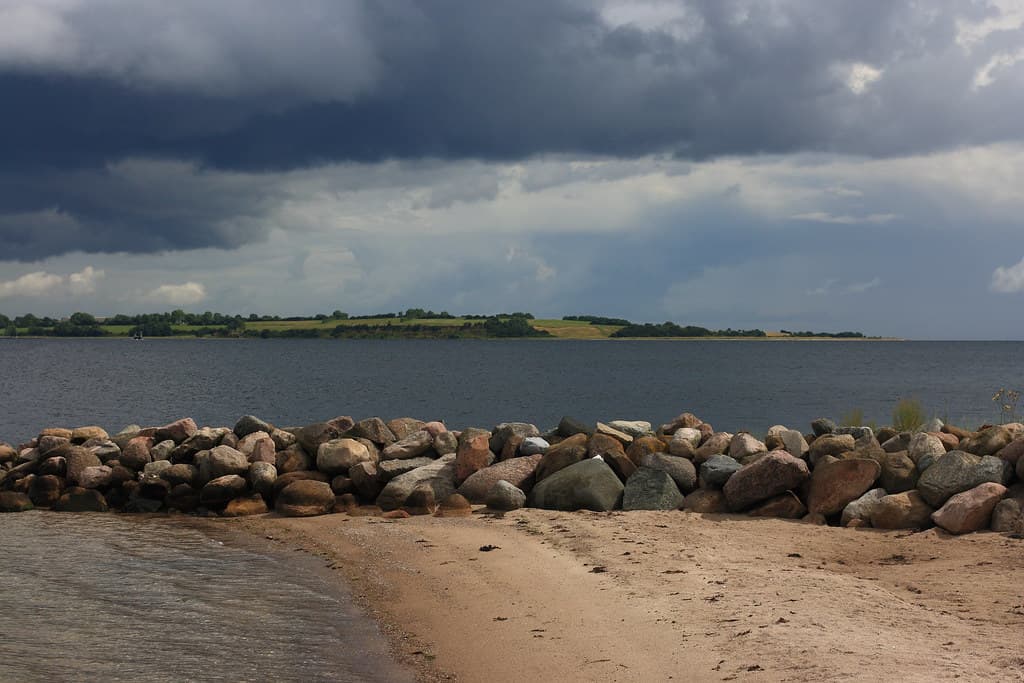
The narrow road through Løjt Land farmland dead-ends at a gravel lot rimmed with wild rose and sea buckthorn, and beyond it stretches Gåsevig Strand: a modest arc of beige sand that feels like stepping into a Danish summer postcard from 1965. The water here belongs to the Little Belt, not the open Baltic, so wavelets replace surf and the shoreline stays glassy even when wind rakes the surrounding barley fields. Toddlers wade knee-deep fifty meters from shore while parents set up low-slung canvas chairs and unpack rye bread layered with leverpostej. The beach occupies a sheltered notch on the eastern flank of the peninsula, protected by gentle hills thick with beech and alder that muffle road noise and filter the afternoon sun into long, golden bars. At low tide, sandbars reveal themselves like secret islands, warm underfoot and perfect for families who want to claim their own temporary kingdom. Jellyfish are rare, currents nonexistent, and the only real hazard is forgetting how quickly the Danish summer sun can burn even through high clouds. There's no snack bar, no rental hut, no lifeguard tower—just a single wooden bench, a trash bin, and the kind of quiet that makes you notice the creak of oarlocks from a distant rowboat. Locals arrive mid-morning with thermoses of coffee and stay until the light turns amber, and they'll nod politely but won't ask where you're from. That's the unspoken bargain at Gåsevig: you've found it, so you belong.
Places, rentals, tours and events within walking and driving distance of Gåsevig Strand.
Photos
Yes, Gåsevig Strand is generally safe for families with children. The beach sits on a small bay within Aabenraa Fjord, offering calm, shallow fjord waters with minimal waves and currents. The sheltered location provides gentle conditions ideal for young swimmers. However, always supervise children closely and check local conditions before entering the water. The low visitor numbers mean fewer eyes around, so parental vigilance is essential. As with any natural water body, be mindful of temperature changes and weather conditions.
The best time to visit Gåsevig Strand is during late spring through early autumn (May to September) when temperatures are warmest. The beach is particularly appealing during weekdays and shoulder seasons when crowds are minimal, aligning with its 'Less Crowds' designation. Summer months offer the warmest water temperatures for swimming, though the fjord location means water may be cooler than open-sea beaches. Early morning or late afternoon visits provide peaceful experiences with beautiful light for the scenic bay views. Weather can be changeable, so check forecasts before visiting.
Gåsevig Strand is located on Løjt Land peninsula near Aabenraa in Southern Jutland. A car is the most practical way to reach this hidden beach, as public transport options are limited in this rural coastal area. From Aabenraa town centre, drive southeast toward Løjt Land following local coastal roads. Look for small signage or use GPS coordinates for precise navigation. Parking is typically informal and limited near the beach. The journey from Aabenraa takes approximately 15-20 minutes by car. Cycling is also popular in this flat, scenic region.
Gåsevig Strand is a small, hidden beach with minimal on-site facilities. You won't find restaurants or shops directly at the beach, so bring your own food, drinks, and supplies. The nearby town of Aabenraa (approximately 10-15 km away) offers supermarkets, restaurants, cafés, and various accommodation options including hotels and holiday rentals. Some holiday homes and bed-and-breakfasts exist in the Løjt Land area. For a quiet, self-sufficient beach day, pack a picnic and enjoy the peaceful, scenic surroundings of this local gem.
Gåsevig Strand stands out for its intimate bay setting on Løjt Land peninsula, offering exceptional tranquility and low visitor pressure rarely found elsewhere. The small-scale, sheltered fjord environment creates distinctively calm water conditions perfect for gentle swimming and peaceful relaxation. Its hidden nature means you often have the beach largely to yourself, providing an authentic, non-touristy Danish coastal experience. The scenic surroundings combine fjord views with pastoral landscapes typical of South Jutland's charming coastline. It's ideal for those seeking solitude and a genuine connection with nature.