
Counting the waves…
Counting the waves…

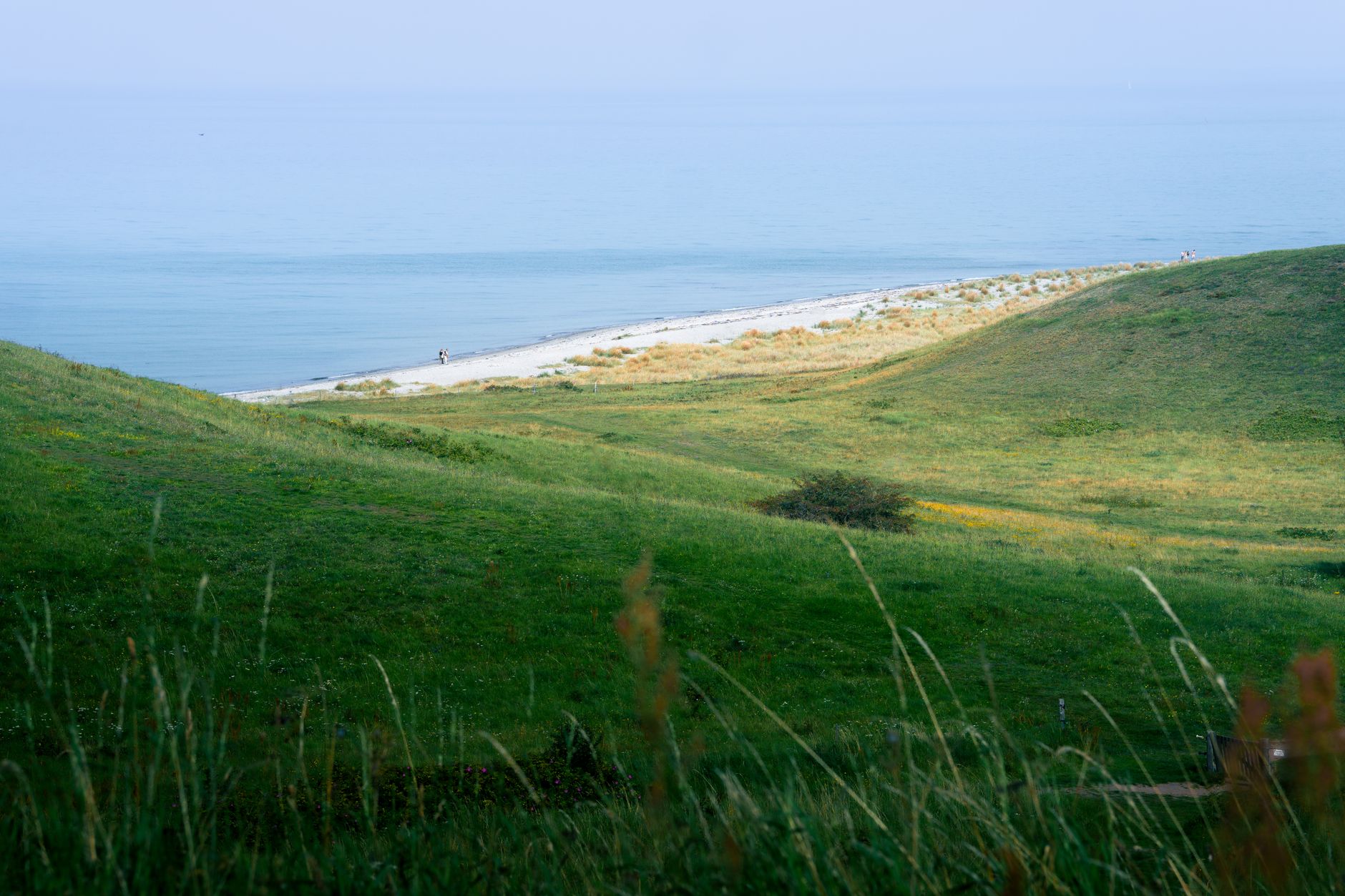
The approach tells you everything. You leave the main road outside Askeby, follow a gravel track past half-timbered barns and pasture fences, then find yourself at the edge of Zealand's quietest coast. The beach unfurls in a gentle arc, its sand the color of wet wheat, bordered by low grasses that hiss in the constant southwesterly wind. Families spread blankets in the shelter of driftwood logs; children wade into shallows so gradual that the waterline seems to shift with your breathing. This is Møn's unpolished corner, where the chalk cliffs give way to softer contours and the Baltic laps rather than crashes. Gulls wheel overhead. In the distance, the spire of Fanefjord Church—a whitewashed medieval landmark famous for its frescoes—rises from farmland like a navigation point for centuries of sailors. You can walk the tideline for an hour and meet only a retiree with a metal detector, or a teenager skipping stones into the wind. The water stays shallow for dozens of meters, warming just enough in July and August to make swimming pleasant rather than punishing. You dry off on sun-warmed sand, taste salt on your lips, and realize you've spent an entire afternoon watching light change on water. There are no beach bars, no umbrella rentals. Just the Baltic, the wind, and the rare gift of a coast that asks nothing of you but attention.
Places, rentals, tours and events within walking and driving distance of Fanefjord Strand.
Photos
Fanefjord Strand generally offers safe swimming with calm, shallow water typical of south-west Møn's protected coastline. The sandy beach and gradual depth make it family-friendly, though no lifeguards patrol this quiet local spot. Water quality is typically good, though Baltic Sea temperatures remain cool even in summer. Always supervise children and check weather conditions before entering the water. The sheltered location usually means gentle conditions, but wind can affect waves and clarity. Basic safety precautions apply: avoid swimming during storms, respect your abilities, and be aware that facilities are minimal should assistance be needed.
The ideal time for Fanefjord Strand is late spring through early autumn, with June and September offering pleasant weather and fewest visitors. This quiet beach rarely feels crowded even in July-August, making it suitable for summer visits if you seek peaceful coastal time. Weekdays provide maximum tranquility for slow coastal exploring, which suits the beach's character perfectly. Early mornings offer beautiful light and solitude for photography and nature observation. The shoulder seasons bring comfortable walking temperatures and dramatic coastal scenery, though swimming may be cool. Winter visits appeal to hardy souls seeking complete isolation.
Reaching Fanefjord Strand requires a car, as public transport to this remote south-west Møn location is very limited. From Copenhagen, drive approximately 100 minutes south via E47 and Route 287 across the bridge to Møn, then follow local roads toward Askeby and Fanefjord. Look for signs to the coast near the historic Fanefjord Church. Parking is informal along roads near beach access points. The area's rural character means signage is minimal, so GPS coordinates or detailed maps are helpful. Cycling is feasible if staying on Møn, as terrain is generally flat and roads relatively quiet.
Fanefjord Strand's remote location means very limited nearby facilities. Stege, Møn's main town approximately 20-30 minutes away, offers restaurants, cafés, and grocery stores for stocking up. Accommodation options include holiday cottages and rural B&Bs scattered around southern Møn, providing peaceful stays in countryside settings. Some farms offer rooms or apartments. Advance booking is advisable, especially in summer. The beach itself has no amenities, so bring all necessary supplies including food, drinks, and sun protection. The nearby Fanefjord Church area might have occasional seasonal facilities, but don't rely on them.
Fanefjord Strand's distinction lies in its combination of coastal beauty and proximity to the remarkable medieval Fanefjord Church with its famous kalkmalerier (frescoes). This quiet beach suits slow, contemplative coastal exploring rather than typical beach activities, appealing to travelers interested in combining nature with cultural heritage. The south-west Møn location offers different character from the island's dramatic eastern cliffs, showcasing gentler coastal landscapes. Genuine tranquility and lack of development make it special for those seeking authentic, unhurried experiences. It's a beach for walkers, thinkers, and visitors wanting to experience Møn beyond its headline attractions.