
Counting the waves…
Counting the waves…

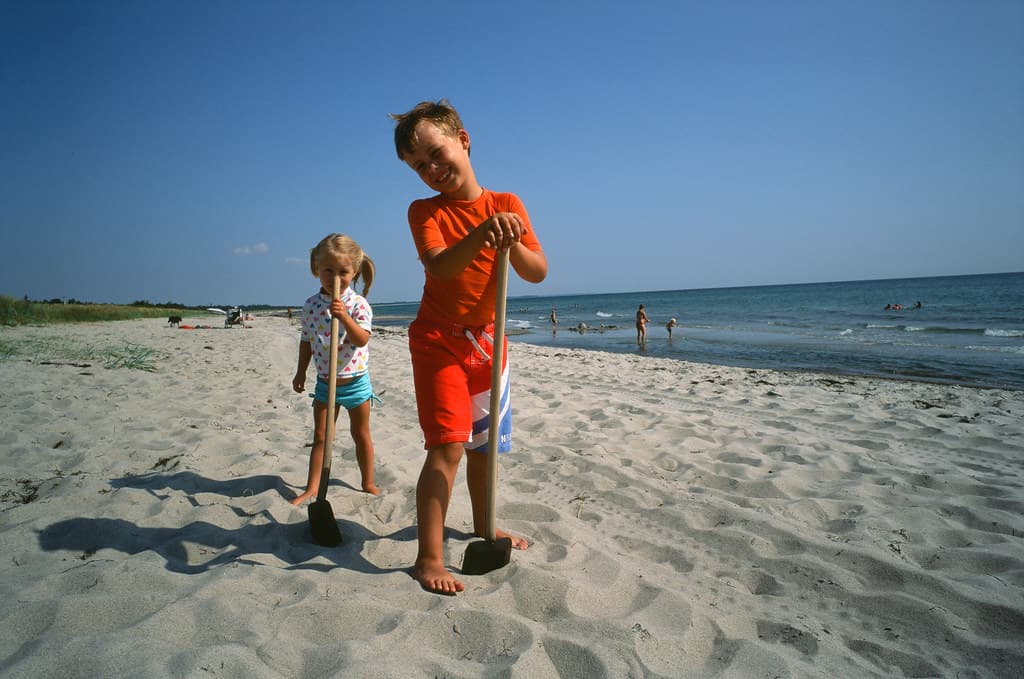
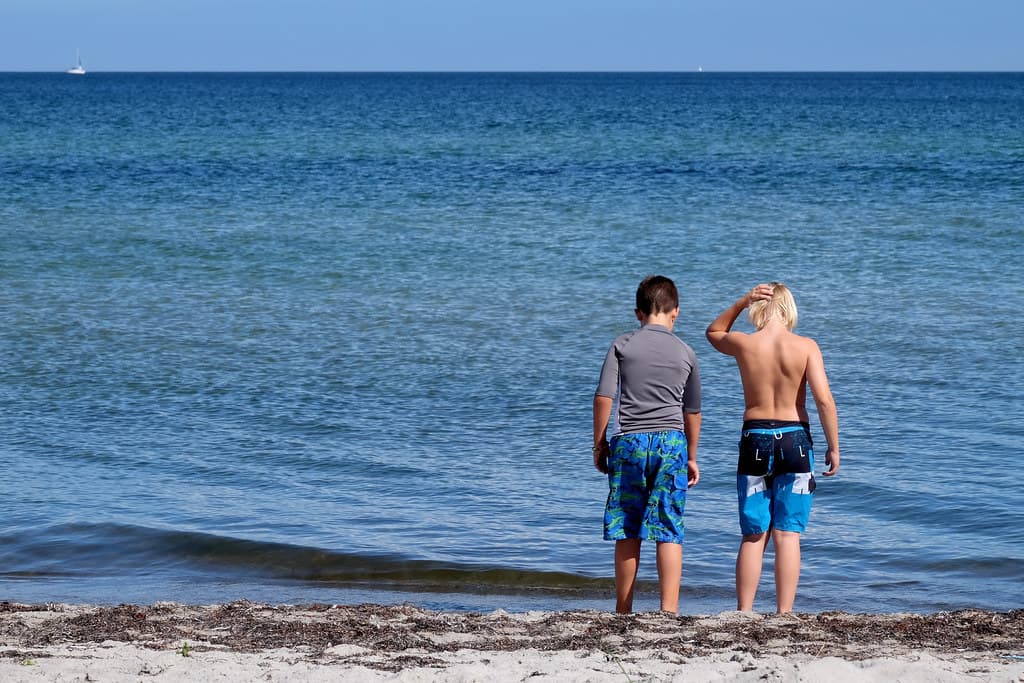
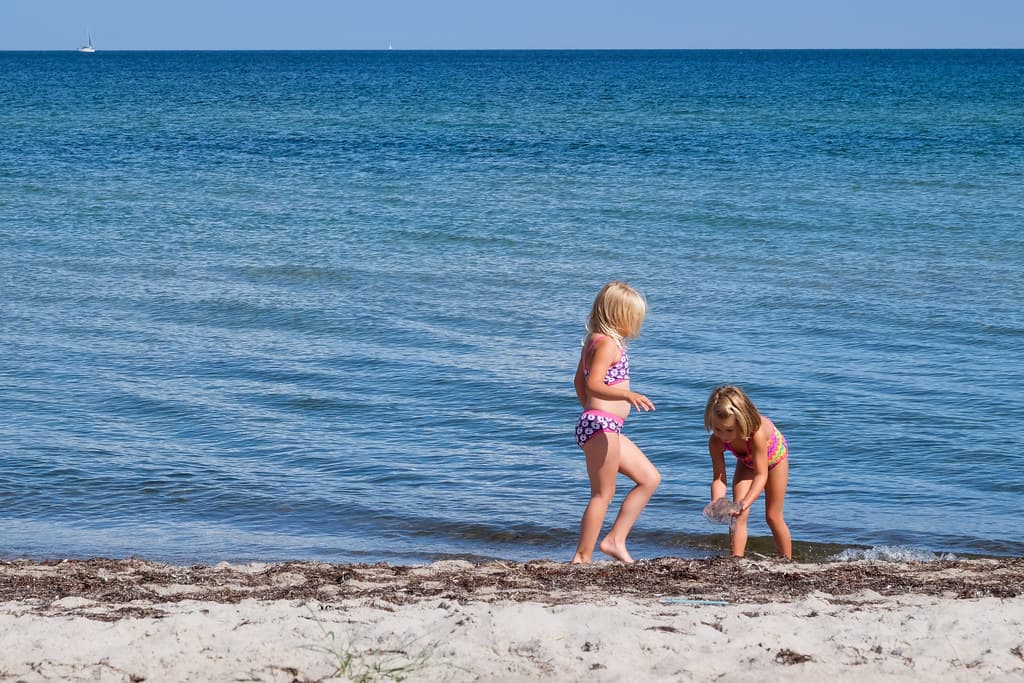
The dunes rise first—great swells of marram grass and wild rose that ripple south along Zealand's edge. You cross them on weathered planks, then step onto sand the color of raw linen, stretching so broad that high-tide debris seems impossibly far from the water. Where Marielyst thrums with beach clubs and umbrellas, Bøtø holds its breath: children crouch over tide pools, couples stake out private hollows between dunes, retirees unfold chairs beside clumps of sea rocket. The shoreline slopes so gently that wading in becomes a meditation. Knee-deep water stays warm enough for long swims by July, and the seabed reveals itself in ribbons of pale sand interrupted by darker kelp shadows. Oystercatchers patrol the wrack line; if you walk north toward the nature reserve, terns dive in silver arcs above the shallows. Stay past the dinner hour and you'll watch daylight linger until nearly ten, casting the dunes in amber and stretching every shadow eastward. Families pack coolers and tartan blankets; couples disappear into dune valleys. The beach empties slowly here, resistant to schedules, as if the sand itself understood the virtue of taking one's time.
Places, rentals, tours and events within walking and driving distance of Bøtø Strand.
Photos
Yes, Bøtø Strand is considered family-friendly and safe for swimming. The sandy beach features gently sloping shallow waters that extend well offshore, making it ideal for children. During summer months, lifeguards may be present at peak times. The beach has relatively calm conditions compared to more exposed coastlines. As always, supervise children closely near water, check daily weather conditions, and be aware that Danish beaches can have occasional currents. The dune-backed setting also provides natural shelter from wind.
The best weather for Bøtø Strand is June through August, when temperatures are warmest (18-22°C) and daylight extends late into evening. July and August see the most visitors, so consider visiting in June or early September for fewer crowds while still enjoying pleasant conditions. Weekdays are generally quieter than weekends. Spring and autumn offer scenic walks and natural beauty with minimal crowds, though swimming will be chilly. The beach is accessible year-round for those seeking peaceful coastal walks.
Bøtø Strand is approximately 150 kilometers south of Copenhagen, best reached by car in about two hours via Route 22 and Route 9 through Vordingborg. Follow signs toward Nykøbing Falster, then Marielyst, with Bøtø just south. Public transport requires taking a train to Nykøbing Falster (around 2 hours), then local bus service toward the coast, though bus frequency can be limited. Renting a car provides the most flexibility for exploring this quieter beach area and nearby attractions on Falster.
Bøtø offers limited on-site facilities, reflecting its quieter, nature-oriented character. Nearby Marielyst (just north) has numerous restaurants, cafés, supermarkets, and accommodation ranging from holiday apartments to camping. Several holiday home rental agencies serve the Bøtø-Marielyst area, popular with Danish and German families. A few smaller guesthouses and B&Bs exist in the immediate vicinity. For dining, plan to drive or cycle to Marielyst or bring picnic supplies. The area caters primarily to self-catering visitors in rental homes.
While adjacent to popular Marielyst, Bøtø Strand offers a noticeably calmer, more natural atmosphere with fewer commercial developments and tourists. The beach emphasizes unspoiled dunes and natural landscapes rather than resort amenities. Visitors seeking quieter sunbathing, nature walks, and a less crowded beach experience choose Bøtø over busier Marielyst. The setting attracts families preferring peaceful surroundings and nature lovers interested in the dune ecosystem. It's essentially Marielyst's quieter sibling, offering similar sand and water quality without the crowds and activity.