Counting the waves…
Counting the waves…
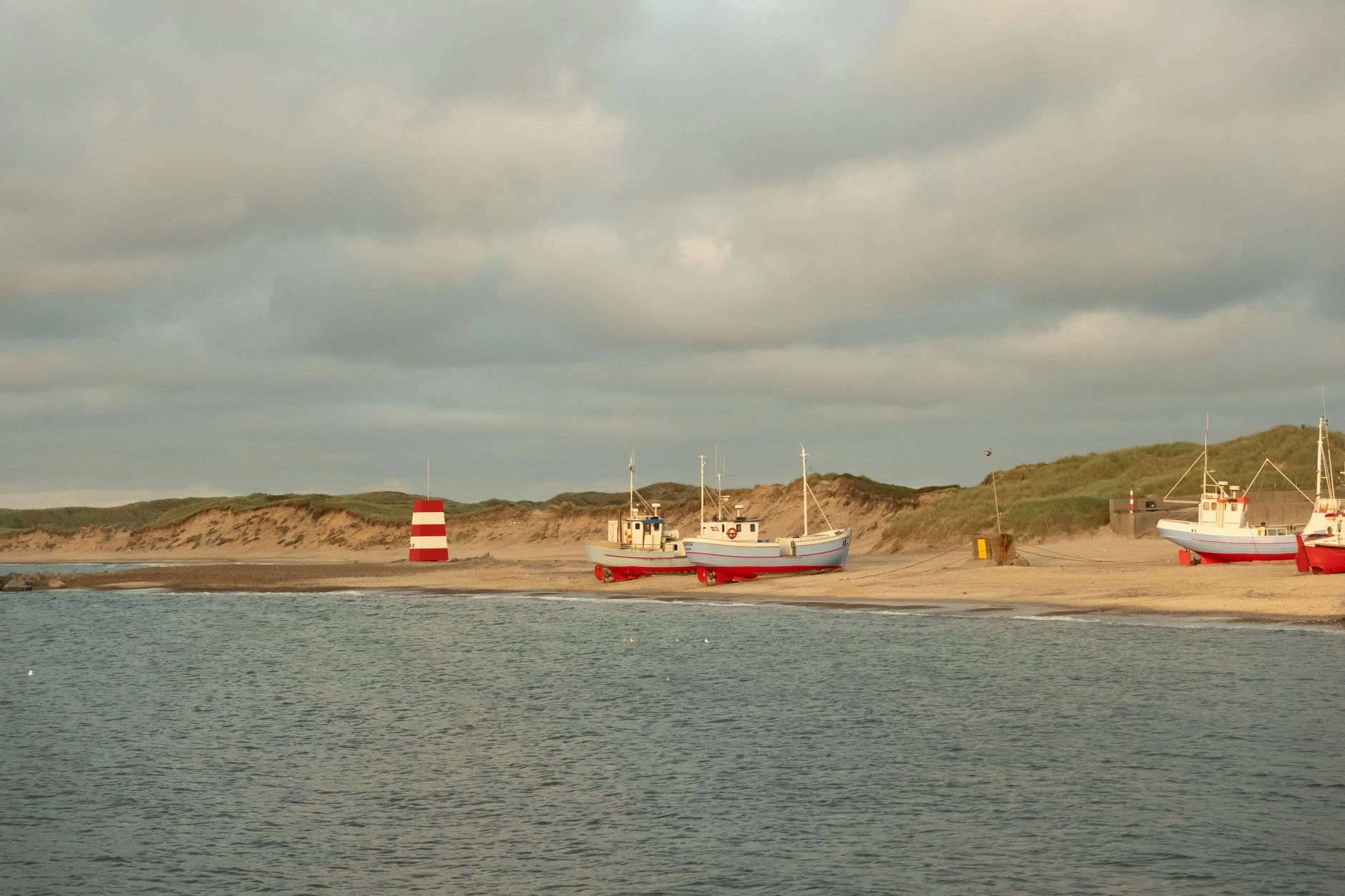
The shoreline announces itself with sound: not the soft hush of sand but the percussive rattle of thousands of egg-shaped stones tumbling in the surf. You pick your way along the pebble bank, each step requiring minor adjustments in balance, past driftwood bleached the color of bone and fragments of mussel shells ground smooth by decades of tidal polish. Behind you, the Røsnæs cliffs rise in bands of ochre and gray—compressed layers of ancient seabed tilted skyward, their faces scarred by rain and wind. The water here is deceptively inviting. When the sun angles low across Sejerø Bay, the Great Belt takes on a glassy clarity, every stone visible three meters down. Swimmers wade in slowly, letting feet adjust to the cool Baltic temperature and the unfamiliar give of pebbles underfoot. Fishermen set up along the western rocks, lines cast toward the deeper channel where cod and sea trout cruise the current. But most visitors come for the close of day. As the sun descends toward the opposite shore, it ignites the entire western sky—salmon bleeding into violet, reflected perfectly in the still water between the waves. Tripods sprout along the beach. Couples lean against car hoods in the gravel parking area. The cliffs glow briefly amber, then fade to silhouette as Denmark's most photogenic coastline performs its nightly curtain call.
Places, rentals, tours and events within walking and driving distance of Røsnæs Strand.
Photos
Swimming at Røsnæs Strand requires caution due to its exposed coastal location. The pebble beach can have stronger currents and waves than sheltered sandy beaches, particularly when winds blow across the Great Belt. Water entry over pebbles can be challenging, and depths increase more quickly than at gradual sandy beaches. The clear water allows good visibility, but rocky areas beneath the surface require careful footing. This beach is better suited for confident swimmers and beachcombing rather than families with very young children. Always assess conditions before entering.
Visit Røsnæs Strand during summer evenings from June through August for spectacular sunsets over the Great Belt—this is when the beach truly shines. Clear weather days offer the best cliff and water views that make this location famous. Spring and autumn provide fewer crowds while maintaining the dramatic coastal scenery, though swimming will be cold. Late afternoon visits optimize photography opportunities as the sun descends westward. Weekdays tend to be quieter than weekends when day-trippers arrive from regional towns.
From Copenhagen, drive approximately 100-110 kilometers west via Route 21 and Route 225 toward Kalundborg, then follow signs to the Røsnæs peninsula. The journey takes about 90 minutes to two hours. Specific beach access points vary along the dramatic Røsnæs coastline, so research your exact destination. Public transport is impractical for this location; a car is essentially required. The peninsula extends northwest from Kalundborg, and roads lead to various coastal access points along the cliffs and beaches.
The Røsnæs peninsula itself is sparsely developed with limited immediate facilities. Most visitors base themselves in Kalundborg, approximately 10-15 kilometers away, which offers hotels, restaurants, supermarkets, and full amenities. Vacation cottages dot the peninsula and surrounding areas, available through rental agencies. Pack food and drinks for beach visits, as onsite facilities are minimal to nonexistent. A few seasonal cafés may operate during summer in small communities along the peninsula, but don't rely on finding services directly at the beach.
Røsnæs Strand stands apart for its dramatic coastal geology featuring cliffs and rocky formations rather than typical flat Danish shorelines. The peninsula's exposure to the Great Belt creates dynamic wave action and exceptionally clear water. Sunset views across the strait are considered among Denmark's finest, making it a destination for photographers and Instagram enthusiasts. The wilder, more rugged character contrasts sharply with family-friendly sandy beaches elsewhere on Zealand, attracting visitors seeking natural beauty and dramatic seascapes over calm swimming and sunbathing convenience.