Counting the waves…
Counting the waves…
A refined fusion of water purity, environmental stability, and communal vibrancy for Marielyst Strand.
View MethodologyAnalyzed via live sensors and environmental data.
Wave height, wind, and atmospheric stability.
Live footfall and crowd balance metrics.
Community reviews and curated sentiment.
“You'll recognize Marielyst by the scent of sunscreen mingling with salt air and the sight of striped windbreaks dotting the shore. The water here warms faster than anywhere else on Zealand's coast, and the sand…”
Limited recent visitor reports — live OBI telemetry is your best guide for current conditions.
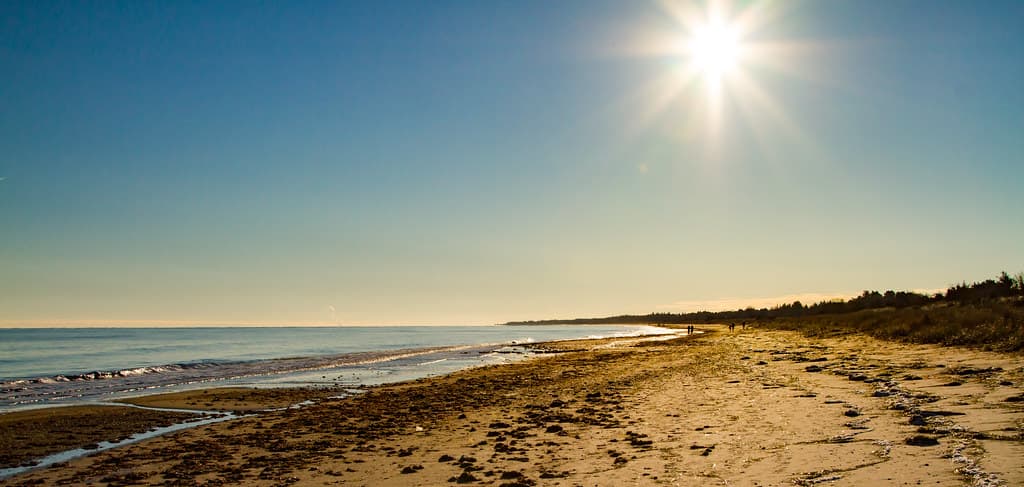
The sand beneath your feet is fine and pale, almost white where the tide has just retreated, leaving ribbed patterns that catch the afternoon light. Behind you, dense pine plantations create a dark green wall that smells of resin and needles warmed by the sun. Families have claimed their territories with colorful windbreaks—those iconic Danish beach shelters that bloom like geometric flowers across the shore each summer.
The Baltic here is uncommonly gentle. You can wade out fifty meters and still touch bottom, the water temperature climbing to a tolerable 20 degrees Celsius by late June. Children dig moats in the damp sand while their parents recline in low-slung beach chairs, faces turned skyward. On clear days you'll spot the white cliffs of Møn across Hjelm Bay, a hazy promise on the horizon.
 Credit: Unsplash
people sitting on seashore during daytime
 Credit: Unsplash
rock formation near water
Safe swimming for young children
Rent striped canvas beach shelters
Explore Hjelm Bay's calm waters
Prime Visitation
Best Weather|Less Crowds
Where it is
Marielyst Strand
Marielyst, Region Zealand, Denmark
54.688700°, 11.967600°
Weather
Loading…
Swell
—
Temp
Warm · Restorative
UV Index
Moderate
Wind
—
Tidal State
Last known
Max Sunlight
—
Ideal Shade
—
May - Sep (Peak)
Jan - Dec (Off-season)
Best Weather|Less Crowds
Near Marielyst Strand
Explore dining, stays, nightlife, and activities near Marielyst Strand in Marielyst, Denmark. Every listing below is a real place linked to this beach — open a card for reviews, maps, and booking options.
Food, cafés, and dining close to Marielyst Strand — curated from places linked to this beach.
Stays and lodging options near Marielyst Strand for your beach trip.
Bars and evening spots near Marielyst Strand.
Activities, tours, and attractions near Marielyst Strand.
Select a category to load nearby places.
Unlock restaurants, luxury stays and curated maritime experiences within 2km
Marielyst Strand is generally safe for families with children. The beach features shallow, gently sloping water that extends far from shore, making it ideal for young swimmers. The Baltic Sea here is typically calm with minimal currents. Lifeguards are present during peak summer season. The sandy bottom is soft and free of rocks. However, always supervise children, check daily weather conditions, and be aware that water temperatures can be cool even in summer. Red flag warnings are posted when conditions are unsuitable for swimming.
The best time to visit Marielyst Strand is June through August when temperatures are warmest and the beach is fully serviced. July offers the warmest water and longest days, though it's also the busiest period. For fewer crowds with decent weather, visit early June or late August when Danish school holidays haven't started or have ended. May and September can be pleasant for walks but too cool for swimming. Weekdays are quieter than weekends throughout summer. The beach is accessible year-round for scenic strolls.
Marielyst Strand is approximately 150 kilometers from Copenhagen, roughly a two-hour drive via the E47/E55 motorway south through Zealand and across the Farø Bridges to Falster. Public transport requires taking a train from Copenhagen to Nykøbing Falster (about 2 hours), then a local bus (route 730) to Marielyst, adding 20-30 minutes. Buses run regularly during summer but less frequently off-season. Having a car provides flexibility to explore surrounding beaches and attractions. Parking is available near the beach, including both free and paid areas during peak season.
Marielyst offers diverse accommodation including hotels, holiday apartments, campsites, and numerous holiday home rentals that Danish families traditionally book for summer weeks. The town has several restaurants, cafés, ice cream shops, and a supermarket for self-catering. Beachfront kiosks sell snacks and refreshments during summer. Dining ranges from casual fish-and-chips to sit-down restaurants serving Danish and international cuisine. Many visitors staying in holiday homes cook their own meals. Booking accommodation well in advance is essential for July, Denmark's main holiday month. Several family-friendly hotels cater specifically to beach vacationers.
Marielyst Strand is one of Denmark's longest and widest sandy beaches, stretching several kilometers with exceptional fine white sand unusual for the Baltic coast. It's Falster's premier resort beach with a well-developed tourism infrastructure while maintaining natural dune landscapes. The combination of extensive shallow waters, consistent sand quality, and family facilities has made it a core Danish summer tradition for generations. The beach offers more space than most Danish beaches, so even during peak season you can find room. Its south-facing position on Falster often provides better weather than Zealand's eastern coast.
Photos