
Counting the waves…
Counting the waves…

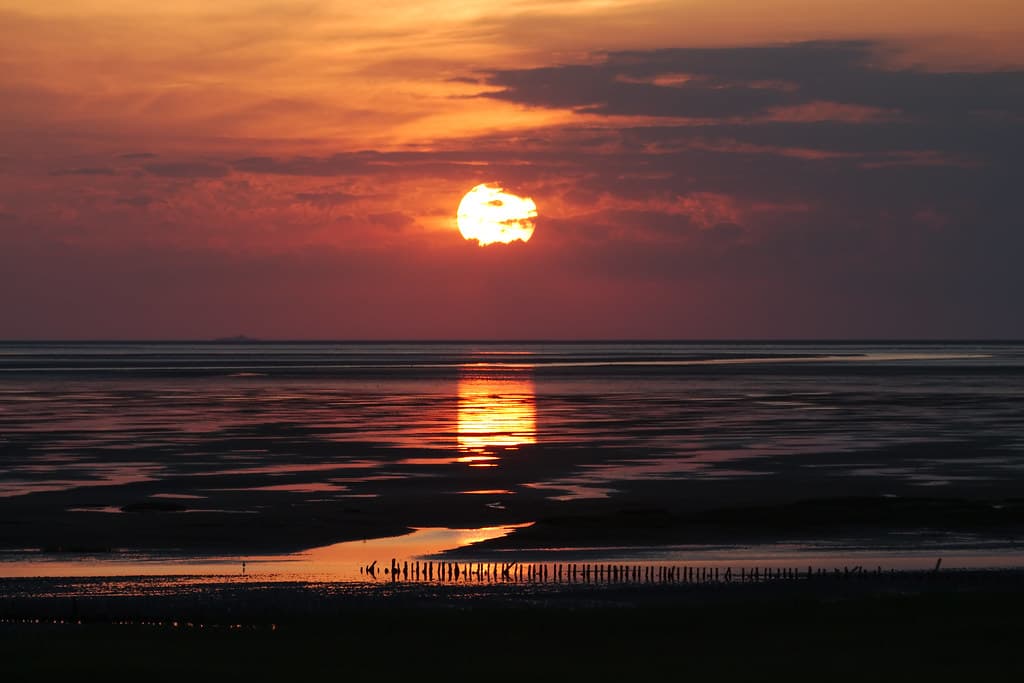
The bicycle path from Rindby fades into sand tracks as you approach Halen Strand, where the island narrows and the landscape opens into a study of horizontal lines: dune grass, mudflats, distant water. This is Fanø's forgotten corner, where the Wadden Sea UNESCO biosphere asserts itself in tidal channels and wading birds rather than beach umbrellas. Low tide exposes ribbed sand that gleams like silk, and you'll walk half a kilometer before the water reaches your knees. The wind here carries a different scent than the North Sea beaches to the west—less brine, more earth, the mineral smell of exposed seabed. Oystercatchers probe the flats with orange beaks. In late afternoon, light turns the shallow pools copper and bronze. You might share the beach with a Danish couple walking their dog or a solitary painter chasing the changing sky, but more often you'll have only the curlews for company. Halen lacks the drama of Fanø's western surf beaches, and that's precisely its appeal. No beach bars, no lifeguard towers, no designated parking lots with signs in four languages. Just the slow pull of tides, the whisper of marram grass, and the kind of coastal quiet that makes you lower your voice without thinking. Bring water, bring patience, and let the Wadden Sea set the clock.
Places, rentals, tours and events within walking and driving distance of Halen Strand.
Photos
Halen Strand, located on Fanø's southern coast facing the Wadden Sea, offers different swimming conditions than North Sea beaches. The Wadden Sea creates calmer, shallower waters with less wave action and fewer strong currents. However, extensive tidal flats mean water depth varies dramatically with tides—during low tide, the sea may retreat far from shore. Swimming is generally safer here than ocean-side beaches, but supervision of children is essential due to tidal variations. No lifeguards are typically present. Check tide schedules and be aware that water temperatures remain cool year-round.
Halen Strand naturally attracts fewer crowds than Fanø's North Sea beaches, making it ideal for peaceful visits year-round. For maximum tranquility, visit weekdays outside Danish school holidays, particularly May, June, or September. The beach's quiet Wadden Sea character and southern location mean it remains uncrowded even during summer peak season. Early mornings and late afternoons offer the most solitude and excellent light for scenery appreciation. Off-season visits provide near-total privacy and dramatic coastal landscapes, though weather requires warm clothing. Couples seeking romantic, secluded beach experiences will find Halen Strand consistently quiet.
Halen Strand is located in southern Fanø, accessible after arriving on the island via the Esbjerg-Nordby ferry. From Nordby, travel south through the island using bicycles (the most popular option on Fanø), car, or on foot if staying nearby. The distance from Nordby to southern coastal areas is several kilometers. Follow local signage toward Halen or southern beach zones. Bicycles can be rented in Nordby or brought on the ferry. Cars are permitted on the ferry and island. The route passes through Fanø's characteristic landscape of dunes, heath, and villages. Allow adequate time for travel from the ferry.
Halen Strand is in a quieter, less developed part of southern Fanø with limited immediate facilities. The main services, restaurants, and shops are concentrated in Nordby and Fanø Bad, requiring travel back toward central island areas. Accommodation options on Fanø include hotels, guesthouses, and holiday cottages scattered across the island, with concentrations in Nordby and Fanø Bad. Many visitors rent weekly cottages. Pack food and drinks for beach visits as Halen lacks beachside vendors. Advance booking is recommended for summer accommodation. Self-catering is practical given the area's quiet, residential character.
Halen Strand's position on Fanø's southern coast gives it a distinctive Wadden Sea character, unlike the island's dramatic North Sea beaches. The Wadden Sea UNESCO World Heritage area features unique tidal landscapes, calmer waters, extensive mudflats at low tide, and rich biodiversity. This creates a quieter, more sheltered beach experience ideal for nature observation, peaceful walks, and exploring tidal zones. The scenery differs markedly from ocean beaches—more subtle, with vast horizontal expanses and exceptional birdlife. It's perfect for couples and those seeking contemplative coastal experiences rather than swimming or surfing, offering hidden, scenic beauty with cultural and ecological significance.