Counting the waves…
Counting the waves…
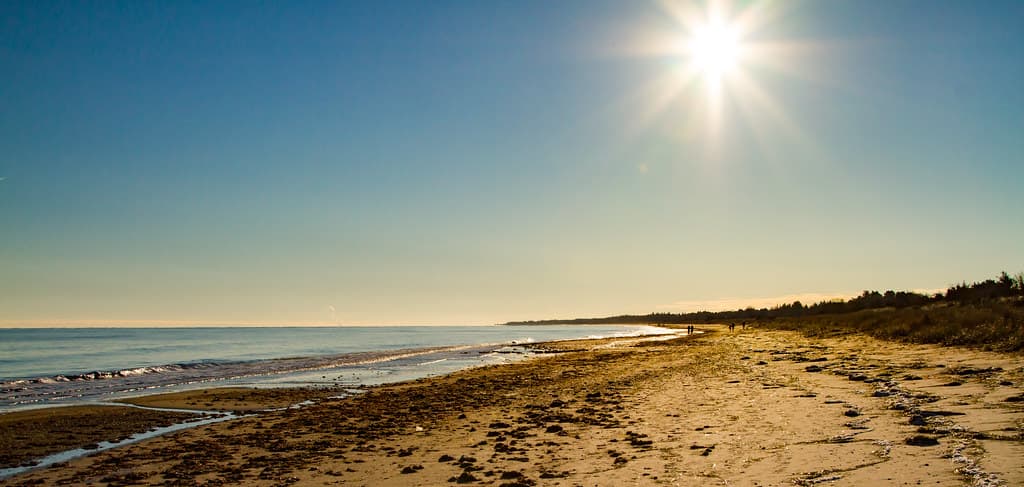
Ulslev Strand doesn't announce itself. You turn off the main road outside Nykøbing Falster, roll past modest cottage gardens heavy with hydrangeas, and park on packed gravel beneath wind-sculpted pines. The beach reveals itself gradually—a wide apron of butter-colored sand stretching in both directions, backed by modest dunes that shelter picnic blankets and toddlers building moat systems destined for the next tide. The water here is a study in patience. You walk out fifty, seventy, a hundred meters, the seafloor firm beneath your feet, the Baltic swirling around your shins in shades of jade and pewter. Children chase each other through the shallows; parents set up camp with thermoses and rye-bread sandwiches. The horizon is a clean pencil line, interrupted only by the occasional cargo ship heading toward Gedser. Gulls wheel overhead, their cries sharp against the hiss of small waves. By late afternoon, the beach empties. The summer-house residents retreat for coffee and card games, leaving you with the long light that turns the dune grass golden and throws violet shadows across the sand. There are no beach clubs here, no jet skis carving the water—just the salt smell, the crunch of shells underfoot, and the reliable rhythm of the Baltic doing what it has done for millennia.
Places, rentals, tours and events within walking and driving distance of Ulslev Strand.
Photos
Ulslev Strand generally offers safe swimming conditions in calm Baltic Sea waters with a gradual sandy bottom suitable for families. There are no lifeguards on duty, so swimmers should exercise caution and supervise children at all times. Water quality is typically good, though Baltic Sea temperatures remain cool even in summer. Check weather forecasts before visiting, as wind conditions can affect waves and currents. The beach's low-key nature means fewer safety facilities, so it's best suited for confident swimmers and families with close supervision of young children.
Ulslev Strand is naturally less crowded than major Falster resorts, making it ideal for peaceful beach visits. For the absolute quietest experience, visit during weekdays in June or late August when Danish school holidays haven't started or are ending. Early mornings and late afternoons, even in peak July, offer solitude. The shoulder seasons of May and September provide scenic beach walks with minimal visitors, though swimming may be cold. Even during peak summer, this beach maintains its low-key atmosphere thanks to its residential summer-house surroundings rather than hotel development.
Ulslev Strand lies approximately 10-15 kilometers from Nykøbing Falster along Falster's east coast. By car, head east from Nykøbing following coastal roads toward the beach communities; the drive takes 15-20 minutes. Limited public bus service connects Nykøbing with smaller coastal villages, though schedules may be infrequent, especially outside summer. Cycling is popular in this flat region if you're comfortable with the distance. Having your own vehicle provides the most convenience for beach access and exploring the surrounding dune landscapes and summer-house areas of eastern Falster.
Ulslev Strand is surrounded primarily by private summer houses with minimal commercial development. Accommodation typically consists of vacation rental cottages available through Danish holiday-home agencies. For restaurants, cafés, and supermarkets, head to Nykøbing Falster, the nearest town with full services. Some visitors bring picnics and supplies for beach days. The nearby Marielyst area offers more dining options if you're willing to drive. This setup appeals to visitors seeking self-sufficient beach holidays in peaceful, residential settings rather than resort-style amenities at the beachfront.
Ulslev Strand features characteristic Baltic coastal dunes that create scenic backdrops and natural windbreaks along the beach. These grass-covered dunes provide a buffer between the sandy shore and the summer-house settlements inland, adding to the area's picturesque quality. The dunes support local vegetation and help protect the coastline from erosion. They're part of what makes this beach particularly scenic for nature lovers and photographers. While you can walk among them, be respectful of the fragile dune ecosystem by staying on designated paths to preserve this natural coastal feature.