Counting the waves…
Counting the waves…
A refined fusion of water purity, environmental stability, and communal vibrancy for Ølsemagle Revle Strand.
View MethodologyAnalyzed via live sensors and environmental data.
Wave height, wind, and atmospheric stability.
Live footfall and crowd balance metrics.
Community reviews and curated sentiment.
“You'll park beside farmland, cross a low dune, and find yourself on a natural barrier beach where eelgrass tangles at the tide line and shallow water warms under the summer sun. Children wade far from shore while…”
Limited recent visitor reports — live OBI telemetry is your best guide for current conditions.
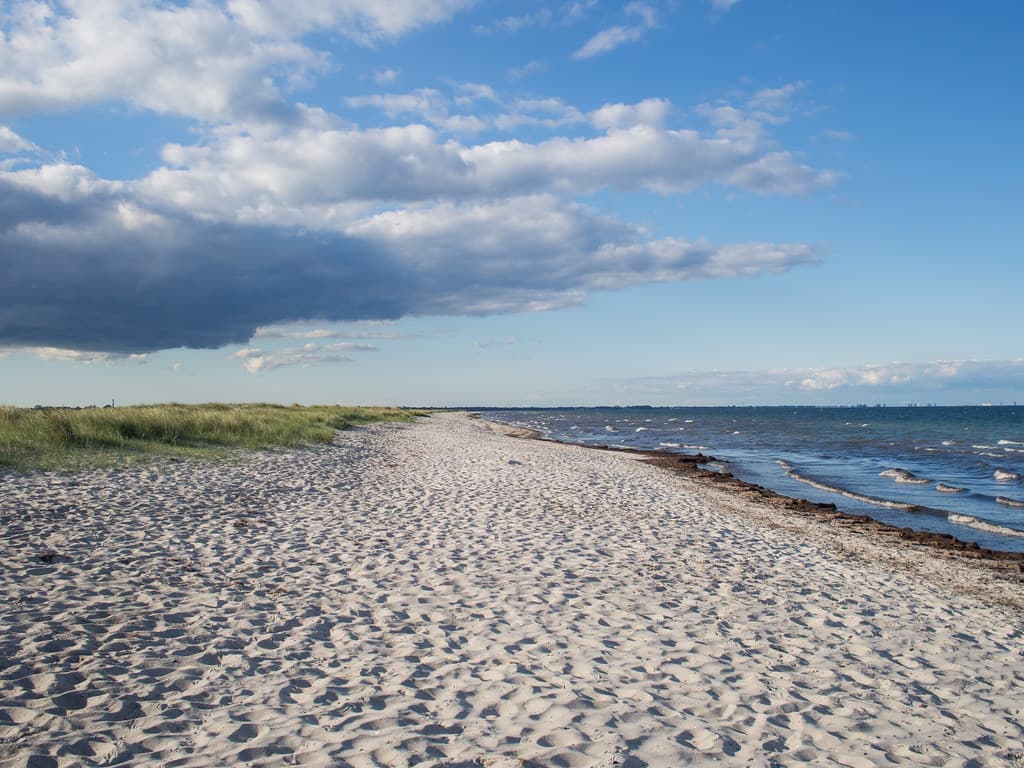
Ølsemagle Revle Strand unfolds as a narrow ribbon of sand between pasture and sea, a geological afterthought that Copenhageners overlook on their rush to bigger names farther north. You reach it via a gravel lot where the asphalt ends, then walk past beach roses and wild grasses onto sand that's more beige than gold, stippled with mussel shells and the occasional strand of kelp. The beach widens at low tide, revealing sandbars where toddlers hunt for crabs while their parents settle into folding chairs hauled from hatchbacks.
The water here is Øresund-cold in June, tolerably brisk by August. You wade in gradually—no sudden drops—feeling mud give way to firmer sand underfoot. Offshore, the shallow bay stretches toward Sweden in a haze of pale blue, interrupted only by the occasional sailboat tacking toward Køge Marina. The lack of facilities keeps crowds thin even on Saturdays; you bring your own shade, your own provisions, your own entertainment.
 Credit: Unsplash
a beach with boats on it
 Credit: Unsplash
people walking along beach during daytime
Wade out fifty meters safely
Cycle toward Køge harbor
Photograph tide-sculpted ridges
Prime Visitation
Less Crowds|Best Weather
Where it is
Ølsemagle Revle Strand
Ølsemagle, Zealand Region, Denmark
55.484100°, 12.190400°
Weather
Loading…
Swell
—
Temp
Warm · Restorative
UV Index
Moderate
Wind
—
Tidal State
Last known
Max Sunlight
—
Ideal Shade
—
May - Sep (Peak)
Jan - Dec (Off-season)
Less Crowds|Best Weather
Select a category to load nearby places.
Unlock restaurants, luxury stays and curated maritime experiences within 2km
Swimming at Ølsemagle Revle Strand is generally safe, with the beach offering a natural sandy bottom and relatively calm waters typical of this protected coastline. However, as a natural barrier beach with less development, facilities like lifeguards are not typically present, so swimmers should be self-reliant and cautious. Water quality is monitored during summer months and is generally good. The beach's more natural character means fewer crowds but also fewer safety amenities. Parents with children should stay vigilant, and all swimmers should check weather and water conditions before entering.
Ølsemagle Revle Strand is naturally less crowded than mainstream beaches due to its hidden character and limited tourist infrastructure. For the quietest experience, visit on weekdays during June or late August to early September when Danish school holidays have ended. Early mornings and late afternoons even during peak summer offer solitude. The beach's relative obscurity means even midsummer weekends are quieter than popular resort beaches. Spring and autumn provide beautiful scenery for beach walks with virtually no crowds, though swimming requires tolerance for cooler temperatures.
Ølsemagle Revle Strand is located near Køge, approximately 40 kilometers south of Copenhagen. By car, take the E47/E55 motorway toward Køge, then follow local roads to Ølsemagle village; total drive time is roughly 40-50 minutes. Public transport requires taking a train to Køge, then a bus toward Ølsemagle, though services may be infrequent and the final walk to the beach might be needed. Check current bus schedules in advance. The beach's somewhat hidden nature means parking may be informal or limited, typical of less-developed coastal areas.
Ølsemagle Revle Strand has minimal on-site facilities, reflecting its natural, undeveloped character. The nearby village of Ølsemagle is small with limited services, so visitors typically bring their own food and supplies. Køge, about 10-15 minutes away, offers supermarkets, restaurants, cafes, and bakeries for provisioning. Accommodation is primarily holiday homes and rental properties in the area rather than hotels. For those seeking hotels and diverse dining, staying in Køge and making day trips to the beach is practical. The beach experience here is intentionally simple and nature-focused.
Ølsemagle Revle Strand offers stronger discovery value than typical town beaches, with its natural sandy barrier formation creating scenic coastal landscapes less altered by development. The beach maintains an authentic, untouched character that appeals to visitors seeking nature over amenities. Its location near but distinct from Køge provides accessibility without commercialization. The barrier beach geography creates unique views and a sense of remoteness despite proximity to towns. It's ideal for those who appreciate natural beauty, quiet contemplation, and authentic Danish coastal environments rather than resort-style beach experiences with extensive facilities.
Photos