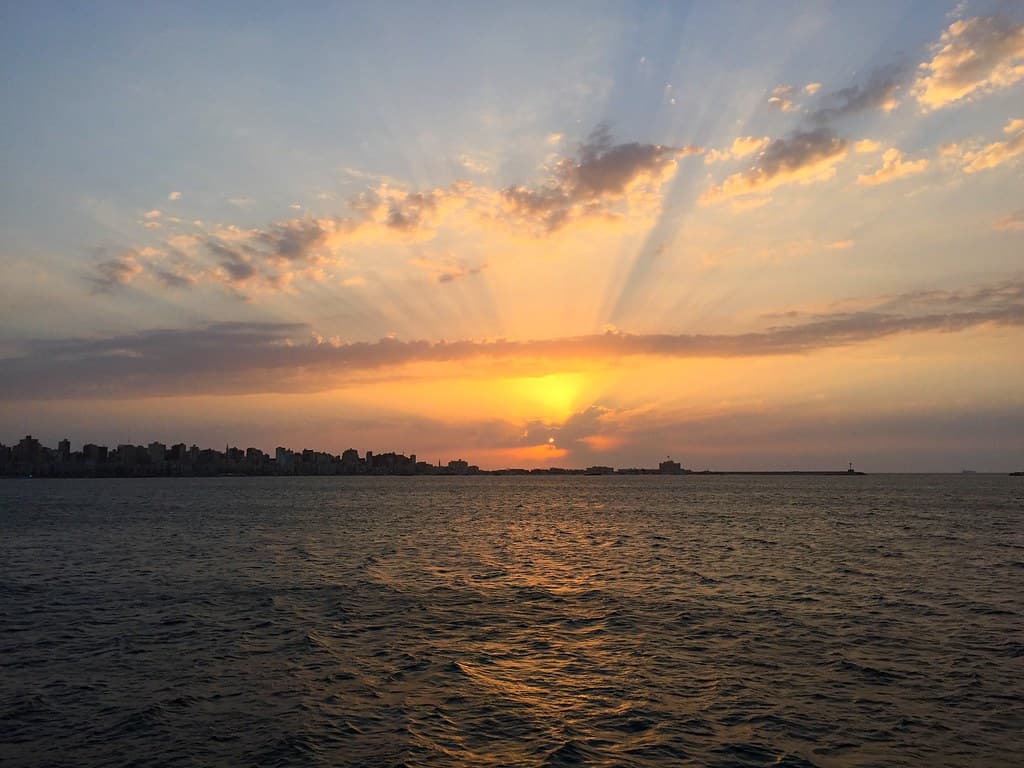
Counting the waves…
Counting the waves…
A refined fusion of water purity, environmental stability, and communal vibrancy for Alexandria Beach.
View MethodologyAnalyzed via live sensors and environmental data.
Wave height, wind, and atmospheric stability.
Live footfall and crowd balance metrics.
Community reviews and curated sentiment.
“No sand here, just shelves of weathered rock that slope into water the color of lapis. You pick your way across tide pools, each one a miniature aquarium, until you find a flat spot to lay your towel on stone warmed by…”
Limited recent visitor reports — live OBI telemetry is your best guide for current conditions.
The beach reveals itself slowly. What looks like inhospitable coastline from the road transforms into a series of natural platforms, each worn smooth by millennia of wave action. You navigate across rock surfaces pocked with fossils—ancient sea creatures pressed into limestone when this shore lay beneath a deeper ocean. Small crabs scatter into crevices as your shadow passes.
There's no gradual entry here. The rock shelves drop vertically into water deep enough that you can't see bottom even when the sun stands directly overhead. You lower yourself from the edge, gasping as Mediterranean chill envelops you, then push off into water so clear you watch your own shadow ripple across the rocky floor fifteen feet below. Damselfish dart between underwater ledges, and occasionally a sea turtle surfaces, exhales, and disappears again.
 Credit: Unsplash
A group of people standing on top of a sandy beach
 Credit: Unsplash
people standing on brown wooden dock near body of water during daytime
Vertical drops from rock ledges
Ledges descend into blue void
Fossils embedded in stone surfaces
Prime Visitation
Best Weather
Where it is
Alexandria Beach
El Alamein, Matruh, Egypt
30.896000°, 29.912000°
Weather
Loading…
Swell
—
Temp
Warm · Restorative
UV Index
Moderate
Wind
—
Tidal State
Last known
Max Sunlight
—
Ideal Shade
—
May - Sep (Peak)
Jan - Dec (Off-season)
Historical data suggests peak visibility and stable sea temperatures occur during the prime visitation window.
Select a category to load nearby places.
Unlock restaurants, luxury stays and curated maritime experiences within 2km
Alexandria Beach's rocky nature requires swimmers to exercise caution and wear appropriate water shoes for protection. The private and peaceful character suggests a more natural setting with potentially limited lifeguard services. Always assess water conditions before entering, as rocky beaches can have uneven depths and underwater obstacles. Swimming is generally safer during calm weather with clear visibility to see submerged rocks. The beach's quieter nature means fewer people around in case of emergency, so swimming with companions is advisable. Check with local accommodations about current conditions and any specific hazards before your visit.
Alexandria Beach is best enjoyed during Egypt's mild seasons from April through June and September through November when temperatures are comfortable (20-30°C) and the Mediterranean is warm enough for swimming. July and August bring peak heat but also the calmest seas. Winter months (December-February) offer solitude with cooler temperatures (15-20°C) suitable for beach walks but less ideal for extended swimming. Spring provides blooming coastal vegetation and pleasant conditions. Summer weekends see more Egyptian vacationers, while weekdays maintain the beach's peaceful character throughout the year.
Despite its name, Alexandria Beach is located in the El Alamein area, not the city of Alexandria. Access typically requires private transportation such as a rental car, taxi, or arranged transport through your accommodation. The beach's private and hidden nature suggests it may be within or near a resort complex or accessed through less obvious coastal roads. Request specific directions from your hotel or local contacts, as GPS coordinates may be necessary for accurate navigation. The beach may require permission or gate access if part of private property. Plan transportation in advance.
As a private and peaceful beach, Alexandria Beach likely has limited on-site facilities. Visitors typically stay at nearby El Alamein resorts or vacation rentals that provide full hospitality services including restaurants, cafes, and various accommodation types. The North Coast of Egypt has developed significantly with numerous hotels ranging from boutique properties to large resort complexes. Most dining requires returning to your accommodation or nearby resort areas. During peak summer season, advance booking is recommended. Bringing your own refreshments for beach time is advisable given the secluded nature of the location.
Alexandria Beach distinguishes itself through its peaceful, private atmosphere that contrasts with busier resort beaches in El Alamein. The rocky terrain naturally limits crowds, attracting visitors seeking tranquility over amenities. Its hidden location provides an escape from typical tourist areas, offering a more intimate connection with the Mediterranean coast. The beach's natural setting and limited development create a serene environment ideal for meditation, reading, or quiet contemplation. The "vibes" referenced suggest an authentic, unspoiled character where visitors can enjoy the sound of waves and natural surroundings without the noise and activity of crowded beaches.
Photos