Counting the waves…
Counting the waves…
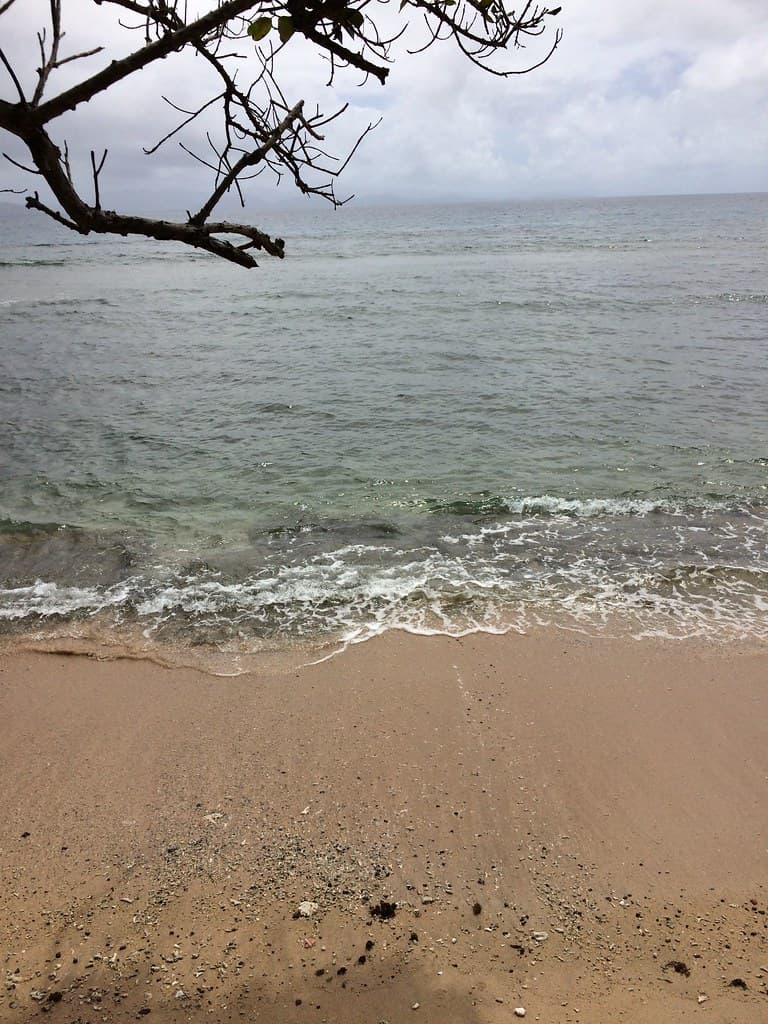
The beach faces Vanua Levu, and on clear evenings the silhouette of that larger island sits dark against a sky gone flamingo and rust. Tavuki's sand is coarse and gray-gold, studded with coral fragments and the occasional cowrie shell. Coconut palms lean at angles that suggest decades of prevailing wind, and beneath them you'll find log benches, fire pits ringed with stones, and the tideline detritus of a working waterfront—frayed rope, bleached buoys, a half-buried anchor. This is a beach shaped by the people who use it daily. Children race into the shallows after school, shrieking and cannonballing off a wooden pier that lists slightly to starboard. Women gather in the shade to weave mats and gossip, their laughter carrying over the lap of small waves. Outriggers launch before dawn and return mid-morning, the catch sorted on the sand while frigatebirds wheel overhead, hoping for scraps. You won't find amenities, but you will find welcome—if you approach with humility. A sevusevu ceremony with the village chief smooths your arrival, and after that you're free to stake out a patch of sand, swim in water that stays tepid and gentle, and watch the light drain out of the day in a spectacle that costs nothing. Tavuki's charm is its ordinariness: this is simply how life looks when the beach is a front yard rather than a product.
Places, rentals, tours and events within walking and driving distance of Tavuki Beach.
Photos
Tavuki Beach on Taveuni's west coast typically offers calm swimming conditions, protected from the prevailing southeast trade winds. The gentle waters make it family-friendly, though facilities and lifeguards are absent. Always check with local villagers about current conditions, tides, and any reef channels. The west-facing orientation means evening swims are particularly pleasant. Snorkeling may be available depending on reef proximity, but don't expect pristine coral close to shore. Standard ocean safety applies: supervise children, avoid swimming alone, and respect the marine environment.
Tavuki Beach can be visited year-round, but the dry season from May to October offers the most comfortable conditions with less rainfall and lower humidity. Budget travelers particularly appreciate the quieter periods outside July-August peak season when flights and accommodation are cheaper. The west coast location means beautiful sunset views throughout the year. Visiting during shoulder seasons like April-May or September-October balances good weather with fewer visitors and better value. The wet season still has sunny periods, and Taveuni's lush landscape is particularly vibrant after rain.
Reaching Tavuki requires flying or taking the ferry to Taveuni from Viti Levu. From Matei Airport or the Somosomo ferry landing, you'll need ground transportation along the western coastal road. Local buses run irregularly, so hiring a taxi or rental car provides more flexibility. The village is on Taveuni's quieter west side, requiring navigation of sometimes basic roads. Ask locals for specific directions, as GPS may be unreliable. Many visitors arrange transport through their accommodation. The journey showcases Taveuni's lush interior and quieter coastal communities.
Tavuki is a small village community with minimal tourist infrastructure. Accommodation typically means homestays or very basic guesthouses arranged directly with villagers, offering an authentic cultural experience at budget-friendly prices. Don't expect hotels or resorts. Food options are limited to village stores with basic supplies; meals may be arranged with host families, featuring traditional Fijian home cooking. Alternatively, stay in more developed areas like Matei or Somosomo and visit Tavuki as a day trip. Bring cash, as card facilities won't be available in the village.
Tavuki Beach represents Taveuni's non-resort side, offering genuine village life away from the dive lodges and eco-resorts concentrated elsewhere on the island. Its west-facing orientation provides stunning sunset views over the Somosomo Strait toward Vanua Levu, unlike the more developed eastern and northern coasts. The community maintains traditional lifestyles with fishing and farming, giving visitors insight into authentic Fijian island culture. This beach suits travelers seeking local immersion and quiet coastal scenery rather than tourist amenities, making it distinctly different from Taveuni's more commercialized areas.