Counting the waves…
Counting the waves…
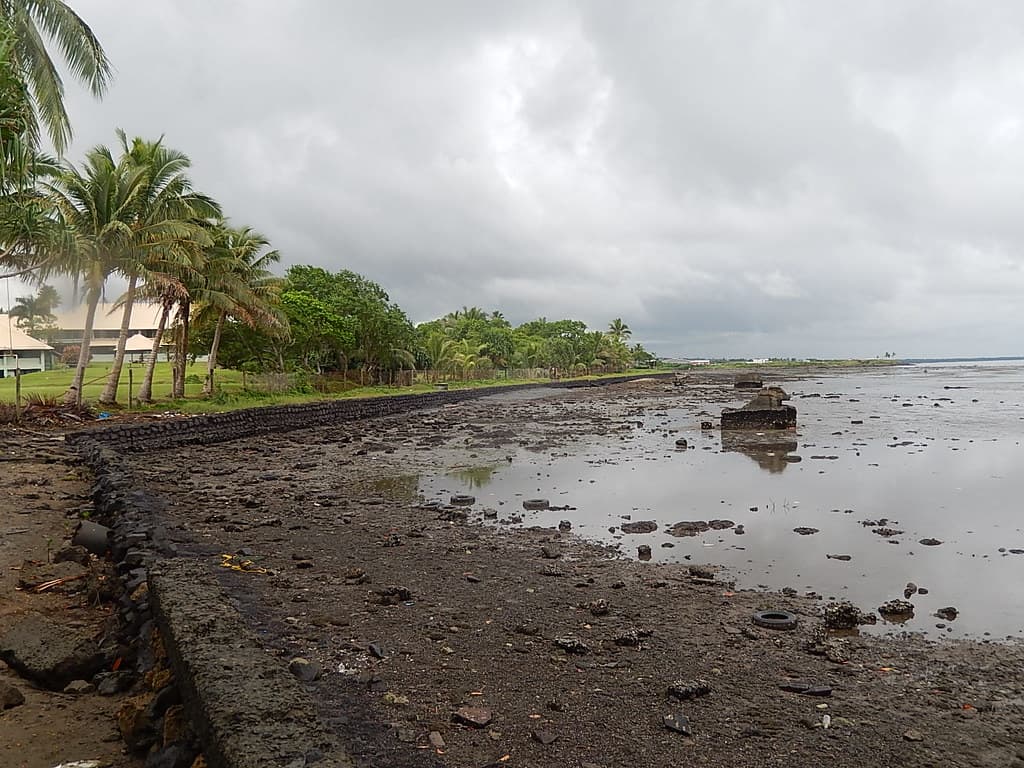
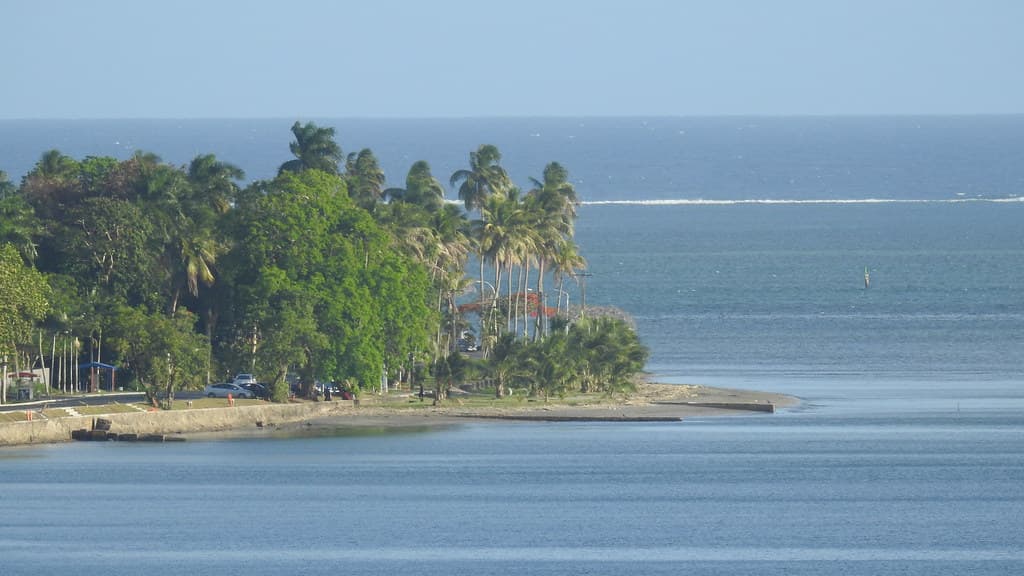
The beach announces itself not with signage but with the scent of woodsmoke from evening cooking fires and the shouts of children playing football on the sand. Kalokolevu sits in Lami's embrace, a working shoreline where village life spills directly onto the beach. Fibreglass dinghies rest upturned on the sand, their hulls faded by salt and sun. Laundry flaps on lines strung between coconut palms. This isn't a beach that performs for visitors—it simply exists, functional and lived-in. The sand here is coarse, mixed with coral fragments that crunch underfoot. At high tide, the water reaches the base of the seawall where teenagers perch, dangling their legs and sharing phones. At low tide, the reef flats expose themselves, becoming a hunting ground for octopus and sea cucumber. Women wade out in sulus, bent at the waist, reading the water for movement. The horizon opens toward the Suva Peninsula, shipping containers stacked like bright Lego blocks in the distance. Sunset transforms everything. The working-class grit softens as the light turns molten, bronzing the water and silhouetting the pandanus trees. Families arrive with mats and thermoses, claiming their usual spots. Laughter carries across the sand. A guitar appears. Someone starts singing. For an hour, Kalokolevu becomes less a beach and more a communal living room, the ocean providing the evening's soundtrack.
Places, rentals, tours and events within walking and driving distance of Kalokolevu Beach.
Photos
Kalokolevu Beach offers calmer conditions than open ocean beaches due to its harbour-side location, making it suitable for gentle swimming and children's water play. Water quality can vary as with any coastal area near settlements, particularly after rainfall. The beach is popular with local families, indicating generally safe conditions for supervised swimming. Currents are typically mild in the protected waters. Always observe current conditions before entering the water and avoid swimming after heavy rains when runoff affects clarity. The beach's village setting means locals can often provide current advice about conditions and safe swimming areas.
Late afternoon is particularly beautiful at Kalokolevu Beach for sunset views across the water. The beach is accessible year-round without significant seasonal restrictions, though the dry season from May to October offers the most reliable weather. Weekdays provide a quieter experience, while weekends see more local family activity and community atmosphere. Early morning offers peaceful conditions if you prefer solitude. Since it's a local beach rather than a tourist hotspot, you'll rarely encounter crowds any time. Tide times can affect beach width and swimming conditions, so checking local tide tables can help plan your visit.
Kalokolevu Beach is located in the Lami area, approximately 8-10 kilometres from central Suva along or near the Queens Road. From Lami town centre, it's a short distance requiring local knowledge or asking directions, as it's more of a village coastal area than a signposted destination. Buses running between Suva and Lami can get you to the general area, then you may need to walk. Taxis from Suva or Lami town can take you directly if you provide the name. Local guidance helps, as the beach is known to residents but not heavily marked for visitors.
Kalokolevu is primarily a village area with limited commercial food facilities directly at the beach. Lami town, nearby, has local shops, bakeries, and small restaurants serving Fijian and Indo-Fijian cuisine. For more dining variety, Suva is only 15-20 minutes away. Bring your own refreshments if planning to spend time at the beach itself. Accommodation at Kalokolevu Beach is virtually non-existent; the area is residential. Most visitors stay in Suva or Lami town and visit as a day trip. Some homestay arrangements might be possible through local contacts, but this isn't a developed tourist accommodation area.
Kalokolevu Beach offers a genuine village coastal experience with strong local community character, more removed from urban development than other Lami foreshore areas. The beach retains traditional village-coast atmosphere where local life continues around the shoreline. It's less about manicured beach facilities and more about authentic Fijian coastal village culture. The setting provides insight into how rural-coastal communities near Suva maintain traditional lifestyles despite proximity to the capital. For travellers seeking authentic cultural experiences beyond tourist beaches, Kalokolevu offers glimpses of everyday Fijian coastal living in a village context rarely experienced by visitors.