
From the mainland, Serua appears as little more than vegetation floating on the horizon, a green thumbprint pressed into the blue. The boat ride across choppy shallows reveals the structure: volcanic rock forming the island's spine, palm canopy dense enough to provide constant shade, and a beach that wraps the perimeter in uneven bands of cream and tan sand. You'll circle to find the best landing spot, the captain reading the waves and reef breaks with practiced efficiency.
“Serua delivers pure island geometry—small enough to comprehend entirely, distinct enough to feel like genuine escape, and accessible enough to reach without expedition logistics.”
 Credit: Flickr
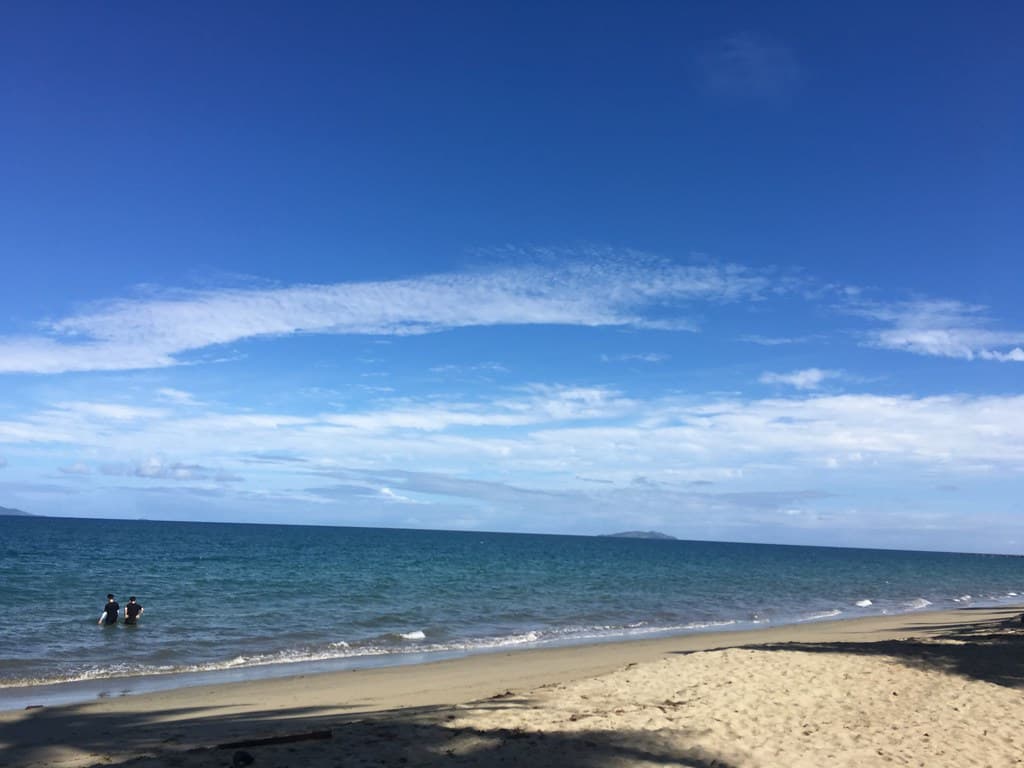
Serua Island Beach — photo by busanlincoln
The beach here changes personality depending on which side you choose. The windward shore takes the full force of the trades, waves arriving with enough conviction to make swimming a commitment rather than a leisure activity. Walk across the island—it takes maybe ten minutes on a rough trail through the interior—and the leeward side offers protected water so calm you can see the coral heads and sand patterns thirty feet down. This is where you'll swim, where the snorkeling reveals the reef fish that treat the island as their private territory.
The island's charm lies entirely in its isolation and geometry. You can walk the full circumference in thirty minutes, finding no development beyond a rough shelter and fire pit that sees occasional use by fishing parties. Seabirds nest in the upper branches. Crabs rule the interior. The views back toward Viti Levu shift with the angle, offering a dozen different compositions for the same basic scene: green island, blue water, mainland mountains hazy with distance. You'll take forty photos and keep maybe three, the ones where the light caught the water gradient just right.


