Counting the waves…
Counting the waves…
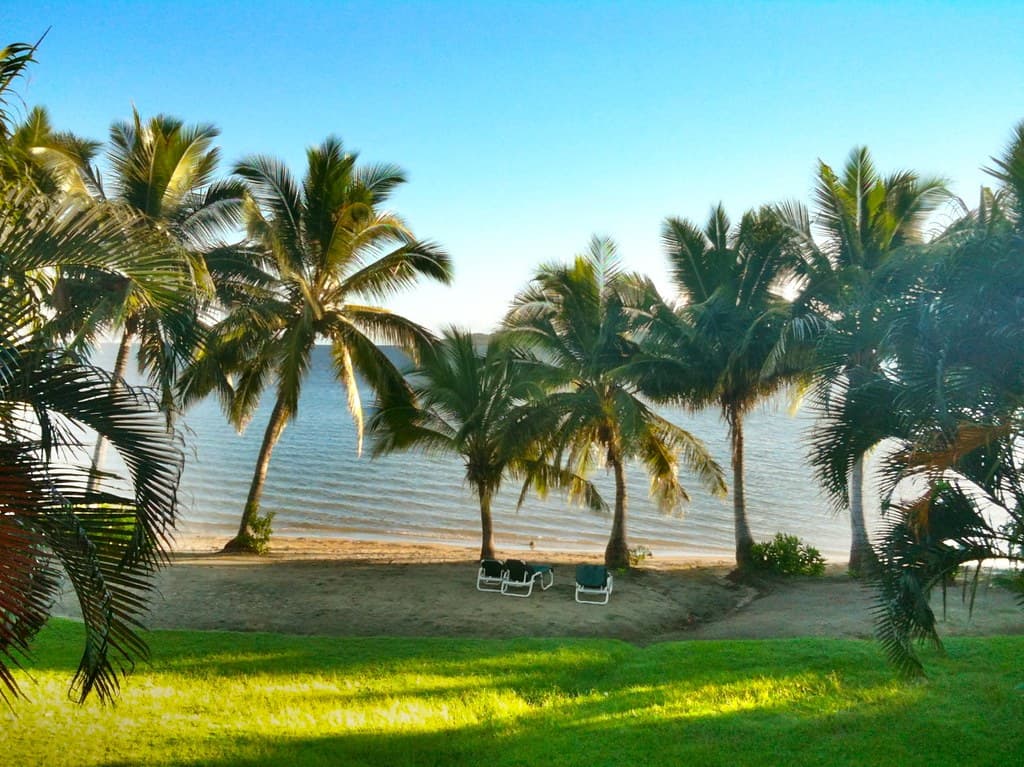
The tomb sits a hundred meters inland, a low stone mound beneath a tin roof, surrounded by a chain-link fence and plaques that tell the story in Fijian, English, and tourist-board circumspection. But the beach itself requires no introduction. It curves along the Suncoast, a wide sweep of sand that hardens underfoot at low tide and softens near the dunes. The water here is shallow and greenish-blue, ruffled by the trade winds that blow unbroken across Bligh Water. Palms lean inland, trunks bent from years of prevailing gusts. Families from Rakiraki spread out on Sundays, claiming patches of shade and sending children to wade in the tepid shallows. The beach is functional rather than stunning—no dramatic headlands, no technicolor reefs just offshore—but it offers space and accessibility. Tour buses stop at the tomb, and visitors often wander down to the sand, snapping photos of the horizon before reboarding. The beach doesn't object. It simply absorbs the foot traffic and returns to quiet. At sunset, the sky bruises pink and indigo, and the wind drops enough that the palms stop thrashing. The tide retreats, exposing dark patches of seaweed and tire tracks from a fisherman's truck. You can walk the length of the beach without encountering another soul, the only sound the hiss of waves on sand and the distant bleat of a goat from the road. Udre Udre's legend haunts the tomb, but the beach remembers nothing—it's just sand, wind, and water, indifferent to history.
Places, rentals, tours and events within walking and driving distance of Tomb of Udre Udre Beach.
Photos
Tomb of Udre Udre Beach offers generally safe swimming conditions suitable for families, with calm, shallow waters characteristic of the protected Suncoast area near Rakiraki. The sandy beach and gradual depth make it accessible for children under supervision. As with all Fijian beaches, wear reef shoes to protect against coral fragments and sea urchins. There are no lifeguards, so parents must actively monitor children. The beach's family-friendly tag reflects its suitability for all ages. Check weather and tide conditions before swimming, and avoid the water during storms or unusually rough seas. Local families frequent the area, which generally indicates safe conditions.
The optimal visiting period is during Fiji's dry season from May to October, characterized by sunny skies, lower humidity, and minimal rainfall—ideal for sunbathing and beach activities. This 'best weather' and 'budget travel' beach offers good value year-round, with shoulder seasons (April-May, October-November) providing pleasant conditions with fewer visitors and competitive accommodation rates. The wet season (November-April) brings occasional heavy showers but remains viable, especially for budget-conscious travelers. Sunset viewing, one of the beach's highlights, is most spectacular during dry-season months with clearer horizons. Weekdays see fewer visitors than weekends, enhancing the peaceful Suncoast experience.
Tomb of Udre Udre Beach is located near Rakiraki on Viti Levu's northern Suncoast, approximately 100 kilometers northeast of Nadi International Airport—about a 2-hour drive via the Kings Road. From Suva, travel northwest for roughly 2.5-3 hours. Regular bus services connect Nadi and Suva to Rakiraki town; from there, hire a taxi or arrange local transport to reach the beach and tomb site. Rental cars provide maximum flexibility for exploring the Rakiraki area. The tomb itself is a recognized landmark, making directions easier to obtain from locals. Well-maintained roads make the journey straightforward for independent travelers.
Rakiraki town, approximately 10-15 minutes from Tomb of Udre Udre Beach, offers several guesthouses, small hotels, and budget-friendly lodging options suitable for various budgets. A handful of dive resorts and coastal lodges along the Suncoast provide accommodation with meal plans, ranging from basic to moderate comfort. Rakiraki has local restaurants serving Fijian, Indo-Fijian, and Chinese cuisine, plus markets for purchasing picnic supplies. Some visitors day-trip from Nadi-area resorts. The beach itself has minimal facilities, so bring refreshments and snacks. Plan meals in advance, especially if visiting on weekends when some establishments may have limited hours.
The beach is named for the nearby Tomb of Udre Udre, a historic site commemorating a 19th-century Fijian chief who holds a Guinness World Record for consuming the most human flesh (872-999 people) during Fiji's cannibalistic era. This cultural landmark attracts visitors interested in Fiji's complex pre-colonial history. The beach itself offers open Suncoast views, excellent sunset vistas, and family-friendly swimming. Unlike purely recreational beaches, it combines natural beauty with significant local heritage, providing educational and leisure value. The recognizable coastal stop near Rakiraki makes it accessible for cultural tourism while offering genuine beach relaxation away from overcrowded tourist hotspots.