Counting the waves…
Counting the waves…
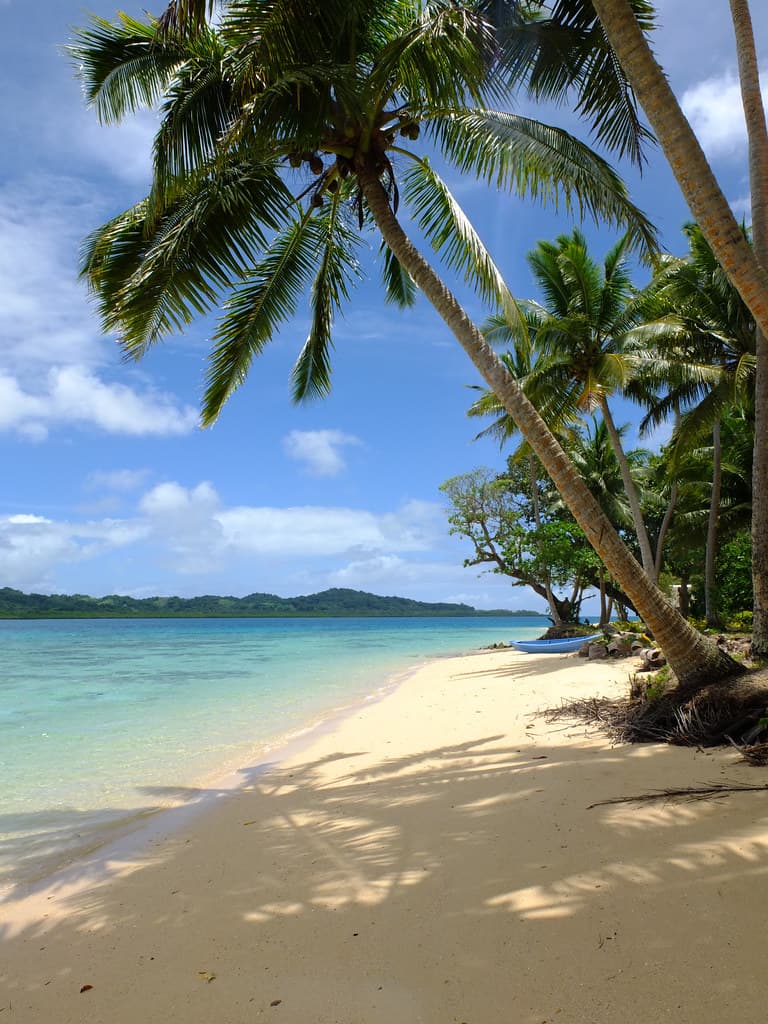
The sand at Nailega runs in a narrow ribbon between palms and the reef-sheltered bay, patched gold and grey where the tide washes over volcanic pebbles. You'll notice the beach belongs firmly to the village: woven baskets rest against tree trunks, fishing lines dry on branches, and a few fibreglass dinghies sit bow-up on the shore. Chickens scratch near the high-tide line, and if you arrive mid-morning, you might see women washing clothes in plastic tubs while children dive off a wooden pier. The water here stays shallow for thirty metres, warm as bathwater and clouded faintly green by river sediment. Small waves fold over the outer reef with a hushed rumble, but inside the lagoon the surface barely ripples. Hermit crabs shuttle across wet sand, and at the forest edge, breadfruit trees drop their knobbed fruit onto leaf litter that smells of rot and salt. This is not a beach for solitude or postcard vistas—it's a working waterfront where daily routines play out in full view. You'll share the sand with villagers checking nets, kids racing sticks in the shallows, and the occasional pig rooting through seaweed. The appeal lies in that unfiltered authenticity: no groomed walkways, no resort boundaries, just a sliver of coast where Fijian families have fished and swum for generations.
Places, rentals, tours and events within walking and driving distance of Nailega Beach.
Photos
Nailega Beach is generally suitable for families, offering a village-area setting with sandy shores and a community atmosphere. Swimming conditions vary depending on tides, reef structure, and weather, so it's important to observe local conditions and ask village residents about safe swimming areas and times. The beach's eastern location on the mainland means conditions can differ from more protected western areas. Supervise children closely, particularly during changing tides. The family-friendly tag reflects the peaceful environment rather than specific lifeguarded facilities, so exercise normal coastal safety precautions and common sense when swimming.
The best time to visit Nailega Beach is during Fiji's dry season from May to October, when you'll enjoy sunny days, calm seas, and minimal rainfall. This period offers the most reliable weather for beach activities and scenic enjoyment. The fewer crowds that characterize this hidden beach are most pronounced during weekdays and outside Fiji's peak tourist months of July and August. Early mornings provide the most peaceful atmosphere and often the calmest water conditions. The dry season's clear skies enhance the scenic qualities that make Nailega Beach worth visiting despite its remote location.
Nailega Beach is located on the eastern end of the Tailevu region, accessible via local roads from Korovou. The journey requires careful navigation, as roads in this area may be unsealed and less maintained than main highways. A 4WD vehicle is often recommended, especially during or after wet weather. It's advisable to arrange transportation with local operators or accommodations in Korovou who can provide specific directions and potentially guide services. GPS coordinates may be unreliable, so local knowledge is valuable. Allow extra travel time and confirm road conditions before setting out to this village-area beach.
Nailega Beach is a village-area location with virtually no commercial tourist facilities on-site. Accommodation and dining options are primarily available in Korovou, the nearest town, where you'll find basic guesthouses and local restaurants. Some visitors may arrange homestays with families in Nailega village itself, which typically include traditional Fijian meals and offer authentic cultural experiences. When visiting the beach, bring all necessary supplies including food, water, and sun protection, as shops and restaurants are not available at the beach. Self-sufficiency is key to enjoying this hidden, uncommercial coastal spot.
Nailega Beach holds significance as a village-area beach positioned on the eastern end of the Tailevu mainland region, providing geographic coverage of this less-visited coastal area. Its location represents the transition point where this section of Viti Levu's northeast coast reaches its eastern extent. This positioning makes it particularly scenic, with potentially different coastal views compared to more western beaches in the region. The beach serves local communities and maintains an authentic, uncommercial character. For travelers seeking to explore the full extent of Tailevu's coastline or experience genuinely local Fijian beach culture, Nailega's eastern position offers unique value.