

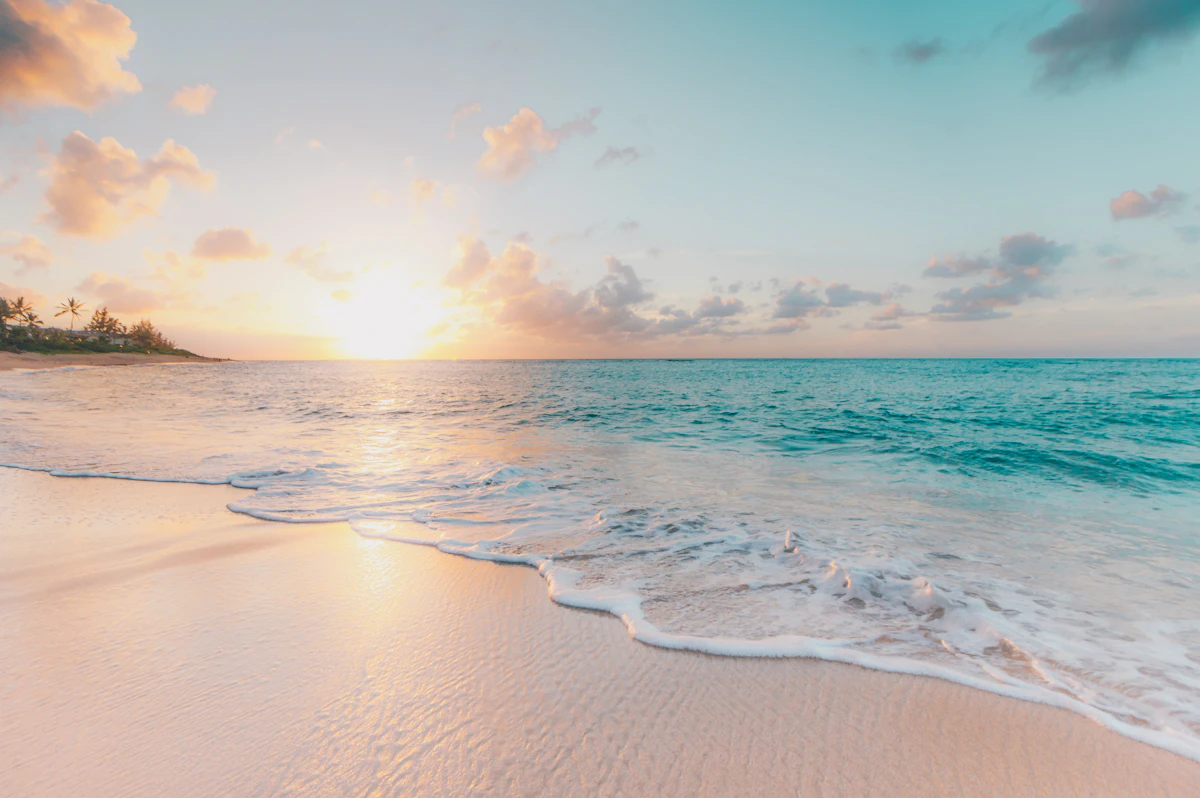
The sand at Vatia runs darker than Nadi's—a rich tan flecked with volcanic grit and shell shards—and the beach curves in a wide arc between two headlands furred with hibiscus and coastal scrub. Fishing skiffs rest on wooden rollers above the high-tide mark, their hulls repainted in fading blues and greens. The water here shifts with the river's moods: after rain it carries a sediment haze that softens the light, but on clear mornings it's the green of old bottle glass, calm inside the reef's embrace.
“You're witnessing a beach in full community use—functional, familial, and utterly unperformed for visitors.”
 Credit: Unsplash
Aerial view of turquoise tropical bay
You'll see more locals than tourists—families picnicking in the shade of mango trees, teenagers practicing rugby on the firm sand near the water, vendors grilling fish over coconut-husk coals. The beach slopes gently, and at low tide you can walk far out onto exposed reef platforms where tide pools brim with darting gobies and brittle stars. The horizon is stitched with the silhouettes of offshore islets, and on still days you can hear the rumble of the Ba River mouth mixing fresh water with salt.
Sunset pulls the entire village to the foreshore. The sky bleeds crimson and violet above the western hills, and the shallows turn to molten copper. Dogs chase each other through the foam, and someone always has a rugby ball in motion. You sit on driftwood smoothed by years of tides, and the sand between your toes still holds the day's warmth.


