Counting the waves…
Counting the waves…

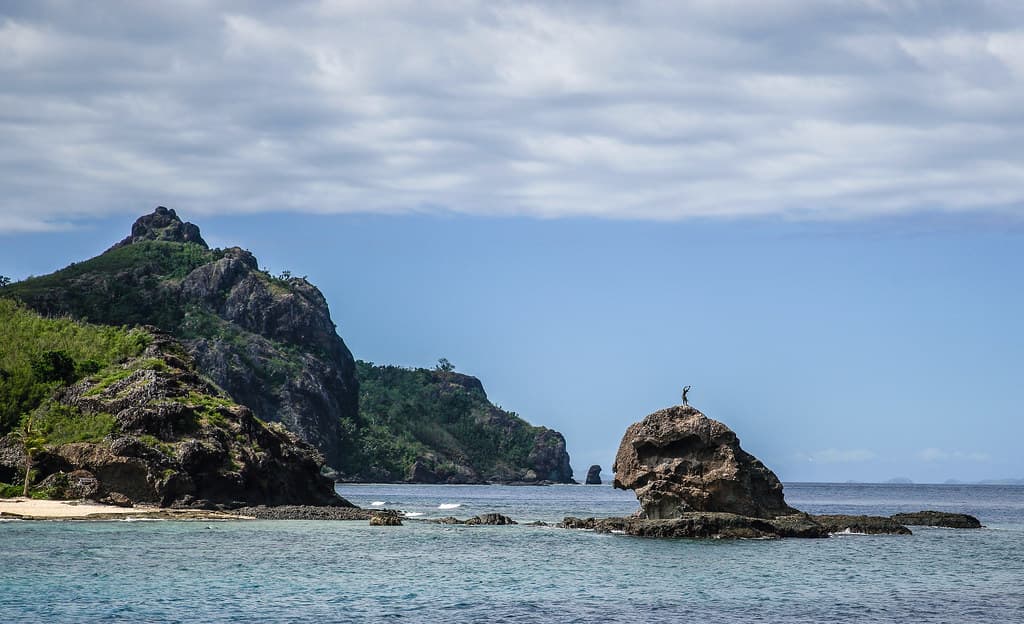
The trail from the main beach switchbacks through scrub and coconut palms, steep enough that you'll pause to catch your breath and admire the Yasawas arrayed to the south. When you crest the ridge, the southern cove reveals itself below: a tight curl of sand no more than fifty meters wide, hemmed by volcanic rock and backed by forest that grows to the tideline. The water is layered—turquoise in the shallows, deepening to cobalt where the reef drops away. Snorkeling here feels like trespassing on a private ecosystem. You'll drift above coral bommies encrusted with soft corals in violet and orange, watch clownfish dart into their anemone homes, spot the occasional hawksbill turtle sculling past. The reef sits close to shore, so even tentative swimmers can explore without venturing into deep water. There's no infrastructure—no umbrellas, no bar, no jet skis—just the hiss of wavelets on sand and the click of parrotfish grazing coral. Bring everything you need: water, snacks, sunscreen that won't poison the reef. The isolation is the point. When you've had your fill, the climb back over the ridge feels earned, and the busier north beach almost jarring by contrast. Kuata South Beach is a footnote in guidebooks, a place you'll keep to yourself or share only with fellow travelers who prize discovery over convenience.
Places, rentals, tours and events within walking and driving distance of Kuata South Beach.
Photos
Kuata South Beach offers relatively safe swimming in its sheltered cove setting, with calmer waters than exposed coastlines. The cove is known for snorkeling opportunities, with coral formations and marine life visible near the shore. Always exercise caution as there are no lifeguards on duty. Check conditions locally before entering the water, as currents can vary. When snorkeling, wear reef-safe sunscreen to protect the coral ecosystem and consider reef shoes for foot protection. Stay within designated swimming areas and avoid touching coral or marine life. Snorkel with a buddy for added safety.
The optimal time to visit Kuata South Beach is during Fiji's dry season from May to October, when underwater visibility is typically best for snorkeling and weather conditions are most stable. These months offer clearer skies, calmer seas, and comfortable temperatures for beach activities. Water temperatures remain warm year-round, typically 25-28°C, making snorkeling pleasant any time. For the quietest experience, visit during weekdays or shoulder months like May and September. Early morning hours often provide the calmest water and best visibility for observing marine life before afternoon breezes develop.
Kuata South Beach is accessed via Kuata Island in the Yasawa chain. Take the daily Yasawa Flyer ferry from Denarau Marina, which reaches Kuata Island in approximately two to three hours. Once on Kuata, the South Beach cove is away from the main arrival area, requiring a walk along coastal paths or arrangements with your resort for boat access. The island is small, so hiking to different beaches is feasible for most fitness levels. Check with your accommodation about the best route and whether any sections require careful navigation over rocky terrain.
Kuata Island has limited accommodation options, primarily small eco-resorts and backpacker lodges that cater to budget-conscious travelers and divers. Most operate on meal-plan basis, serving fresh seafood and Fijian cuisine in communal settings. These properties are typically located near the main beach area rather than directly at South Beach, requiring a short walk to reach this quieter cove. Facilities are basic but adequate, focusing on natural surroundings rather than luxury amenities. Book ahead, especially during peak season, and confirm meal arrangements as there are no independent restaurants or shops on the island.
Kuata South Beach's cove configuration creates a protected snorkeling environment with healthy coral formations close to shore, making it accessible even for beginners. The beach's location away from the main arrival area means less snorkeler traffic, allowing for more pristine coral conditions and undisturbed marine life viewing. You may encounter colorful reef fish, sea turtles, and diverse coral species without needing to venture far from the beach. The relative isolation and smaller visitor numbers compared to other Yasawa snorkel spots provide a more intimate underwater experience, ideal for those seeking discovery and tranquility.