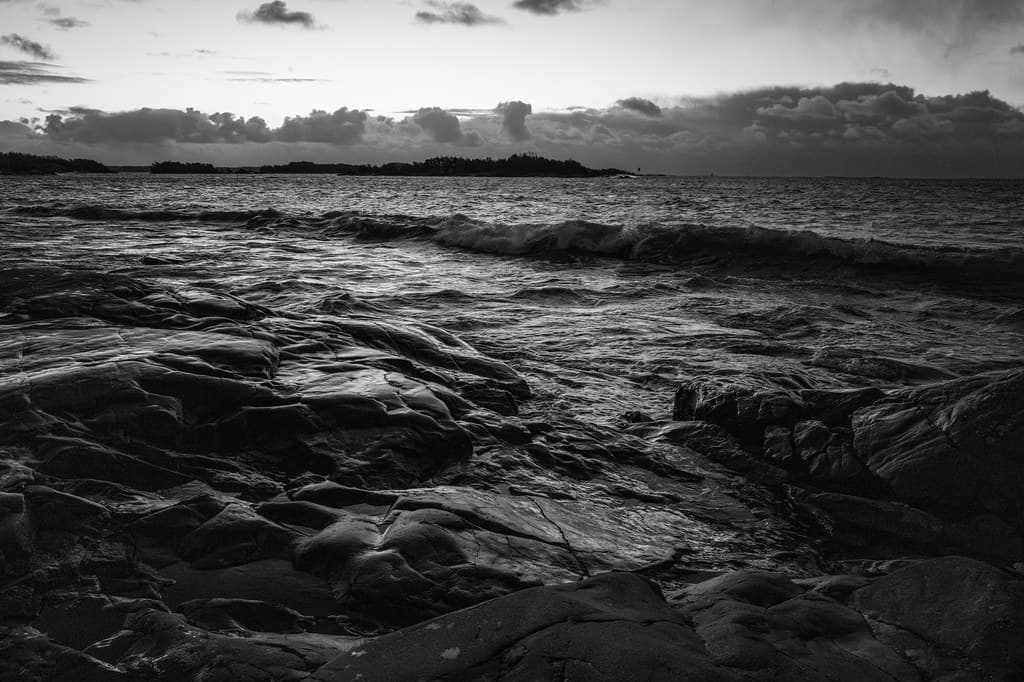
Counting the waves…
Counting the waves…
The ferry schedule dictates everything here. You arrive on Sottunga when the boat arrives—twice daily in summer, weather permitting—and the beach unfurls along the southern shore where the municipality's sixty souls have chosen not to pave, not to build kiosks, not to do much at all. The sand runs coarse and blond, interrupted by smooth boulders the glaciers left behind twelve thousand years ago. Spruce and pine lean in from the margins, their roots gripping thin soil over bedrock. You spread your towel between stones still warm from the brief northern sun, the water temperature hovering near sixteen degrees Celsius even in July. The bay shelters you from the open Baltic, but the wind still carries salt and the faint diesel note of a distant fishing boat. Locals swim here after sauna, their shouts sharp in the stillness. There's no snack bar, no umbrella rental, no lifeguard tower. You brought what you need in your daypack, or you buy cloudberries and hard cheese at the island's single store. When the last ferry sounds its horn, you're either staying the night at the guesthouse or you're leaving. Sottunga doesn't negotiate.
Places, rentals, tours and events within walking and driving distance of Sottunga Beach.
Photos
Sottunga Beach generally offers calm, safe swimming conditions typical of the sheltered Åland archipelago. The sandy bottom and gradual depth make it suitable for families with children. However, as with all Baltic Sea beaches, water temperatures remain cool even in summer (typically 15-18°C). There are no lifeguards on duty, so supervise children closely. Check local weather conditions before swimming, as occasional winds can create waves. The remote location means medical facilities are limited to the mainland, so exercise appropriate caution.
The best time to visit Sottunga Beach is June through August when temperatures are warmest and ferry services run most frequently. July offers the warmest water and longest daylight hours, but also peak visitor numbers. For fewer crowds while maintaining decent weather, visit in late June or late August. Early summer brings beautiful light nights, while late summer offers calmer seas. Spring and autumn see limited ferry connections and cooler temperatures. Always verify ferry schedules before planning your trip to this remote island location.
Sottunga Beach requires boat access as the island has no bridge connections. Take a ferry from Långnäs on mainland Åland, with services operated by Ålandstrafiken typically running several times daily during summer months (reduced off-season). The journey takes approximately 90 minutes. Once on Sottunga, the island is small enough to explore on foot or bicycle. Limited parking is available at the Långnäs ferry terminal on mainland Åland. Book advance tickets during peak summer season, and always confirm current ferry schedules before departure.
Sottunga is one of Åland's smallest municipalities with very limited facilities. Basic amenities exist in the small village, but don't expect extensive services. A small guesthouse and limited cottage rentals offer accommodation options—advance booking essential. There may be a small café or seasonal restaurant, but visitors should bring supplies from mainland Åland to be safe. No large supermarkets exist on the island. Public restrooms are limited. Most visitors come as day-trippers from other Åland islands or stay in self-catering accommodation with provisions brought from elsewhere.
Sottunga Beach's uniqueness lies in its extreme remoteness and authenticity—it's located in Åland's smallest municipality with only around 100 year-round residents. This isolation creates an unspoiled, peaceful atmosphere rarely found at more accessible beaches. The journey itself through the archipelago offers stunning island scenery. Unlike developed beach resorts, Sottunga provides a genuine island experience where nature dominates. The sandy beach is a rarity in this rocky archipelago region. It's ideal for travellers seeking solitude and authentic Finnish island culture over tourist infrastructure.