

Utö's southern shore occupies a geographic extreme—this is the last solid ground before open Baltic, the final granite outcrop of the Finnish archipelago. The exposure shapes everything: wind-stunted vegetation clinging to rock crevices, wave-smoothed ledges descending into water that darkens quickly to navy, the constant whisper and boom of swells arriving unobstructed from the Gulf of Finland. You stand on rock that's seen every storm, every shipping lane passage, every change in weather before it reaches the mainland.
“The southernmost swimming rocks of inhabited Finland, where geography creates both exposure and spectacular unobstructed sunset views.”
 Credit: Unsplash
Aerial view of turquoise tropical bay
The swimming here is for people who understand their limits. The water depth increases dramatically just meters from shore—two strokes and you're over your head, five strokes and the bottom has disappeared into darkness. Currents run stronger than on sheltered northern shores, created by water squeezing between island groups. You time your entry and exit carefully, watching for larger sets, using the rock's natural holds to pull yourself out when waves surge. The temperature runs colder than protected inlets, even in high summer.
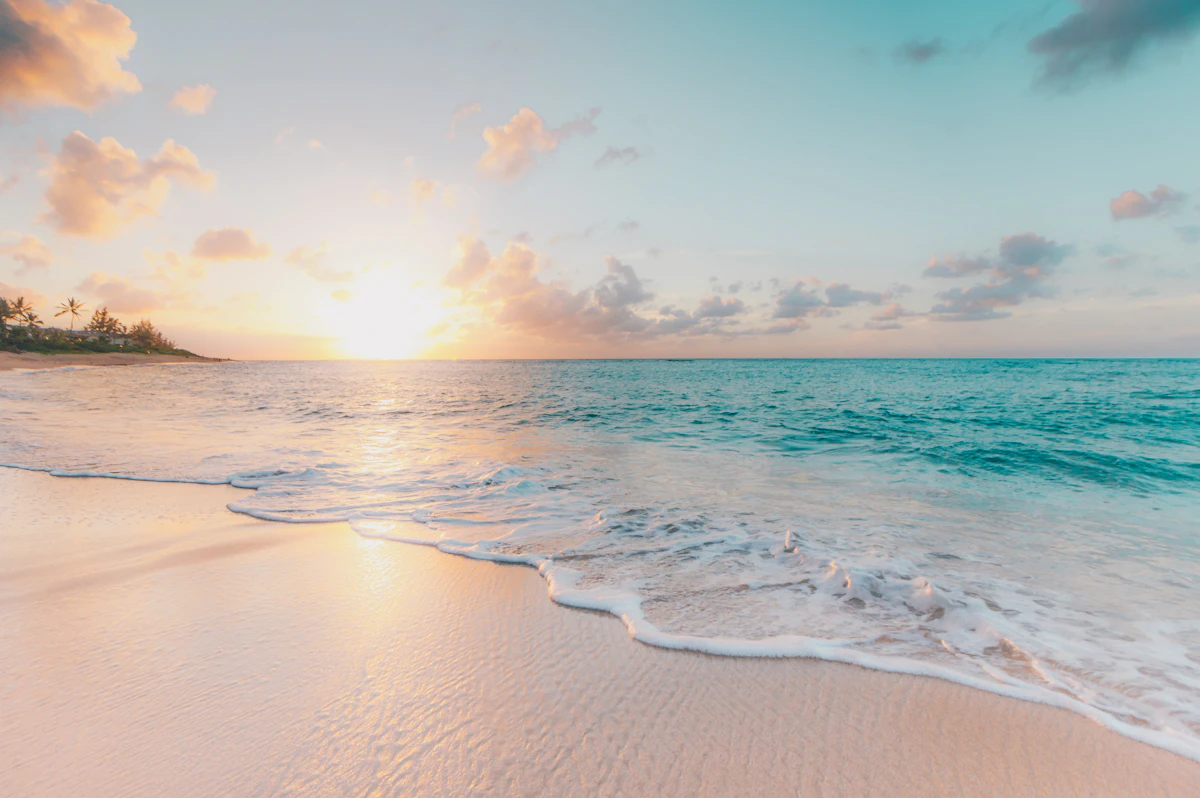
Sunset transforms the shore into something theatrical. You watch the sun descend toward the horizon with nothing blocking its path—no islands, no mainland, just the clean line where sky meets water. The granite takes on rose and copper tones, and for half an hour the whole southern sky performs. Gulls work the updrafts along the rocks, their white bodies brilliant against darkening water. Then the light drains west, stars emerge, and you understand why people cross so much water to reach this particular edge.


