Counting the waves…
Counting the waves…
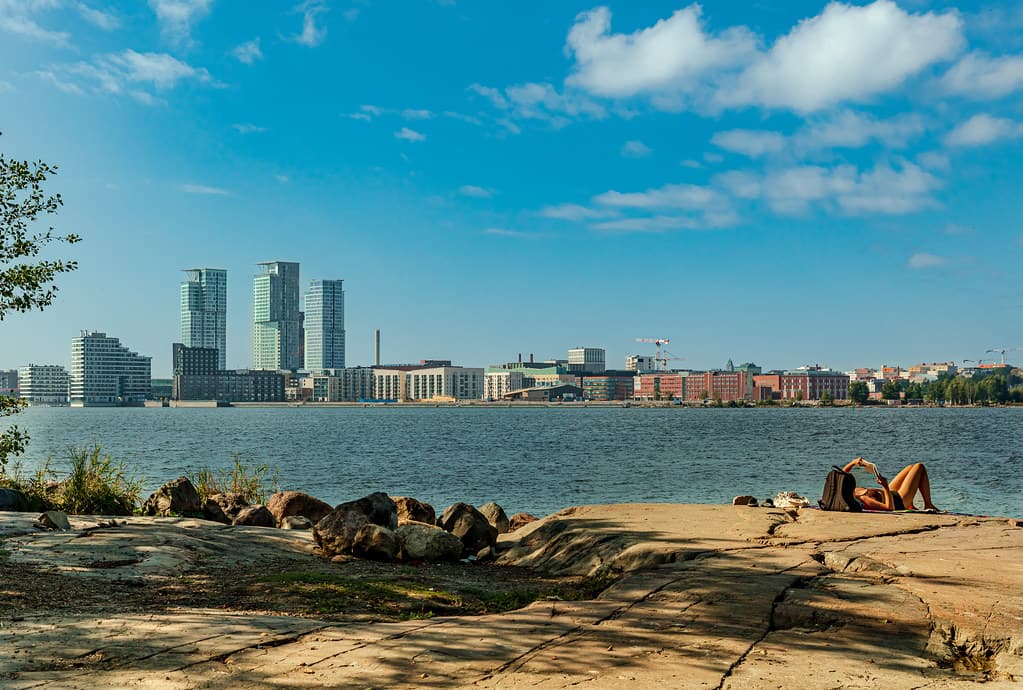
The granite here slopes into the water at angles that create natural steps, diving boards, and sun loungers depending on what you need. You've taken the bridge to Laajasalo, leaving central Helsinki behind for this eastern archipelago neighborhood where tourists rarely venture. The locals on the rocks nod acknowledgment but maintain the respectful distance that characterizes Finnish beach culture—proximity without intrusion. You choose a smooth section of stone that's been absorbing sunlight all afternoon, its warmth spreading through your towel into your back. The water below shifts between deep blue and green depending on depth and light, so clear you can watch small fish navigate between rocks. When you slip in, the cold hits immediately—Gulf of Finland temperatures never quite reach comfortable—but your body adjusts as you swim parallel to shore, arms pulling through the clean water. As evening approaches, the western sky begins its slow summer performance. The sun tracks toward the horizon, painting the water in shades of amber and rose that seem almost too vivid to be real. This is what the guidebooks miss: Helsinki's eastern shore catching the sunset across open water, the rocks still holding the day's heat, the city feeling distant despite being just kilometers away.
Places, rentals, tours and events within walking and driving distance of Laajasalo Beach.
Photos
Swimming at Laajasalo Beach requires more caution than sandy beaches due to its rocky nature. Wear water shoes to protect your feet when entering and exiting the water, as the shore has smooth rocks and stones. The water depth increases more quickly than at sandy beaches. There are no lifeguards, so swim only if you're confident in your abilities. The rocky bottom provides good visibility and the area is generally safe during calm weather, but avoid swimming during storms or high winds when waves crash against the rocks.
Laajasalo Beach faces southeast, offering beautiful evening light rather than direct sunset views over water. Visit during golden hour in summer, typically 7-9 PM, when warm light illuminates the Gulf of Finland. The best sunset reflections occur in June and July when the sun sets northwest but casts colourful skies overhead. Weekday evenings are quieter for photography and peaceful moments. Early mornings also offer serene conditions with sunrise light. Check sunset times seasonally, as they vary dramatically in Finland from late afternoon in winter to near-midnight in midsummer.
Laajasalo Beach is accessible via public transport from Helsinki centre. Take bus 86 or 90 from the city toward Laajasalo district, then walk to the shoreline depending on your specific beach access point. The journey typically takes 30-40 minutes. Cycling is an excellent option, with dedicated bike paths connecting eastern Helsinki in about 45 minutes. Drivers can use Laajasalontie road with limited street parking available. The area comprises several rocky shore access points rather than one defined beach, so research your exact destination beforehand.
Laajasalo is primarily residential with limited beach-side dining. Small local cafés and grocery stores serve the neighbourhood, mainly along Laajasalontie and near the Yliskylä metro station. For restaurants, return to central Helsinki or try the nearby island of Suomenlinna. Accommodation options in Laajasalo itself are scarce; most visitors stay in central Helsinki hotels or apartments and make a day trip. The area works best as a local swimming spot rather than a destination beach. Bring snacks and refreshments with you.
Locals favour Laajasalo Beach for its authentic, uncrowded character and natural rocky shoreline. While tourist beaches like Hietaniemi offer more facilities, Laajasalo provides a genuine neighbourhood swimming experience away from crowds. The rocky coast creates intimate swimming spots between boulders, offering more privacy than sandy expanses. It's ideal for sunbathing on warm rocks and enjoying peaceful Gulf views. The lack of tourist infrastructure means fewer people know about it, preserving its tranquil atmosphere. For Helsinkians, it represents the accessible, everyday coastal life that defines the city.