Counting the waves…
Counting the waves…

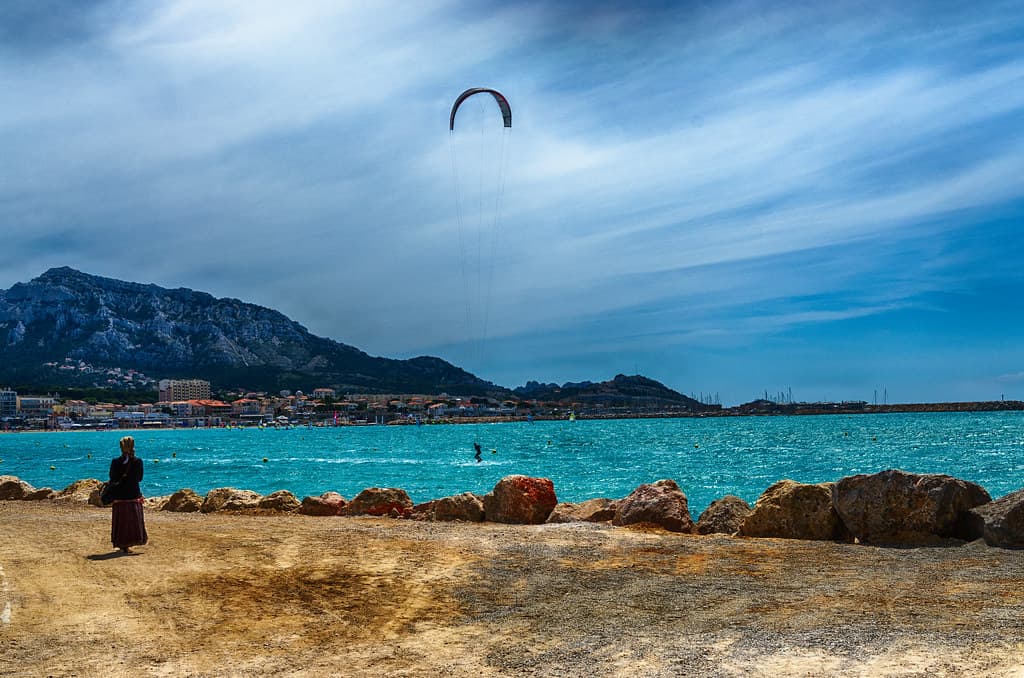
The trail from the nearest road winds through garrigue thick with thyme and cistus, then drops sharply over sun-bleached rock. You'll use your hands. When the path opens onto Calanque de l'Escu, the cove sits narrow and deep, its shoreline a mix of smooth pebbles and flat stone slabs where you spread your towel directly onto Provençal bedrock. The water shifts from jade at the shallows to ink-blue past the first shelf, cold enough in June to make you gasp. Most calanques draw weekend crowds from Marseille and Aix; this one remains overlooked because access requires attention and sturdy shoes. You'll share the space with a handful of locals who arrive early, swim long, and leave by noon. Limestone walls curve inward, creating natural shade by mid-afternoon and amplifying every sound—a snorkel exhale, the knock of a kayak hull, the scrape of a gull's landing. Bring everything you need in a daypack. No vendors, no umbrellas for rent, no footpath maintenance crews. The rock underfoot is sharp in places, soft where wind and sea have worked it smooth. You'll notice the water clarity once you're in: every stone on the bottom stays visible twenty feet down, and small fish move through the eel grass without hurry. This is Marseille stripped of postcard editing, just stone, sea, and the faint hum of cicadas from the maquis above.
Places, rentals, tours and events within walking and driving distance of Calanque de l’Escu.
Photos
Swimming at Calanque de l'Escu is generally safe during calm weather, with clear, deep waters ideal for experienced swimmers. However, there are no lifeguards, facilities, or easy exit points from the water. Rocky entry requires careful footing, and sudden weather changes can create dangerous conditions. Always check marine forecasts before visiting, avoid swimming alone, and be cautious of boat traffic in the calanque. The remote location means emergency services would take longer to arrive, so assess your swimming ability honestly before entering the water.
The optimal time to visit Calanque de l'Escu is May-June or September-early October when weather is pleasant, water is swimmable, and crowds are minimal. Summer months (July-August) offer warmest water but can bring more visitors and access restrictions due to fire risk. Winter visits are possible for hiking but water is too cold for most swimmers. Weekday mornings provide the most solitude year-round. Note that portions of the Calanques National Park may close during high fire danger periods, typically summer afternoons with strong winds.
Calanque de l'Escu is accessible primarily by boat or kayak from Marseille's ports, as there's no practical hiking trail directly to this remote calanque. Some visitors join boat tours departing from Marseille's Vieux Port or Cassis that stop at various calanques. Experienced kayakers can paddle from Marseille, though the distance requires good fitness and sea conditions awareness. The calanque's remoteness is precisely what keeps visitor numbers low. Always inform someone of your plans when visiting isolated calanques and check weather conditions before departure.
Calanque de l'Escu has no facilities, restaurants, or accommodations on-site—it's a pristine, undeveloped natural area. Visitors must bring all food, water, and supplies, and pack out all waste. The nearest restaurants and lodging are in Marseille, approximately 10-15 kilometers away, offering everything from budget hostels to luxury hotels and diverse dining options. Cassis, another nearby town, also provides accommodation and restaurants. Plan to be completely self-sufficient during your visit, bringing ample water, snacks, sun protection, and any gear you'll need for the day.
Calanque de l'Escu stands out for its exceptional remoteness and pristine, untouched character among the Marseille calanques. Its difficult access keeps visitor numbers remarkably low, offering an experience closer to true wilderness than more famous calanques like Sormiou or Sugiton. The isolation means you'll likely have crystal-clear snorkeling waters largely to yourself, with excellent visibility and diverse marine life. The dramatic limestone cliffs create an intimate, enclosed atmosphere. This calanque appeals specifically to adventurous travelers seeking solitude and willing to make the extra effort required to reach genuinely hidden coastal spots.