Counting the waves…
Counting the waves…

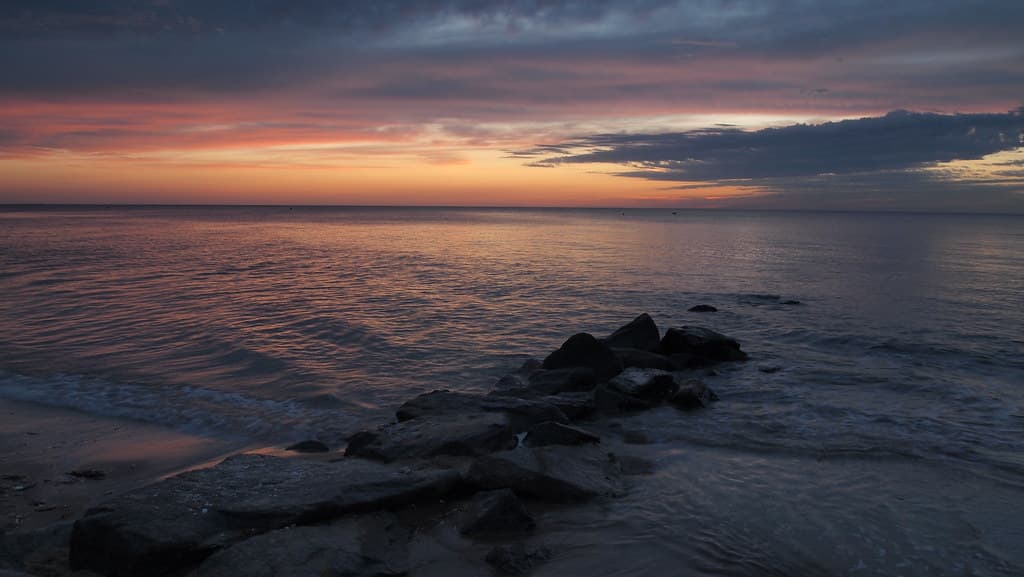
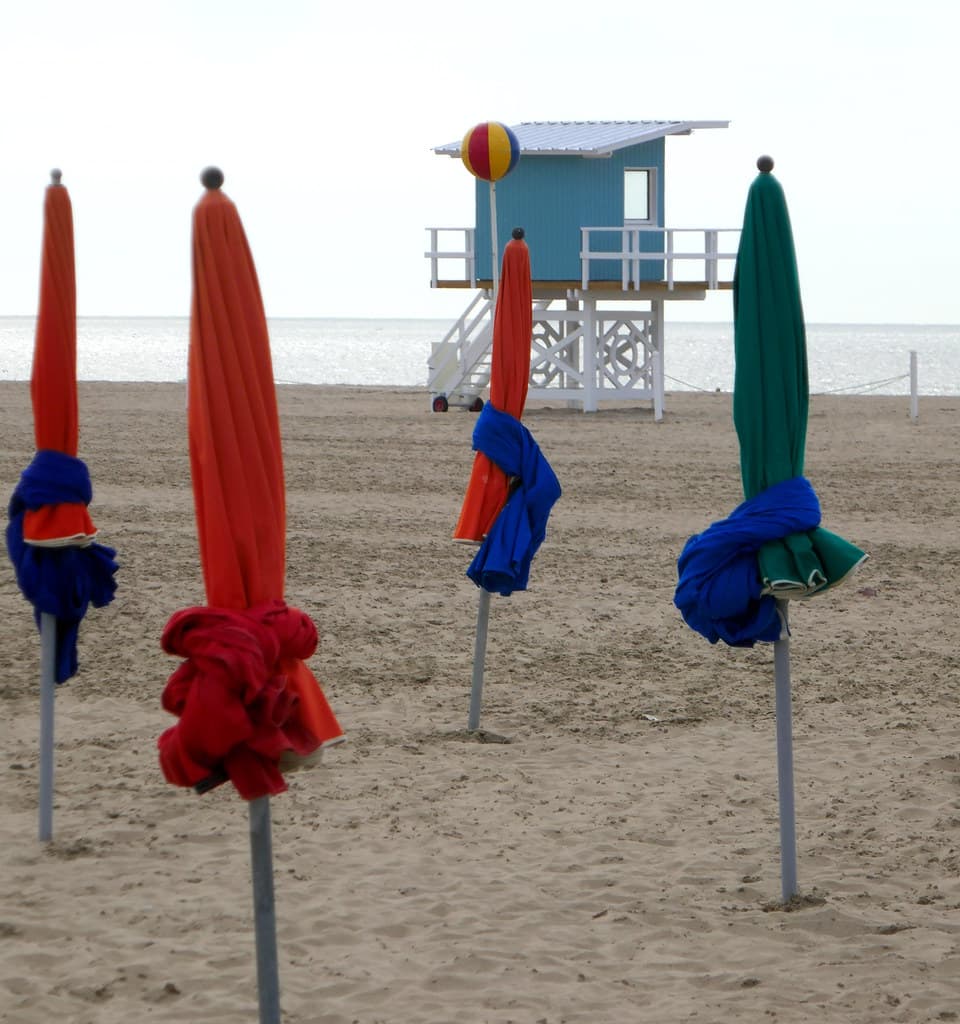
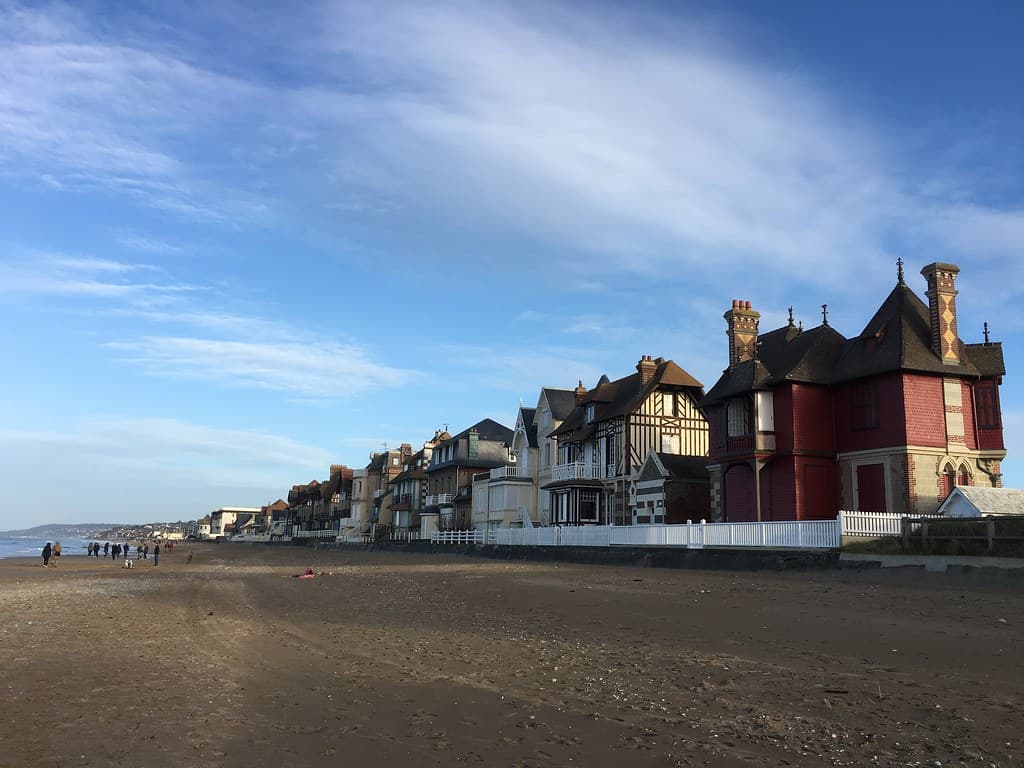
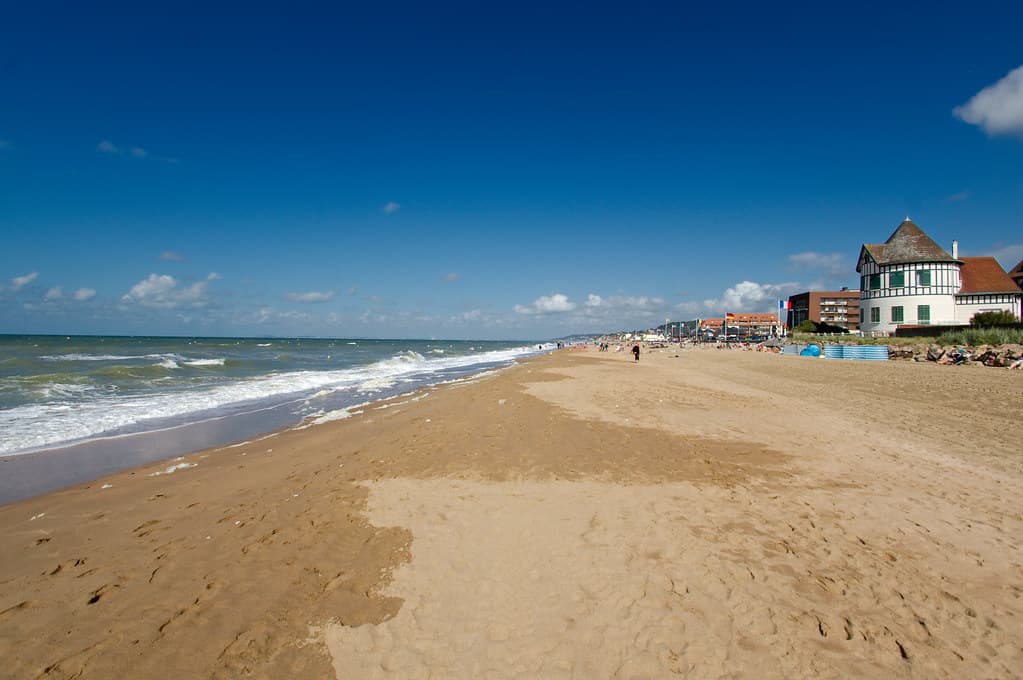
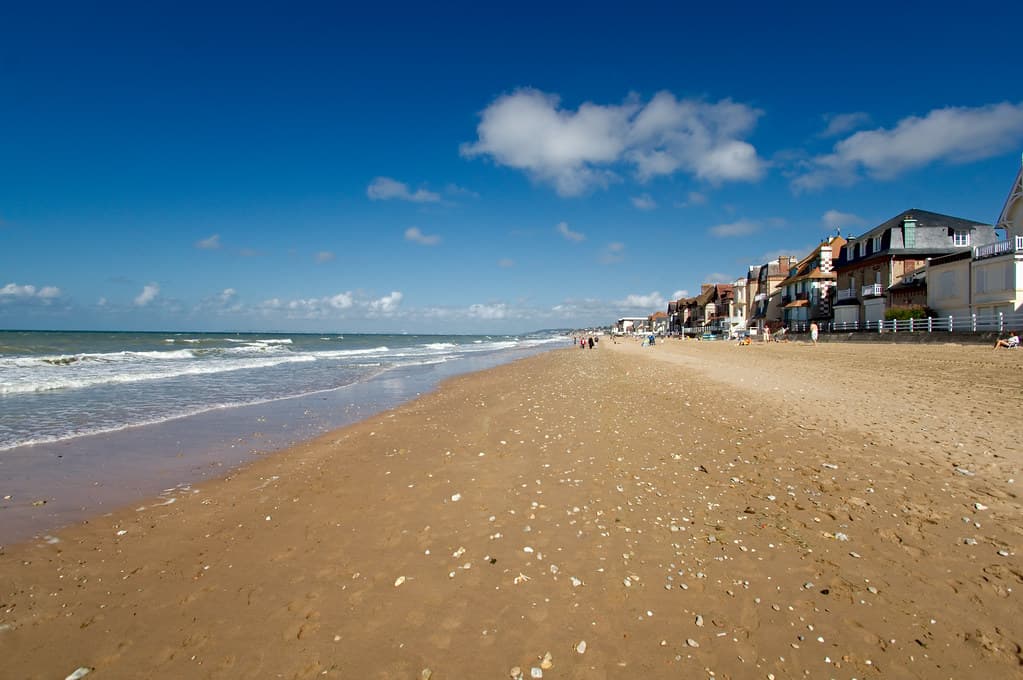
The beach at Villers-sur-Mer unfolds in a wide crescent beneath the Vaches Noires cliffs, their dark clay faces streaked with chalk and riddled with fossils dating back 160 million years. At low tide, the strand stretches nearly two hundred meters seaward, exposing rock shelves and shallow pools where periwinkles cling to slick stones. Families stake claim near the timber breakwaters, while dog-walkers trace the firm sand at the waterline, dodging the foam of small breakers rolling in from the Channel. The promenade runs parallel to the beach, lined with brasseries serving moules-frites and glass-fronted apartments that catch the afternoon sun. Unlike the glamour of neighboring Deauville, Villers retains a quieter, more accessible rhythm—pensioners read newspapers on benches, teenagers volley a football near the lifeguard station, and vendors sell waxed-paper cones of frites with mayonnaise. The beach clubs still rent candy-striped tentes, wooden changing huts that nod to the town's turn-of-the-century resort roots. Come evening, the westward view opens toward Trouville, and the sinking sun paints the wet sand copper and rose. The tide reclaims the flats slowly, erasing footprints and filling the hollows around half-buried driftwood. You'll hear the clatter of boules from the esplanade, smell buttery crêpes from a nearby stand, and feel the cool offshore breeze that makes Normandy summers bearable.
Places, rentals, tours and events within walking and driving distance of Plage de Villers-sur-Mer.
Photos
Plage de Villers-sur-Mer is generally considered family-friendly with lifeguard supervision during summer months (typically July-August). The beach has a gentle slope and relatively calm waters at high tide, making it suitable for children. However, the Normandy coast experiences significant tidal ranges, so swimming conditions vary. At low tide, the water recedes considerably, exposing rocky areas. Always check local tide times and weather conditions before swimming, supervise children closely, and stay within designated swimming zones when lifeguards are present.
Summer (June-September) offers the warmest weather and full amenities, with temperatures reaching 18-22°C, though the English Channel remains cool for swimming. July and August are busiest with lifeguards on duty. Spring and autumn provide peaceful beach walks with mild temperatures and dramatic coastal scenery. The beach is accessible year-round and beautiful in winter for bracing walks, fossil hunting after storms, and stunning sunsets, though most facilities close off-season. The Normandy coast can be windy and rainy any time, so pack layers.
Villers-sur-Mer is located between Deauville and Cabourg on Normandy's Côte Fleurie. By car from Paris, take the A13 motorway (approximately 2.5 hours). The beach has several parking areas along Boulevard de la Mer and near the town center, with both free and paid options available depending on season. By train, take services to Villers-sur-Mer station (connections from Paris Saint-Lazare via Lisieux), which is a short walk from the beach. During summer, parking fills quickly, so arrive early or use public lots slightly inland.
The beachfront promenade features several restaurants, crêperies, and cafés serving fresh seafood and Norman specialties. You'll find beach clubs offering chair rentals and refreshments during summer. The town center, just steps from the beach, has bakeries, ice cream shops, supermarkets, and a covered market. Amenities include public restrooms, showers, and changing cabins near the beach. Accommodation ranges from beachfront hotels to vacation rentals and campgrounds. The tourist office on Place Jean Mermoz provides information and services. Most establishments reduce hours or close outside peak season.
Yes, Villers-sur-Mer is renowned for fossil hunting along the Vaches Noires cliffs at the western end of the beach. The dark clay cliffs contain Jurassic-era fossils (around 160 million years old), including ammonites, belemnites, and occasionally marine reptile remains. The best time is at low tide after storms when erosion reveals new specimens. The town's Paleospace museum showcases significant finds and provides context. Hunt responsibly near the cliff base on the beach (not on unstable cliffs), and be aware of tide times to avoid being cut off.