Counting the waves…
Counting the waves…
A refined fusion of water purity, environmental stability, and communal vibrancy for Plage de la Giraudière.
View MethodologyAnalyzed via live sensors and environmental data.
Wave height, wind, and atmospheric stability.
Live footfall and crowd balance metrics.
Community reviews and curated sentiment.
“You'll feel the west wind first—salt-edged, persistent, carrying the low rumble of Atlantic swells. The sand stretches north and south until it blurs into heat shimmer, interrupted only by wooden groynes dark with…”
Limited recent visitor reports — live OBI telemetry is your best guide for current conditions.
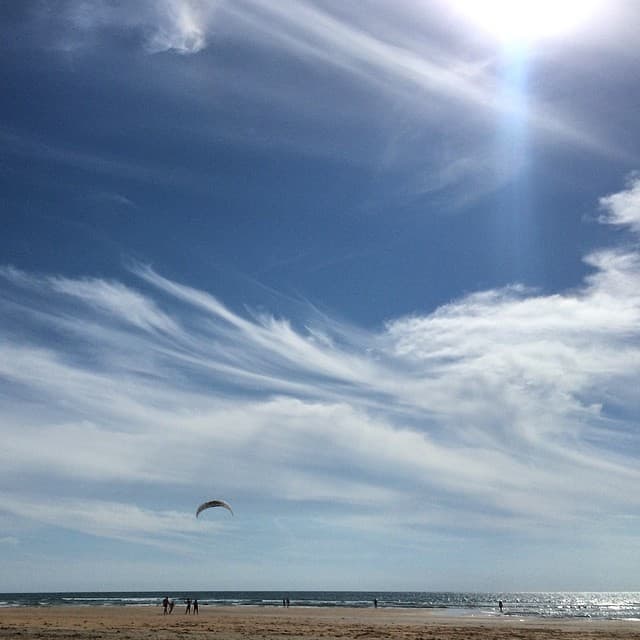
The beach announces itself from the dune crest: a broad crescent of blonde sand facing open ocean, unmarked by rocks or reef. Wind shapes everything here—the marram grass leans east, the waves comb in at angles, and even the umbrellas need anchoring. Families claim spots near the supervised swim zones marked by red and yellow flags, while surfers shoulder their boards toward the northern groynes where sandbars sculpt shifting peaks.
By late afternoon the light changes. The sun drops toward the horizon, backlighting the spray kicked up by closeout sets, and the beach empties just enough that your footprints stay visible for minutes instead of seconds. Gulls work the tideline. The smell of frying galettes drifts from the beachfront snack bar, mixing with sunscreen and the iodine tang of exposed seaweed.
 Credit: Unsplash
boats on the beach
 Credit: Unsplash
A group of people standing on top of a sandy beach
Sandbars shift with each tide
Five kilometres of unbroken sand
Backlit spray and orange horizons
Prime Visitation
surf beach day + long walk
Where it is
Plage de la Giraudière
Le Grand-Village-Plage, Charente-Maritime, France
45.861900°, -1.261700°
Weather
Loading…
Swell
—
Temp
Warm · Restorative
UV Index
Moderate
Wind
—
Tidal State
Last known
Max Sunlight
—
Ideal Shade
—
May - Sep (Peak)
Jan - Dec (Off-season)
surf beach day + long walk
Select a category to load nearby places.
Unlock restaurants, luxury stays and curated maritime experiences within 2km
Plage de la Giraudière faces the open Atlantic, which means conditions can vary considerably. During calm summer days, families can enjoy the beach, but Atlantic swells bring surf and stronger currents that require careful supervision of children. Lifeguards typically patrol during summer months (July-August), making supervised swimming much safer. Always check the flag system before entering the water, swim only in designated areas, and keep young children within arm's reach. The beach is better suited for confident swimmers; families with small children may prefer calmer beaches on Oléron's eastern shore.
The peak season runs from late June through August, offering the warmest weather and full services including lifeguards. However, many visitors prefer late spring (May-June) or early autumn (September) for fewer crowds and still-pleasant temperatures. Surfers find autumn and winter swells most exciting. Sunset is spectacular year-round on this west-facing beach, with the sun dropping directly into the Atlantic horizon. For long beach walks, low tide exposes extensive firm sand ideal for strolling. Check tide tables to time your visit, as the beach transforms dramatically between high and low tide.
Plage de la Giraudière sits on the western coast of Île d'Oléron, accessible via the iconic viaduct bridge connecting the island to the mainland near Marennes. Once on the island, follow signs to Le Grand-Village-Plage. The beach has parking areas that fill quickly in summer; arrive early morning for the best spots. If cycling, Oléron's extensive bike paths make the beach easily accessible from surrounding villages. Public buses serve the island during summer, though a car offers most flexibility for exploring multiple beaches. From La Rochelle, the drive takes approximately 90 minutes.
Le Grand-Village-Plage offers several beachfront restaurants and cafés serving fresh seafood, particularly oysters from nearby Marennes-Oléron beds. You'll find casual beach bars perfect for lunch alongside more formal dining options in the village center. Many establishments specialize in regional cuisine including moules-frites and local fish. For accommodation, the village has family-run hotels, vacation rentals, and camping sites, many within walking distance of the beach. Nearby Saint-Pierre-d'Oléron and Saint-Trojan-les-Bains offer additional dining and lodging options. Book summer accommodation well in advance, as Oléron is a popular French holiday destination.
Plage de la Giraudière stands out as one of Oléron's premier Atlantic-facing surf beaches, offering consistent waves that attract surfers while other beaches on the island's eastern side remain calm. The expansive sandy shoreline becomes exceptionally wide at low tide, perfect for long beach walks that seem to stretch endlessly. Its west-facing orientation delivers stunning sunsets directly over the ocean, a feature not found on the island's sheltered eastern beaches. The combination of surf culture, dramatic Atlantic energy, and beautiful natural setting creates an atmosphere distinct from the gentler, family-oriented beaches elsewhere on Oléron.
Photos