Counting the waves…
Counting the waves…
A refined fusion of water purity, environmental stability, and communal vibrancy for Cala di Labra.
View MethodologyAnalyzed via live sensors and environmental data.
Wave height, wind, and atmospheric stability.
Live footfall and crowd balance metrics.
Community reviews and curated sentiment.
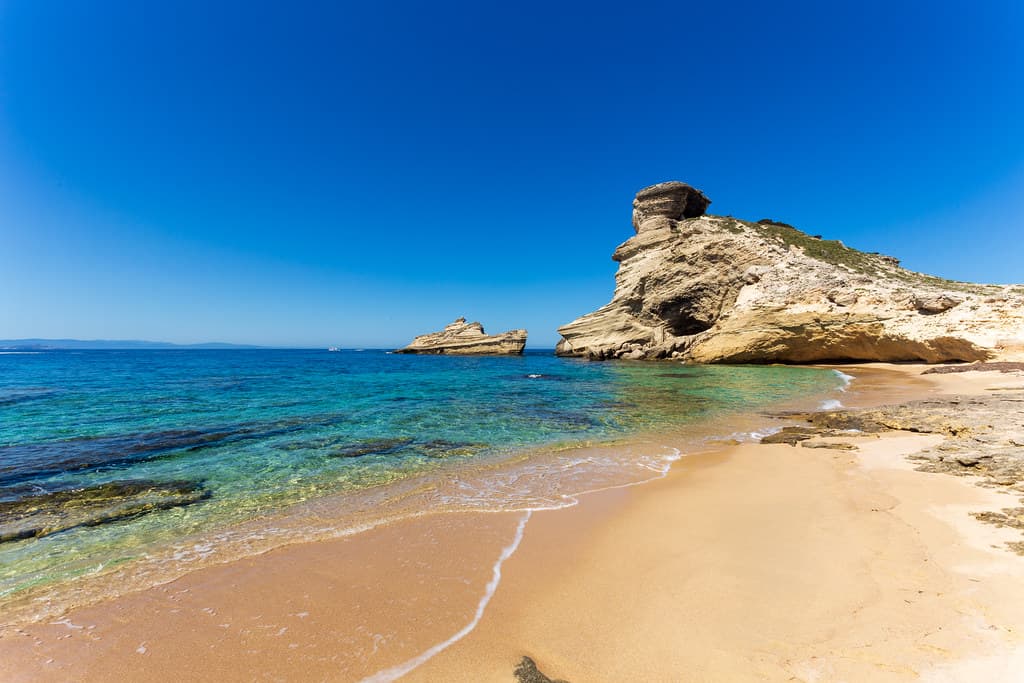
“You'll know you've arrived when the scrub opens onto a pocket of sand no wider than a tennis court. The water here shifts from sapphire to cobalt depending on the depth of the granite shelf below.”
Limited recent visitor reports — live OBI telemetry is your best guide for current conditions.
The approach winds through maquis thick enough to brush your shins, releasing scents of myrtle and immortelle with every step. When the vegetation thins, Cala di Labra appears—a crescent of sand tucked between rust-streaked cliffs that glow orange in afternoon light. The beach itself barely holds a dozen towels, and most summer days you'll share it with gulls and the occasional kayaker cutting across from Piantarella.
Wade in and the seabed reveals itself in geometric clarity: sea grass swaying in channels, white sand rippled by last night's current, dark patches where posidonia meadows anchor the ecosystem. The water temperature climbs fast in the shallows, but swim fifteen metres out and you'll hit cooler currents funneling through the gap between the headlands. Snorkelers work the western rocks, where damselfish dart between algae and the occasional octopus retreats into crevices.
 Credit: Unsplash
a view of a beach from a hill overlooking the ocean
 Credit: Unsplash
A view of a beach and ocean from a hill
Damselfish and posidonia meadows
Cooler currents between headlands
Orange limestone against blue water
Prime Visitation
Best Weather|Less Crowds
Where it is
Cala di Labra
Bonifacio, Corse-du-Sud, France
41.391700°, 9.236300°
Weather
Loading…
Swell
—
Temp
Warm · Restorative
UV Index
Moderate
Wind
—
Tidal State
Last known
Max Sunlight
—
Ideal Shade
—
May - Sep (Peak)
Jan - Dec (Off-season)
Best Weather|Less Crowds
Select a category to load nearby places.
Unlock restaurants, luxury stays and curated maritime experiences within 2km
Cala di Labra typically provides safe swimming conditions due to its sheltered cove location and generally calm, clear waters. The small size and protected position minimize strong currents and large waves, making it suitable for confident swimmers and snorkelers. However, rocky areas around the cove require caution when entering and exiting the water—water shoes are highly recommended. Always assess current weather and sea conditions before swimming, as Mediterranean weather can change quickly. Supervise children carefully, and be aware that this beach lacks lifeguards and emergency facilities due to its remote nature. Avoid swimming during rough weather.
Visit Cala di Labra between June and September for optimal weather, warm water temperatures, and reliable sunshine. Peak summer months (July-August) offer the best swimming conditions but attract more visitors to the Bonifacio region. For a quieter experience with still-pleasant weather, choose June or September when crowds thin considerably. Early morning visits reward you with serene ambiance and excellent snorkeling visibility. The beach remains accessible year-round, but autumn and winter bring cooler temperatures, unpredictable weather, and cold water unsuitable for most swimmers. Spring can be beautiful for coastal walks but water remains chilly.
Cala di Labra is located near the more well-known Piantarella area, accessible by car from Bonifacio. Drive toward Piantarella beach, then look for coastal paths or small access points leading to this smaller cove. The exact route may involve walking along coastal trails from nearby parking areas, as direct vehicle access is typically unavailable. A GPS device with detailed maps or local guidance helps locate this hidden spot. Some visitors arrive by kayak or small boat from Piantarella or Bonifacio harbor. Wear appropriate footwear for potentially uneven terrain, and allow extra time for exploration and route-finding.
Cala di Labra has no on-site facilities, so bring all essentials including food, drinking water, and snorkeling equipment. The closest amenities are at Piantarella beach, which may have seasonal beach bars or mobile vendors during summer. Bonifacio town, approximately five to seven kilometers away, offers extensive dining options featuring fresh seafood and Corsican specialties, plus supermarkets for picnic supplies. Accommodation ranges from luxury hotels to vacation rentals, guesthouses, and campgrounds throughout the Bonifacio area. Piantarella and surrounding areas also feature some vacation properties. Stock up before heading to this remote cove.
Cala di Labra's primary appeal lies in its intimate size and relative anonymity, offering an escape from busier Bonifacio beaches like Piantarella and Sperone. The exceptionally clear turquoise water provides outstanding snorkeling opportunities with excellent visibility to observe Mediterranean marine life and underwater rock formations. Its proximity to Piantarella means easier access than some remote coves while maintaining a secluded atmosphere. The small scale creates a sense of personal discovery, as if you've found your own private slice of Corsican coastline. This combination of accessibility and tranquility makes it particularly valuable for travelers seeking authentic, uncrowded coastal experiences.
Photos