Counting the waves…
Counting the waves…
A refined fusion of water purity, environmental stability, and communal vibrancy for Plage d'Erbaju.
View MethodologyAnalyzed via live sensors and environmental data.
Wave height, wind, and atmospheric stability.
Live footfall and crowd balance metrics.
Community reviews and curated sentiment.
“The beach stretches wider than expectation, backed not by development but by a tawny plain of scrub and stone. Wind scours the surface, the sea runs unfiltered from Africa, and you feel the island's spine at your back.”
Limited recent visitor reports — live OBI telemetry is your best guide for current conditions.
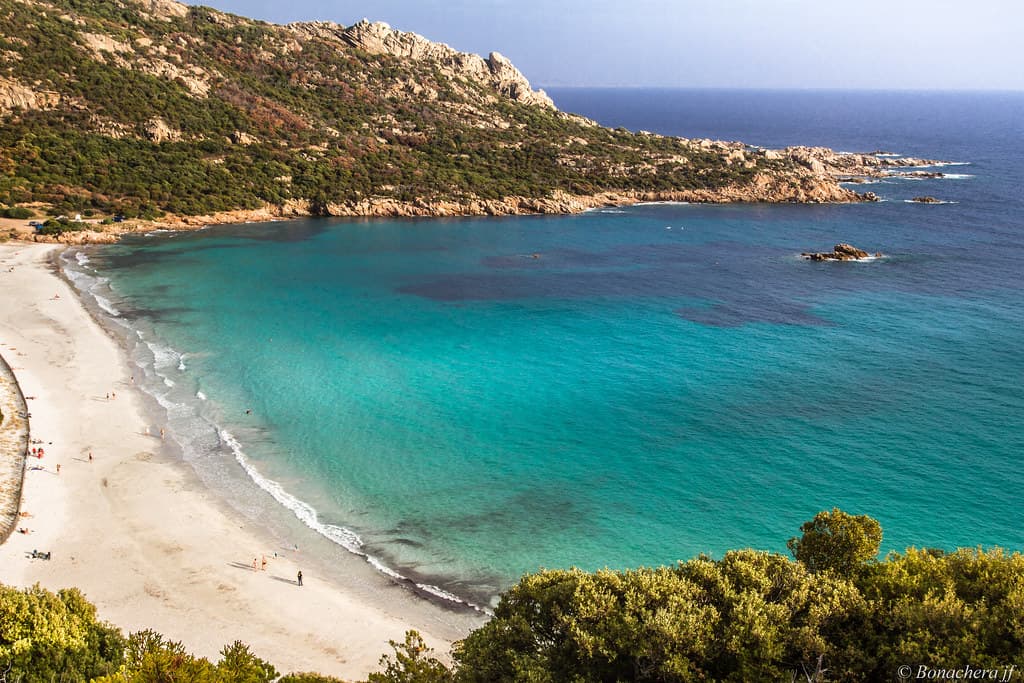
Erbaju doesn't ease you in. You'll arrive across a rutted track through grazing land, and when the beach reveals itself it does so all at once: a broad sweep of sand the color of bone, waves marching in from the southwest in orderly ranks, the horizon empty of boats or landmarks. Behind you, the land rises in folds of sun-bleached grass and granite, the mountains of the interior a blue suggestion in the north. This is Corsica unadorned, the interface between stone and sea with nothing softening the transaction.
The sand is coarse enough to scrub your feet clean, and wide enough that you can walk a hundred meters from the dune line to the water's edge. The waves have authority here—this coast catches the fetch from the Balearics—and the shore break crashes with a percussion you feel in your sternum. You'll swim only if you're strong and the wind has dropped; mostly you'll walk, collect driftwood sculpted to abstract forms, let the scale recalibrate your sense of proportion.
 Credit: Unsplash
a view of a beach from a hill overlooking the ocean
 Credit: Unsplash
A view of a beach and ocean from a hill
Hundred-meter sand crossing
Abstract wave-carved forms
Powerful southwest swell
Prime Visitation
Best Weather|Less Crowds
Where it is
Plage d'Erbaju
Monacia-d'Aullène, Corse-du-Sud, France
41.471900°, 8.966400°
Weather
Loading…
Swell
—
Temp
Warm · Restorative
UV Index
Moderate
Wind
—
Tidal State
Last known
Max Sunlight
—
Ideal Shade
—
May - Sep (Peak)
Jan - Dec (Off-season)
Best Weather|Less Crowds
Select a category to load nearby places.
Unlock restaurants, luxury stays and curated maritime experiences within 2km
Swimming conditions at Plage d'Erbaju depend on weather and wind. The beach is exposed to southwest winds, which can create waves and currents. On calm days, the spacious sandy shore offers good swimming conditions. However, there are no lifeguards on duty, so swimmers should exercise caution and check local conditions before entering the water. The wild, undeveloped nature means fewer safety amenities, so families with young children should supervise closely and avoid rough sea days.
The best time to visit Plage d'Erbaju is from June to September for warm weather and calm seas. May and early October offer pleasant temperatures with fewer crowds, ideal for those seeking a more peaceful experience. Summer months (July-August) provide the warmest water and most reliable sunshine, though you'll find more visitors. Early mornings and late afternoons in peak season offer the best combination of good conditions and relative tranquility on this spacious beach.
Plage d'Erbaju is accessible by car from Monacia-d'Aullène in southern Corsica. From Sartène, take the D48 road south toward the coast. The final approach typically involves a dirt track, so a vehicle with good clearance is recommended. Parking is usually informal near the beach access. The remote location means public transport options are very limited, making a rental car essentially necessary. The journey rewards visitors with spectacular coastal scenery along the way.
Plage d'Erbaju is a wild, undeveloped beach with no on-site facilities, restaurants, or accommodations. Visitors should bring all necessary supplies, including food, water, and sun protection. The nearest amenities are in Monacia-d'Aullène or Sartène, where you'll find hotels, gîtes, and restaurants. Some travelers stay in nearby coastal villages or camp in designated areas. The beach's remote character is part of its appeal, but requires advance planning for meals and lodging.
Plage d'Erbaju stands out for its wild, unspoiled character and strong southwest Corsica identity. Unlike more developed beaches, it remains spacious and uncrowded, offering an authentic experience of Corsica's rugged coastline. The beach's position south of the famous Roccapina area provides stunning natural scenery without the tourist infrastructure. Its remote location and lack of facilities attract travelers seeking solitude and a genuine connection with Corsica's dramatic coastal landscape, making it ideal for those who value nature over convenience.
Photos