Counting the waves…
Counting the waves…
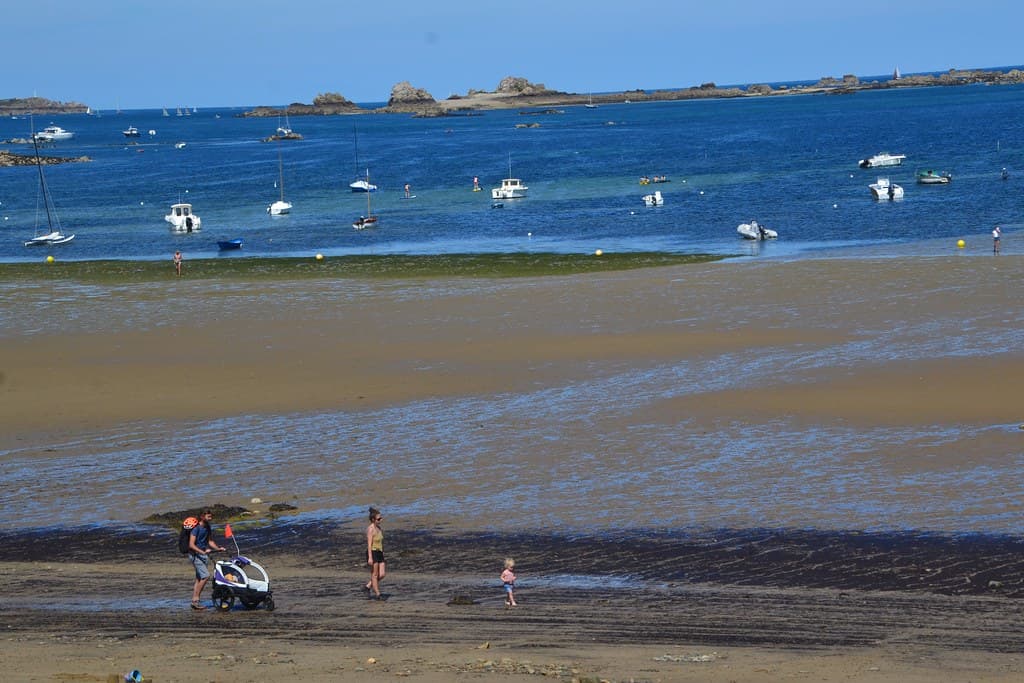
The ferry from Pointe de l'Arcouest deposits you at Port Clos itself—this working harbour doubles as one of Île-de-Bréhat's loveliest swimming coves. Walk fifty paces from the landing stage and you're already sinking toes into coarse sand mixed with crushed shells, the kind that squeaks underfoot. Granite boulders, smoothed by centuries of tides, divide the beach into nooks where families claim territory among the rockpools. At low tide, the waterline retreats to expose ribbed sand flats and clusters of mussels clinging to stone. Pine trees lean eastward from decades of Atlantic wind, their resin scent mixing with salt and the faint diesel trace of returning trawlers. The water here stays calmer than Brittany's outer coasts—Port Clos faces southeast, sheltered by the island's northern mass and the scatter of offshore îlets. On August afternoons the shallows turn bathtub-warm, though even in June you'll find locals wading in without wetsuits, their towels spread on sun-heated granite. Sunset paints the harbour in apricot light that catches the white hulls of sailboats and gilds the Paimpol coast visible across the channel. The last ferry departs at seven in summer, and if you've booked a night on Bréhat, you'll have Port Clos nearly to yourself—just the lap of water against mooring lines and the occasional clatter of rigging as wind shifts.
Places, rentals, tours and events within walking and driving distance of Plage de Port Clos.
Photos
Plage de Port Clos is generally safe for swimming, with calm, sheltered waters protected by the surrounding coastline. The beach is suitable for families with children due to its gentle slope and clear conditions. However, always check local tide times, as tidal ranges in Brittany can be significant. There are no lifeguards on duty, so swim at your own risk and stay aware of changing conditions. The rocky areas around the beach can be slippery, so wear appropriate footwear when exploring.
Île-de-Bréhat enjoys a mild microclimate year-round, making Plage de Port Clos accessible in all seasons. Summer (June-August) offers warm temperatures ideal for swimming and sunbathing, but expect more visitors. Spring and autumn provide pleasant weather with fewer crowds, perfect for peaceful walks and photography. Winter visits are tranquil, though swimming may be too cold for most. The beach is particularly stunning at sunset. Check ferry schedules, as they vary seasonally, with reduced service in winter months.
Plage de Port Clos is only accessible by boat, as it's located on car-free Île-de-Bréhat. Take a ferry from Pointe de l'Arcouest (near Paimpol); crossings take about 10 minutes. Park your car at the mainland parking areas near the ferry terminal (paid parking available). Once on the island, walk or rent a bicycle—Port Clos is roughly 20-30 minutes on foot from the main arrival port. Follow island paths westward toward the beach. No cars or motor vehicles are permitted on Bréhat.
Plage de Port Clos itself has no facilities, so bring your own supplies. The main village on Île-de-Bréhat, near the ferry landing, has several restaurants, crêperies, cafés, and small shops where you can buy picnic provisions. Limited accommodations exist on the island, including small hotels, chambres d'hôtes, and vacation rentals—book well ahead during summer. Many visitors day-trip from the mainland. The island has public restrooms near the port area. Plan accordingly, as amenities are minimal outside the main village.
Yes, Plage de Port Clos offers spectacular sunset views thanks to its west-facing position. The beach provides an unobstructed view across the water, with the sun setting over the Atlantic horizon. The pink granite rocks characteristic of this Breton coastline glow beautifully in golden hour light, creating excellent photography opportunities. Arrive early to secure a good spot, especially during summer. Remember to check the last ferry departure time before planning an evening visit, as you'll need to return to the mainland unless staying overnight on the island.