Counting the waves…
Counting the waves…

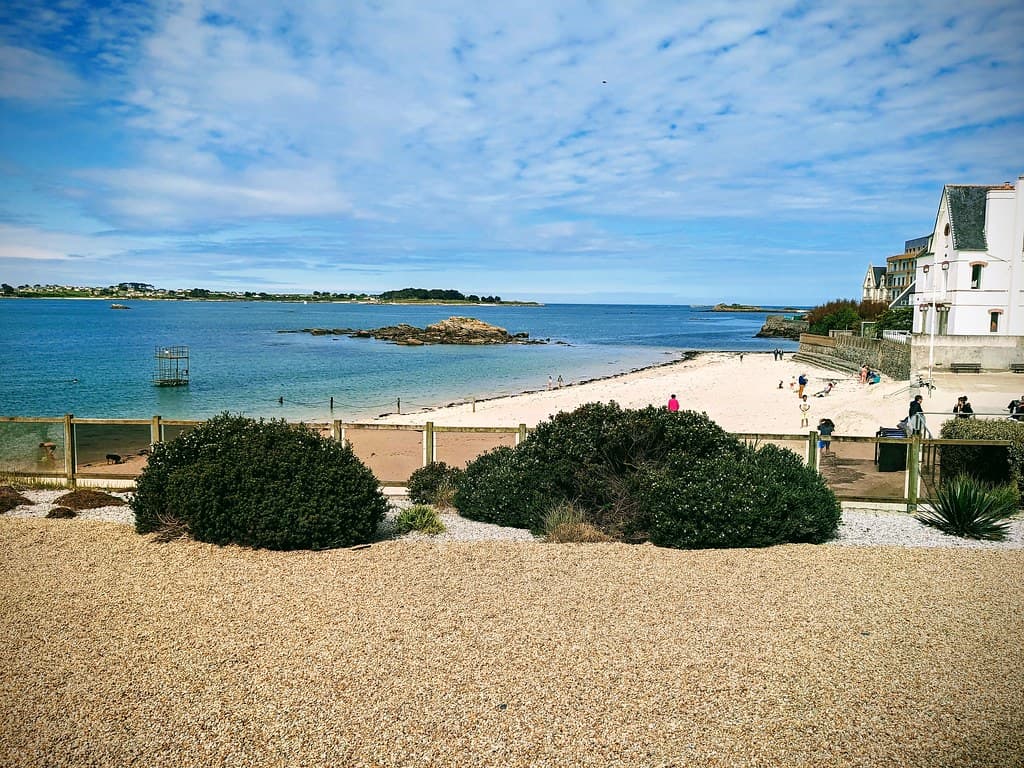
The name promises Polynesia but delivers something better: a sweep of fine, nearly white sand flanked by granite outcrops and shallow turquoise pools that appear at low tide. You'll find your spot among the beach cabanas and striped windbreaks, the scent of iodine and warmed seaweed drifting up as the tide recedes. Children crouch in tidal basins hunting for crabs while gulls wheel overhead, their cries mingling with the steady percussion of small waves. The water here runs cold even in August—expect 62°F if you're lucky—but on sunny afternoons the shallows warm just enough for a bracing swim. You wade out over rippled sand, the bottom visible for fifty yards, until the seafloor drops and the true chill of the Channel wraps around your ankles. Beyond the designated swim zone, kayakers carve paths toward Île Callot, accessible on foot when the tide pulls back to reveal its causeway. Stay through the evening and you'll understand why locals return with folding chairs and thermoses of cider. The sun sinks behind Carantec's peninsula, igniting the bay in shades of tangerine and rose, the silhouettes of offshore islands sharpening against the dimming sky. The beach empties slowly, footprints erased by incoming water, the day's warmth held briefly in the sand before the night wind arrives.
Places, rentals, tours and events within walking and driving distance of Plage de Tahiti.
Photos
Plage de Tahiti is generally safe for swimming, especially during summer when lifeguards are present. The beach is sheltered within the Bay of Morlaix, which provides calmer waters compared to exposed Atlantic beaches. However, like all Brittany beaches, tides are significant and currents can develop. Always check tide times before swimming, as the beach transforms dramatically between high and low tide. Families appreciate the shallow waters at low tide, making it suitable for children. Red flags indicate dangerous conditions—never swim when posted. The sandy bottom and gradual depth make it safer than rocky alternatives nearby.
While Plage de Tahiti is accessible year-round, June through September offers the warmest weather and full services, with July and August being busiest. Spring (April-May) and early autumn (September-October) provide milder crowds and pleasant temperatures for walking, though water remains cool. Brittany's maritime climate means unpredictable weather any season, so pack layers. Sunset visits are spectacular year-round, as the beach faces west over the bay. Winter attracts storm-watchers and peaceful walkers but expect wind and rain. Check tide schedules regardless of season, as low tide reveals extensive sandy expanses perfect for beach activities.
Plage de Tahiti is located just outside Carantec's town centre, easily accessible by car via the D173. Free parking is available at the beach car park, though spaces fill quickly in summer, especially during afternoon high tides when the beach is most attractive. Arriving before 10am or after 4pm improves parking chances. The beach is about 500 meters from central Carantec, making it walkable from town accommodations. If driving from Morlaix, it's approximately 15 minutes northeast. No direct public transport serves the beach, but regional buses connect to Carantec town from where you can walk.
Plage de Tahiti has a beachfront restaurant and bar offering Breton specialties, seafood, and casual dining with bay views—perfect for sunset meals. Public toilets are available at the beach during summer months. For more dining options, Carantec's town centre (10-minute walk) features creperies, restaurants, and shops. Accommodations range from hotels to vacation rentals throughout Carantec. The beach has basic facilities but no equipment rentals. A small grocery is available in town for picnic supplies. During peak season, an ice cream vendor often operates near the parking area. Nearby beaches offer additional restaurant choices within short drives.
Plage de Tahiti earned its exotic name and fame from its microclimate and sheltered position, which create surprisingly mild conditions for northern Brittany. The beach offers stunning panoramic views across the Bay of Morlaix to the Château du Taureau, a historic fortress visible offshore. Its west-facing orientation provides spectacular sunset vistas that have made it photographically iconic. The combination of fine sand, relatively warm shallow waters, and scenic beauty gives it an almost Mediterranean feel on sunny days—hence the tropical name. It's considered one of Finistère's most beautiful beaches, regularly featured in Brittany tourism campaigns and beloved by generations of French holidaymakers.