Counting the waves…
Counting the waves…

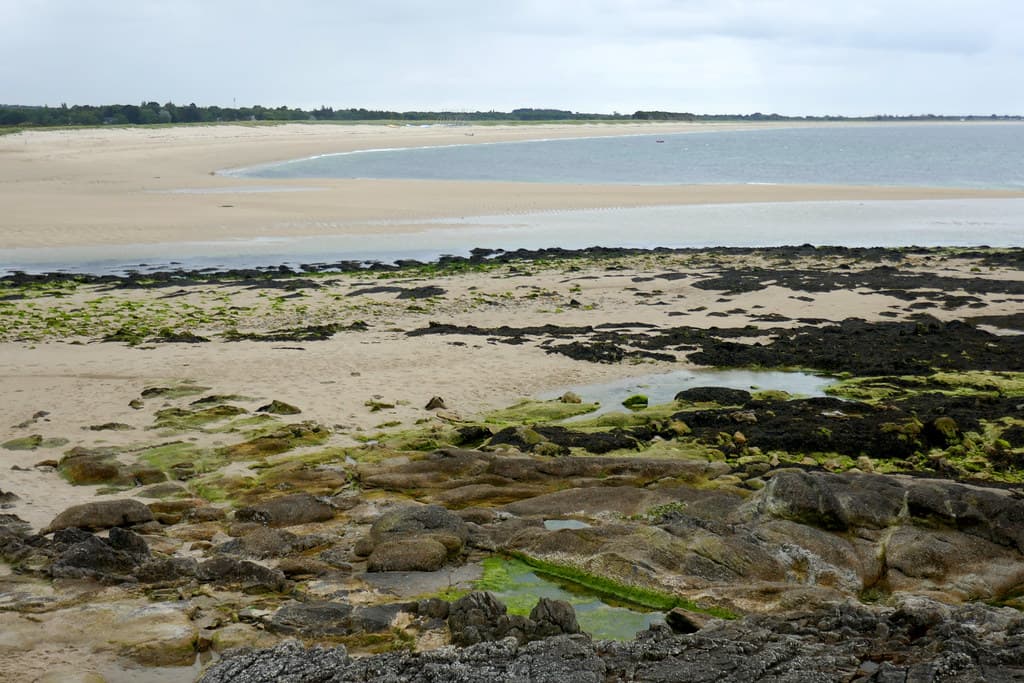
Île-Tudy clings to a slender finger of land separating the Pont-l'Abbé estuary from open ocean, and its beach reflects that duality. At high tide, the strand shrinks to a narrow ribbon backed by grassy dunes and whitewashed cottages with blue shutters. When the water recedes, you'll walk across acres of firm, ribbed sand that stretches halfway to the horizon, dotted with mussel stakes and shallow tide pools where children crouch to net shrimp. The beach curves gently northwest, offering unobstructed views across to Loctudy and, farther out, the Pointe de la Torche headland. The village behind you hums quietly with working-harbor life—trawlers offload langoustines at the quay, and the morning fish auction draws restaurateurs from across Finistère. You'll notice the absence of boardwalk kitsch; instead, a handful of stone-fronted crêperies and a single tabac-presse anchor the waterfront. A small passenger ferry shuttles back and forth to Loctudy every twenty minutes in summer, its diesel rumble punctuating the steady hiss of surf. Sunset here unfolds slowly. Light gilds the estuary mouth, turning the wet sand bronze and silhouetting the rigging of anchored boats. Locals arrive on bicycles an hour before dusk, staking out favorite spots on the low seawall. You'll feel the offshore breeze pick up as the tide turns, carrying the scent of rockweed and the distant clang of channel buoys.
Places, rentals, tours and events within walking and driving distance of Plage de l'Île-Tudy.
Photos
Plage de l'Île-Tudy is generally family-friendly with calm, sheltered waters thanks to its location on the Pont-l'Abbé estuary. The beach slopes gently, making it suitable for children. However, always check local tide schedules and weather conditions before swimming. Like all Brittany beaches, currents can vary with tides. There's typically no lifeguard service outside peak summer months (July-August), so supervision is essential. The protected estuary position usually means gentler waves compared to Atlantic-facing beaches, but conditions can change with weather and tidal flows.
Plage de l'Île-Tudy offers year-round appeal, though July and August bring warmest swimming temperatures (17-19°C) and fullest amenities. Late spring (May-June) and early autumn (September) offer pleasant weather with fewer crowds—ideal for beachcombing and scenic walks. The beach is particularly renowned for sunsets throughout the year, as it faces west across the estuary. Winter visits appeal to those seeking dramatic coastal scenery and solitude. Brittany's maritime climate means rain is possible any season, so pack layers regardless of when you visit.
Île-Tudy is located in southern Finistère, approximately 20km southwest of Quimper. By car, follow signs to Pont-l'Abbé, then cross the bridge to Île-Tudy village. Several free and paid parking areas are available near the beach, though spaces fill quickly in July-August. A small ferry connects Île-Tudy to Loctudy across the estuary during summer, offering a scenic arrival alternative. Public transport is limited; driving is most practical. The village is small and walkable once you arrive, with the beach easily accessible from central parking areas.
Île-Tudy village offers several seafood restaurants, crêperies, and cafés within walking distance of the beach, many specializing in fresh local catch. You'll find basic amenities including public toilets and seasonal beach showers. The village has small grocery shops for picnic supplies. Accommodation options include vacation rentals, a handful of small hotels, and nearby campsites. For wider dining and lodging choices, neighboring Loctudy and Pont-l'Abbé (both under 5km away) provide additional restaurants and hotels. The beach atmosphere is relaxed and uncommercial compared to larger Brittany resorts.
Île-Tudy uniquely combines authentic Breton fishing village charm with a genuine beach holiday setting. Unlike typical estuary locations, it offers both sheltered beach swimming and working harbor character—you'll see colorful fishing boats alongside sunbathers. The village's narrow streets and traditional granite houses create an unspoiled atmosphere increasingly rare in coastal Brittany. Its position at the estuary mouth means you experience both river and ocean influences. The westward orientation delivers spectacular sunsets over the water, a feature not common on Brittany's south-facing beaches. It feels genuinely local rather than resort-focused.