Counting the waves…
Counting the waves…
A refined fusion of water purity, environmental stability, and communal vibrancy for Plage de Kersiny.
View MethodologyAnalyzed via live sensors and environmental data.
Wave height, wind, and atmospheric stability.
Live footfall and crowd balance metrics.
Community reviews and curated sentiment.
“You'll find Plage de Kersiny where the Cap Sizun peninsula softens into Audierne Bay—a working beach where local families spread picnics beside wetsuit-clad surfers. The scent of iodine mixes with gorse from the…”
Limited recent visitor reports — live OBI telemetry is your best guide for current conditions.
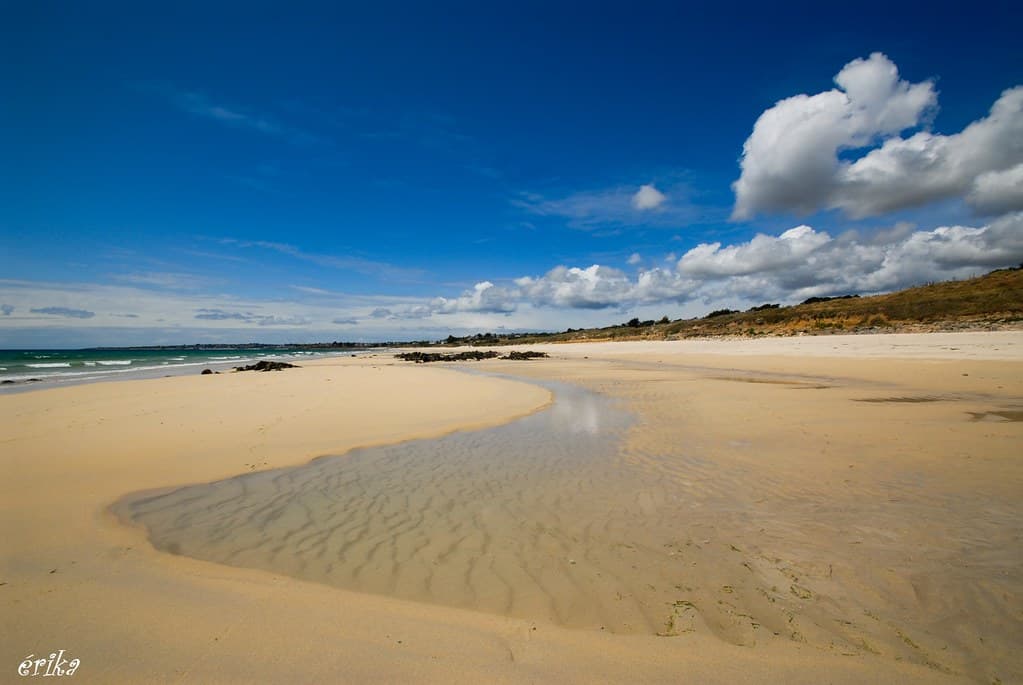
The approach tells you everything: a narrow lane winds past stone cottages and grazing cattle before depositing you at a small car park above the strand. Below, the beach curves in a tight arc, its ochre sand interrupted by black schist reefs that jut seaward like broken fingers. When the tide retreats, it leaves behind shallow lagoons warm enough for toddlers and deep enough to float on your back while gulls wheel overhead.
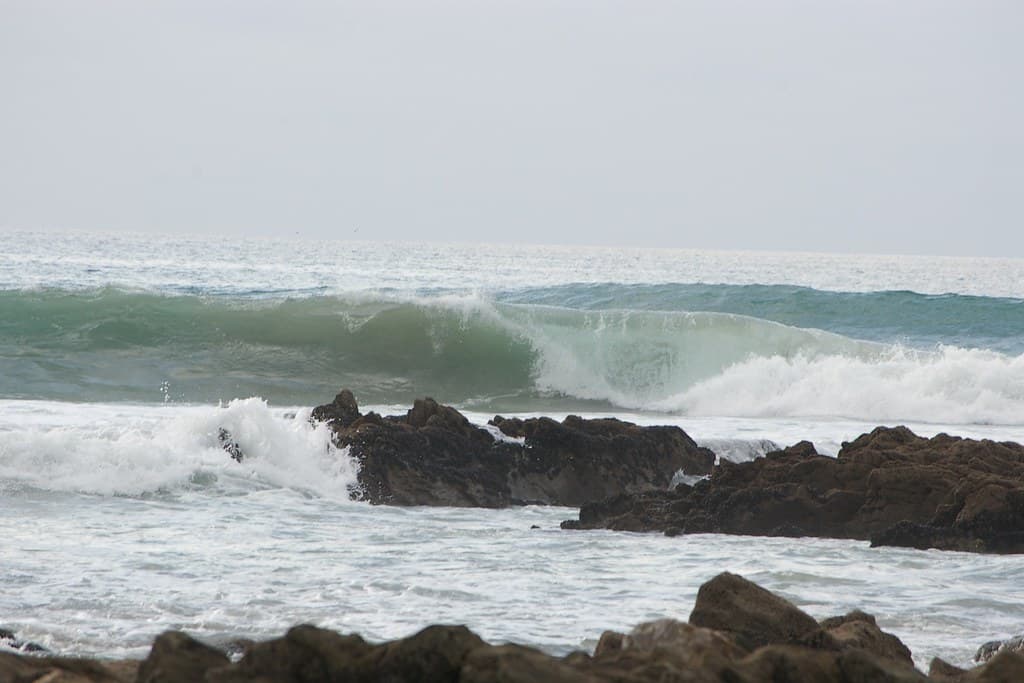
This is a beach that works year-round because it adapts. Summer brings families with striped windbreaks and thermoses of hot chocolate—even in July, the Breton wind has teeth. Autumn and winter hand the lineup to a dedicated crew of surfers who read the swell charts and arrive at dawn, their vans idling in the lot as they wax boards and check the sets. The western exposure catches everything the Atlantic sends, and the rocky points on either end create shifting peaks that reward patience.
 Credit: Unsplash
a beach with many people and buildings
 Credit: Unsplash
body of water
Reef breaks on both flanks
Warm lagoons at low water
Granite cliffs bracket the crescent
Where it is
Plage de Kersiny
Plouhinec, Finistère, France
47.984400°, -4.497700°
Weather
Loading…
Swell
—
Temp
Warm · Restorative
UV Index
Moderate
Wind
—
Tidal State
Last known
Max Sunlight
—
Ideal Shade
—
May - Sep (Peak)
Jan - Dec (Off-season)
Historical data suggests peak visibility and stable sea temperatures occur during the prime visitation window.
Select a category to load nearby places.
Unlock restaurants, luxury stays and curated maritime experiences within 2km
Plage de Kersiny is generally considered family-friendly with calmer waters in sheltered areas, though conditions vary with tides and weather. The beach has no lifeguard supervision, so swimmers should exercise caution and monitor children closely. Surf conditions attract wave riders, particularly during Atlantic swells, meaning some areas may have stronger currents. Check tide times before visiting, as the beach changes significantly between high and low tide. The sandy bottom and gradual slope make it suitable for paddling, but always assess conditions upon arrival.
Plage de Kersiny is accessible year-round, with each season offering different appeal. Summer (July-August) brings warmest water and longest days, ideal for families, though it's busier. Spring and autumn offer pleasant weather with fewer crowds, perfect for scenic walks and photography. Winter attracts surfers seeking bigger swells and dramatic coastal scenery. The beach faces west, making it spectacular for sunset viewing throughout the year. Brittany's maritime climate means weather can change quickly, so bring layers regardless of season.
Plage de Kersiny is located near Plouhinec in southern Finistère, accessible by car via the D784 coastal road. From Quimper, it's approximately 30-40 minutes southwest. Follow signs to Plouhinec, then local beach signage. A dedicated parking area is available near the beach access point, typically free but with limited spaces during peak summer season. Arriving early in July and August is advisable. The beach requires a short walk from the car park. Public transport options to this area are limited, making a car the most practical choice.
Plage de Kersiny itself has minimal on-site facilities, maintaining a natural, unspoiled character. Basic amenities like restaurants, bakeries, and small shops are found in nearby Plouhinec village, about 2-3 kilometres away. The larger town of Audierne, roughly 10 minutes by car, offers more extensive dining options, supermarkets, and services. Accommodation options include vacation rentals, chambres d'hôtes, and small hotels scattered throughout the Plouhinec area and surrounding coastal villages. Pack food and drinks for a beach day, as there are no beachfront vendors or cafés.
Plage de Kersiny stands out for its unspoiled, authentic Breton character and dual appeal to both families and surfers. Unlike more developed beaches, it retains a wild, natural atmosphere with dramatic coastal scenery typical of Finistère's rugged coastline. The westward orientation provides exceptional sunset views over the Atlantic, making it popular with photographers. Its position in the Audierne Bay area offers a quieter alternative to busier tourist beaches while still delivering quality surf conditions. The blend of sandy stretches and rocky outcrops creates varied landscapes for exploration at low tide.
Photos