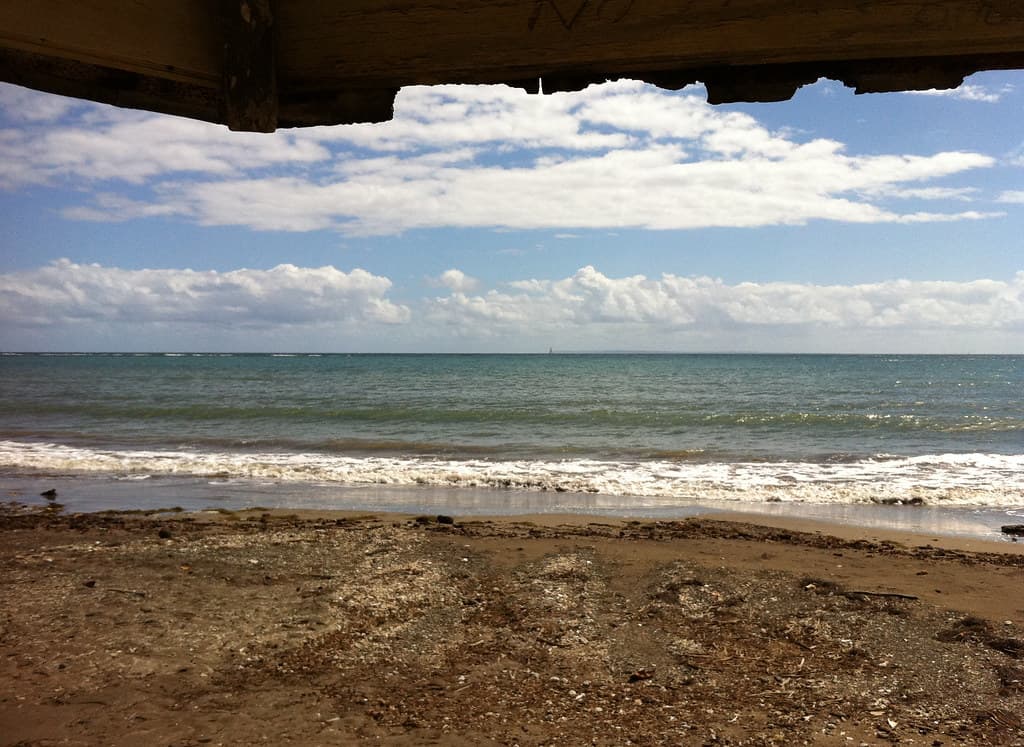
Counting the waves…
Counting the waves…
The beach at Anse de la Petite Rivière exists in constant negotiation between river and ocean. The stream emerges from rainforest-covered mountains visible inland, cutting across the sand in channels that change width and depth with rainfall and tide. During dry season, you can hop across on exposed stones; after storms, the river claims half the beach, running brown with mountain sediment before dissipating into Atlantic blue. The sand here feels different from purely marine beaches—finer, with a buff tone from river-carried minerals mixing with coastal deposits. Driftwood collects at the high-tide line, some pieces still green from recent mountain floods, others bleached silver by sun and salt. The river's influence moderates water temperature in the mixing zone, creating pockets of relative warmth where small fish gather and children splash in the shallows. Vegetation grows close to the beach where river moisture sustains it—wild ginger, heliconia with red bracts, and bamboo groves that rustle in the trade winds. The soundscape layers rushing freshwater over crashing surf, punctuated by bird calls from the riparian forest. On weekends, families set up where river meets sand, some in the freshwater, others preferring salt.
Places, rentals, tours and events within walking and driving distance of Anse de la Petite Rivière.
Photos
Anse de la Petite Rivière on Basse-Terre's Atlantic coast can experience variable conditions typical of windward beaches. Swimming safety depends on weather, season, and ocean conditions. The beach's location near river-coast scenery suggests freshwater influence, which can create unique currents where river meets sea. Always observe conditions before swimming and stay cautious of waves and currents. The family-friendly designation indicates suitable areas for wading, but close supervision of children is essential. As a hidden, local beach, lifeguard services are unlikely, so personal judgment and caution are critical.
December through May during the dry season offers the most favourable conditions with minimal rainfall, pleasant temperatures, and calmer Atlantic waters. This period is ideal for sunbathing, exploring the river-coast scenery, and beach photography. Because Anse de la Petite Rivière is a hidden local beach, you'll encounter very few crowds throughout the year, even during peak tourist season. Morning visits often provide the best lighting and tranquillity. Avoid the wettest months from August through November when heavy rains can affect the river and beach conditions significantly.
Anse de la Petite Rivière is located in Goyave on Basse-Terre's eastern coast. A rental car is strongly recommended as this hidden beach has limited public transport access. From Pointe-à-Pitre, drive south along the coastal N1 road toward Goyave. Look for local signs indicating the beach or river access, or use GPS navigation with the beach name. Don't hesitate to ask Goyave residents for directions to this specific spot. Parking is likely informal and limited given the beach's local, undeveloped character.
As a hidden local beach, Anse de la Petite Rivière has minimal or no on-site facilities. Goyave town, known for its guava production, offers local restaurants serving Creole cuisine, small shops, and bakeries where you can buy provisions. It's advisable to bring your own food, water, and beach supplies. Accommodation options in Goyave are limited but include some guesthouses and vacation rentals. Many visitors base themselves in larger towns like Sainte-Anne or Gosier and make day trips to experience this quieter, authentic coastal spot.
This beach's distinctive feature is its river-coast scenery where the Petite Rivière meets the Atlantic Ocean, creating a unique landscape uncommon among typical sandy beaches. This confluence offers interesting natural beauty, possibly with lush vegetation and freshwater pools depending on season and rainfall. The hidden, local character means you'll experience Guadeloupe's coast as residents do, without tourist infrastructure. The beach's location in Goyave, a town famous for guava rather than tourism, adds authentic cultural context. It's ideal for travellers seeking undiscovered spots, scenic photography, and peaceful family time in natural surroundings.