Counting the waves…
Counting the waves…
A refined fusion of water purity, environmental stability, and communal vibrancy for Anse Canot.
View MethodologyAnalyzed via live sensors and environmental data.
Wave height, wind, and atmospheric stability.
Live footfall and crowd balance metrics.
Community reviews and curated sentiment.
“The rough track ends at a cluster of fishing pirogues painted the colors of tropical fruit. Beyond them, tamarind trees lean over a cove so sheltered that morning water sits mirror-flat, reflecting the clouds that pile…”
Limited recent visitor reports — live OBI telemetry is your best guide for current conditions.
Your flip-flops slip on limestone as you descend the path, catching the scent of rotting seaweed and wild oregano. The sand here holds more shell than silica—crushed conch and brain coral fragments that crunch like breakfast cereal underfoot and stain your towel with flecks of purple and orange. A fisherman coils rope in the shade of an upturned boat, barely glancing up as you stake your claim near the waterline where the last high tide left a necklace of dried sargassum and bleached sea biscuits.
Wade in and the bottom drops abruptly after three meters, transforming from sand to scattered coral heads encrusted with fire coral and tube sponges. Sergeant majors dart between your knees, their stripes vivid against the teal backdrop, while a hawksbill turtle grazes on algae coating the rocks that define the cove's eastern boundary. The water temperature shifts in layers—warm surface, cool upwelling, then warm again—as ocean currents eddy through the gap between the headlands. No beach chairs rent here, no vendors hawk frozen coconuts; just the slap of wavelets against hulls and the distant whine of a grinder from the village workshop.
 Credit: Unsplash
wavy seashore during daytime
 Credit: Unsplash
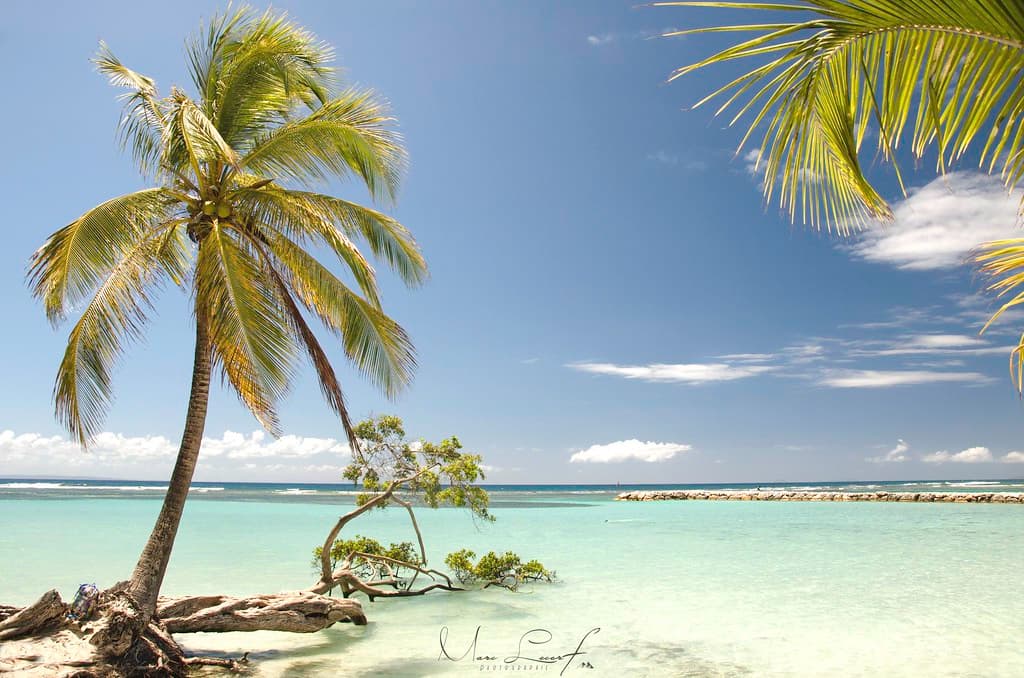
green palm tree on beach shore during daytime
Elkhorn and brain formations
Hand-painted traditional pirogues
Locals' favorite jumping spot
Prime Visitation
Best Weather|Less Crowds
Where it is
Anse Canot
Sainte-Anne, Guadeloupe, France
16.218100°, -61.424000°
Weather
Loading…
Swell
—
Temp
Warm · Restorative
UV Index
Moderate
Wind
—
Tidal State
Last known
Max Sunlight
—
Ideal Shade
—
Jan - Dec (Peak)
May - Nov (Off-season)
Best Weather|Less Crowds
Select a category to load nearby places.
Unlock restaurants, luxury stays and curated maritime experiences within 2km
Anse Canot is a discreet cove offering generally calm conditions suitable for swimming and snorkeling when seas are moderate. The protected cove setting helps reduce wave action, though Atlantic swells can still affect conditions. Always assess water conditions before entering, as lifeguards are typically not present at this small beach. The snorkeling opportunities around rocky areas require caution for sea urchins and coral. Snorkelers should wear protective footwear. The intimate size means it's best for confident swimmers. Check weather forecasts and avoid during rough sea conditions or strong winds.
The optimal time for visiting Anse Canot is December through May during the dry season when seas are calmest and underwater visibility is best for snorkeling. January to April offers particularly clear conditions with minimal rainfall. Morning hours typically provide the calmest waters and best light for viewing marine life. Avoid hurricane season (June-November) when seas can be rough and visibility reduced. The shoulder months of May and early December balance good conditions with fewer tourists. Calm weather days throughout the year can offer excellent snorkeling, but dry season provides most consistent conditions.
Anse Canot is located near the Pointe de la Caravelle area of Sainte-Anne on Grande-Terre's southern coast. From Pointe-à-Pitre airport, drive approximately 30 minutes east via N4 and D128 to Sainte-Anne, then navigate toward the Caravelle peninsula. A rental car is essential as this discreet cove has limited public transport access. Local signage may be minimal, so GPS coordinates or asking locals helps. Parking may be informal and limited given the beach's hidden nature. The journey requires some exploring, which adds to its appeal for adventurous travelers.
Accommodation options are concentrated in Sainte-Anne town, offering hotels, vacation rentals, and guesthouses within a short drive. Anse Canot itself is undeveloped without facilities, so visitors should bring food, water, and snorkeling equipment. Sainte-Anne town has restaurants serving Creole cuisine, fresh seafood, and French Caribbean dishes. Small markets provide picnic supplies. The nearby Club Med Caravelle offers resort dining but is primarily for guests. The beach's hidden, natural character means planning ahead with provisions is essential for a comfortable visit to this romantic, secluded spot.
Anse Canot distinguishes itself as a hidden gem near the Caravelle area, offering intimate seclusion that appeals to couples and discovery-minded travelers. Unlike Sainte-Anne's busier main beaches, this discreet cove remains largely unknown to casual tourists. The combination of scenic natural beauty, snorkeling opportunities, and peaceful atmosphere creates a romantic setting. Its position near Pointe de la Caravelle provides a sense of exploration and reward for those who find it. The beach exemplifies Guadeloupe's hidden coastal treasures, offering authentic Caribbean beauty without crowds or commercial development.
Photos