
Counting the waves…
Counting the waves…

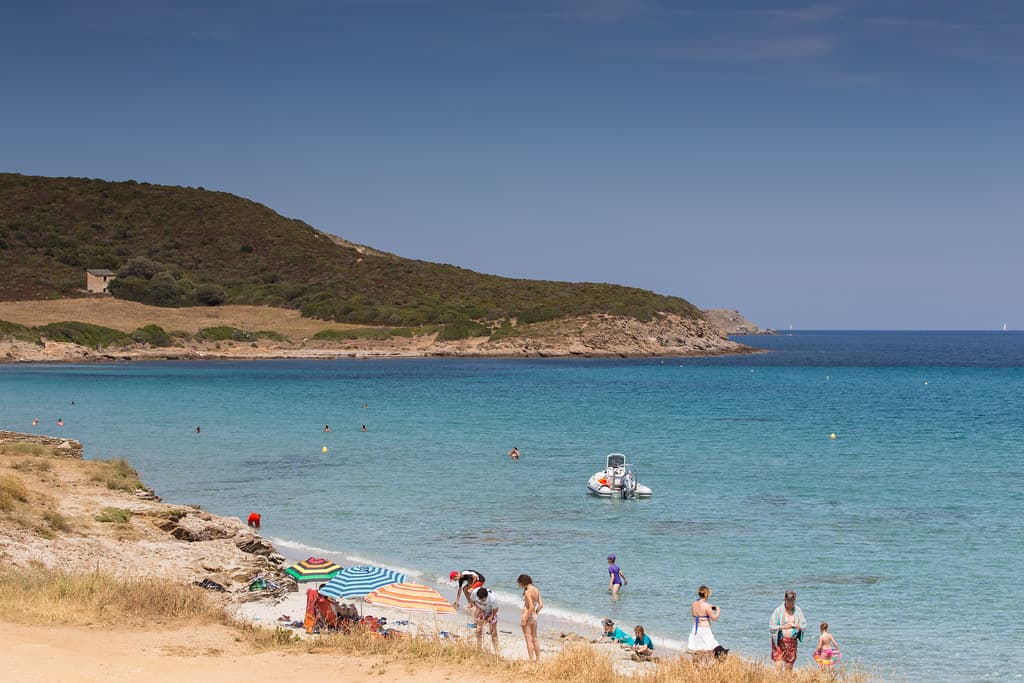
You arrive in Meria not through signposted tourist trails but by following the narrow road that drops between stone houses, their shutters painted the faded blue of old boats. The beach unfolds below, a crescent of rounded stones flanked by low rock shelves where cormorants perch and dry their wings. Unlike the poster-perfect coves that draw the tour buses, this shore belongs first to the village—lines strung between poles hold drying octopus, and the small bar across the road opens when it opens. The pebbles clatter softly as wavelets arrive, sorted by tide into bands of grey, rust, and black. You'll want water shoes; the stones are smooth but unyielding. Wade in and the seabed shelves gradually, the water cool even in July, filtered clean by the rocky bottom. Families spread towels on flattened sections, children building cairns instead of sandcastles. The backdrop is green scrub climbing toward the spine of Cap Corse, punctuated by the square silhouette of a Genoese tower. Come in the late afternoon when the light slants gold across the surface and the few visitors have packed up. You'll hear the slap of cards from the café terrace, the buzz of cicadas in the brush, and nothing else. This is Corsica without the performance, a place where the beach serves the village rather than the other way around.
Places, rentals, tours and events within walking and driving distance of Plage de Meria.
Photos
Plage de Meria is generally safe for swimming and family-friendly, offering a quieter alternative to busier Cap Corse beaches. The pebble beach provides good water clarity, though water shoes are recommended for comfort. As a more hidden beach, facilities may be limited, so families should come prepared with supplies. Always assess current conditions before swimming, as the eastern Cap Corse coast can experience afternoon winds. The quieter atmosphere makes it easier to supervise children, though the lack of lifeguards means parents must take full responsibility for water safety.
Plage de Meria is ideal for those seeking fewer crowds, particularly outside July and August when Corsica sees peak tourism. June and September offer excellent weather with significantly fewer visitors, making the beach feel even more secluded. Weekdays are quieter than weekends year-round. The 'less crowds' designation suggests this beach maintains a peaceful atmosphere even during reasonable weather periods. Spring and early autumn can provide pleasant conditions for beachcombing and scenery, though swimming may be cooler. For the best combination of solitude and swimming conditions, visit in early June or mid-September.
Plage de Meria is located on the eastern Cap Corse coast, accessible via the D80 coastal road that circles the peninsula. From Bastia, drive north past Macinaggio or approach from the west via the Cap Corse circuit. The beach is associated with the village of Meria, situated between the better-known Macinaggio and Luri areas. A car is essential as public transportation on Cap Corse is extremely limited. Watch for signage indicating the beach access road, which may involve a small descent. Parking is likely informal and limited, so arrive prepared for roadside parking.
Plage de Meria is located near the village of Meria, which is small and may offer limited facilities. Basic provisions might be available, but don't expect extensive dining or shopping options directly at the beach. The nearby villages of Macinaggio and Luri offer more substantial services including restaurants and accommodation. Many visitors stay in larger Cap Corse towns or Bastia and make day trips. Given the quiet, hidden nature of this beach, it's advisable to bring food, water, and any supplies you'll need. Check ahead for seasonal restaurant openings if planning to dine nearby.
Plage de Meria distinguishes itself through its genuine village identity and quieter, more hidden character compared to busier Cap Corse beaches. Positioned between the popular areas of Macinaggio and Luri, it offers a peaceful retreat with authentic local atmosphere. The beach provides scenic pebble coastline without the crowds, ideal for travelers seeking solitude and natural beauty. Its real connection to the village of Meria gives it cultural authenticity often missing from purely tourist-oriented beaches. This combination of accessibility via the coastal road and relative seclusion makes it special for those wanting to escape busier spots.