Counting the waves…
Counting the waves…

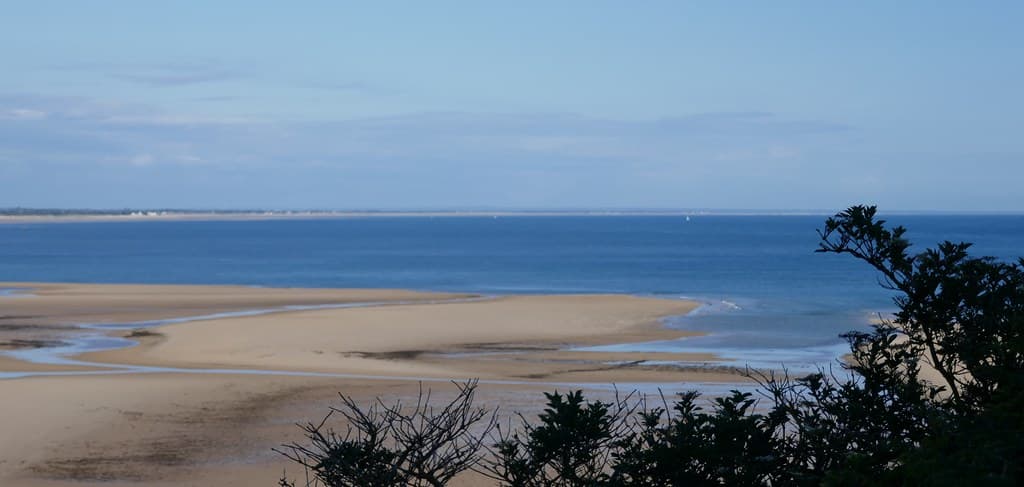
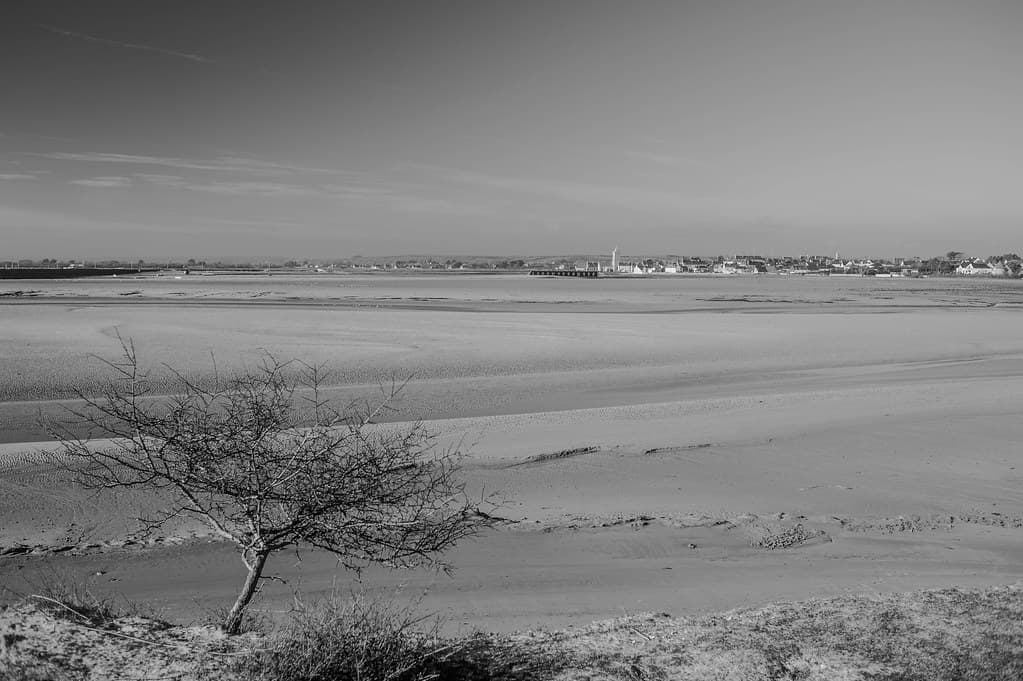
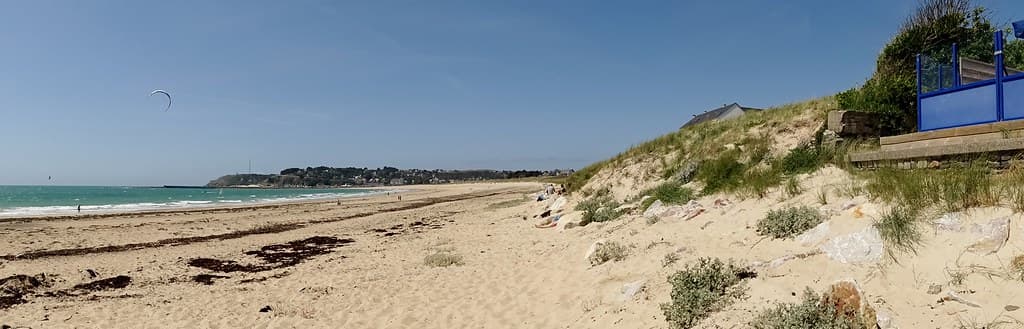
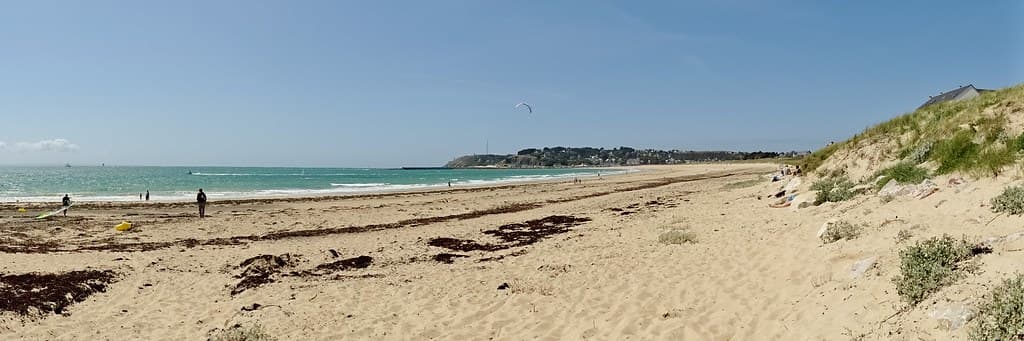
The beach unfurls south of Carteret like a ribbon of blonde sand pinned between low dunes and the grey-green Channel. At low tide the strand doubles its width, revealing glossy expanses of compacted sand ridged by retreating water and studded with pebbles worn smooth by centuries of swell. Oystercatchers probe the tideline; dog-walkers vanish into the haze. The air smells of iodine and wet grass. There is no boardwalk, no beach club—just a narrow access road that ends at a gravel car park and a wooden ramp over the dunes. The village itself, a handful of grey-stone farms and a Romanesque church spire, sits a kilometre inland. You bring your own blanket, your own thermos. On clear evenings the sun sinks behind the offshore reefs in bands of apricot and violet, and the wet sand turns to copper. The best hours are either side of high tide, when the water laps close to the dune line and you can wade in without a quarter-mile trek. In summer a few French families claim the southern end; by September you might have the entire crescent to yourself. The undertow can be brisk—locals respect it—but the rhythm of the waves, the crunch of shells underfoot, and the unbroken horizon make this stretch of the Cotentin coast worth the detour from busier resorts.
Places, rentals, tours and events within walking and driving distance of Plage de Saint-Jean-de-la-Rivière.
Photos
This beach on Normandy's west coast experiences Atlantic tides and currents, so swimming conditions vary significantly. Check tide times before visiting, as the beach transforms dramatically between high and low tide. There are no lifeguards stationed here, so swimmers should be cautious and stay close to shore. The beach is generally calmer than more exposed Atlantic beaches, but always supervise children closely. Jellyfish can occasionally be present during summer months. Local advice recommends swimming during incoming tides and avoiding periods immediately after storms when currents strengthen.
The beach is accessible year-round, with each season offering distinct appeal. Summer (June-August) provides warmest weather for swimming, though the beach remains quieter than major resorts. Spring and autumn offer pleasant walking conditions with fewer visitors and beautiful light for photography. The beach is particularly renowned for spectacular sunset views across the bay toward Carteret. Winter visits appeal to those seeking solitude and dramatic coastal scenery, though swimming is only for the hardy. Weekdays outside French school holidays guarantee the most peaceful experience at this lesser-known stretch of coastline.
The beach is located in the small village of Saint-Jean-de-la-Rivière, approximately 3 kilometres south of Barneville-Carteret in the Manche department. By car, follow the D137 coastal road and look for signs to the beach. Free parking is available near the beach access point, though spaces are limited compared to larger resort beaches. The nearest train station is in Carteret, about 15 minutes away by car. No direct public transport serves the beach, making a car the most practical option. The parking area is small, reflecting the beach's quiet, local character.
Saint-Jean-de-la-Rivière is a small village with limited on-site amenities. You'll find basic facilities but no beachfront restaurants or shops directly at the beach. For dining, shopping, and accommodation, nearby Barneville-Carteret (3km north) offers restaurants, cafés, bakeries, supermarkets, and hotels. It's advisable to bring food, drinks, and beach supplies with you, as the nearest commerce requires a short drive. The village itself has a peaceful, residential character. Some visitors prefer this quieter setting and pack picnics to enjoy the unspoiled coastal atmosphere away from commercial development.
This beach offers a more local, undiscovered alternative to the busier sands of neighbouring Barneville-Carteret. Its south-facing orientation provides sheltered conditions and outstanding sunset views across the bay, making it particularly popular with photographers. The beach retains an authentic, uncommercialized character with minimal development, appealing to visitors seeking tranquility over tourist facilities. At low tide, extensive sandy stretches and rock pools emerge, perfect for exploration. The absence of crowds, even in summer, creates a peaceful atmosphere. It's ideal for those who prioritize natural beauty and solitude over amenities and entertainment.