Counting the waves…
Counting the waves…

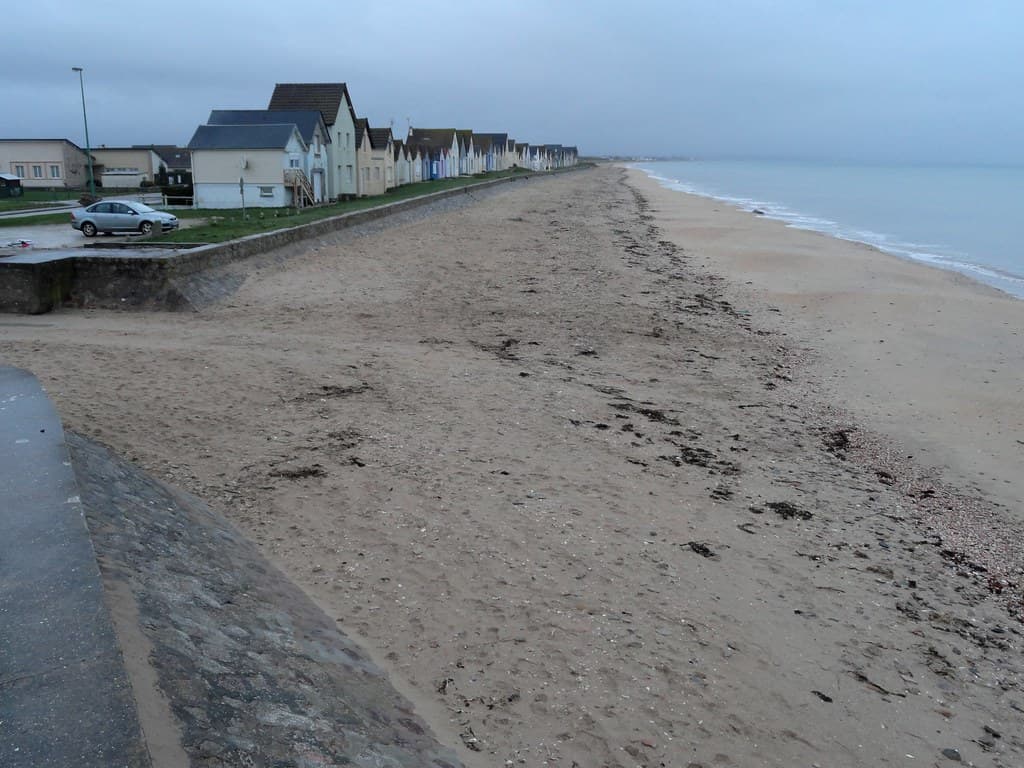
The beach stretches five kilometers between Pouppeville and La Madeleine, a wide expanse of firm sand that shifts from beige to graphite depending on the light. At low tide, you can walk far enough out that the shoreline becomes a memory, the receding Atlantic leaving behind tidal pools and the occasional razor clam shell. Families dig in the shallows while cyclists trace the promenade behind the seawall, and the Norman sky delivers its trademark palette of pewter and pearl. The Musée du Débarquement sits directly on the sand at La Madeleine, its galleries housed in a former German bunker. You'll find original landing craft preserved on the beach itself, hull numbers still legible after eight decades of weather. The monument to the 4th Infantry Division rises from the dunes, and on June 6 each year, veterans' families scatter rose petals into the surf. Come for the late afternoon when day-trippers thin out and the westward sun turns the wet sand to bronze. Local fishermen set nets near the Vire estuary, and the smell of mussels steaming in white wine drifts from the brasseries in Sainte-Marie-du-Mont, a ten-minute walk inland. The tide returns quietly here, a slow reclamation that never announces itself until the water reaches your shoes.
Places, rentals, tours and events within walking and driving distance of Utah Beach.
Photos
Utah Beach is generally safe for swimming during calm weather, but conditions vary significantly with tides and season. The beach has strong currents and cooler water temperatures typical of the Normandy coast. Lifeguards are not always present, so exercise caution. Many visitors come primarily for the historical significance rather than swimming. If you plan to swim, check local tide schedules and weather conditions. The beach is wide and sandy, making it better suited for walking and reflection than recreational swimming for most of the year.
Utah Beach can be visited year-round, but May through September offers the most pleasant weather with temperatures ranging from 15-20°C (59-68°F). June 6th draws large crowds for D-Day anniversary commemorations. Spring and autumn provide fewer tourists and mild conditions ideal for exploring the museums and memorials. Summer offers the warmest weather but expect more visitors. Winter visits are atmospheric but can be windy and cold. Early morning or late afternoon visits provide beautiful light for photography and a more contemplative experience of this historic site.
Utah Beach is located near Sainte-Marie-du-Mont in Normandy, about 90 minutes from Caen and 4 hours from Paris by car. Driving is the most convenient option via the D913 road. Free parking is available near the Utah Beach Museum and beach access points. Public transportation is limited; the nearest train station is in Carentan (15km away), where you can take a taxi or rent a car. Many visitors explore Utah Beach as part of organized D-Day tour packages from Bayeux or Caen, which include transportation.
Dining and lodging options near Utah Beach are relatively limited compared to larger Normandy towns. A few small restaurants and crêperies operate in Sainte-Marie-du-Mont and nearby villages, typically serving regional French cuisine and seafood. The town of Sainte-Mère-Église (6km away) offers more restaurant choices. For accommodation, you'll find small hotels, bed and breakfasts, and vacation rentals scattered in the area. Most visitors stay in larger towns like Bayeux or Carentan, which offer more amenities and dining variety while remaining within easy driving distance of the beach.
The Utah Beach Museum (Musée du Débarquement) sits directly on the beach where American forces landed on D-Day, June 6, 1944. Built around an original German bunker, the museum houses authentic military equipment including tanks, landing craft, and personal items from soldiers. Interactive exhibits detail the Utah Beach landings, which were the westernmost of the D-Day operations. Visitors can see the actual beach where troops came ashore and walk among preserved fortifications. The museum provides essential context for understanding the site's historical significance. Entry fees typically range from €8-12 for adults.