Counting the waves…
Counting the waves…
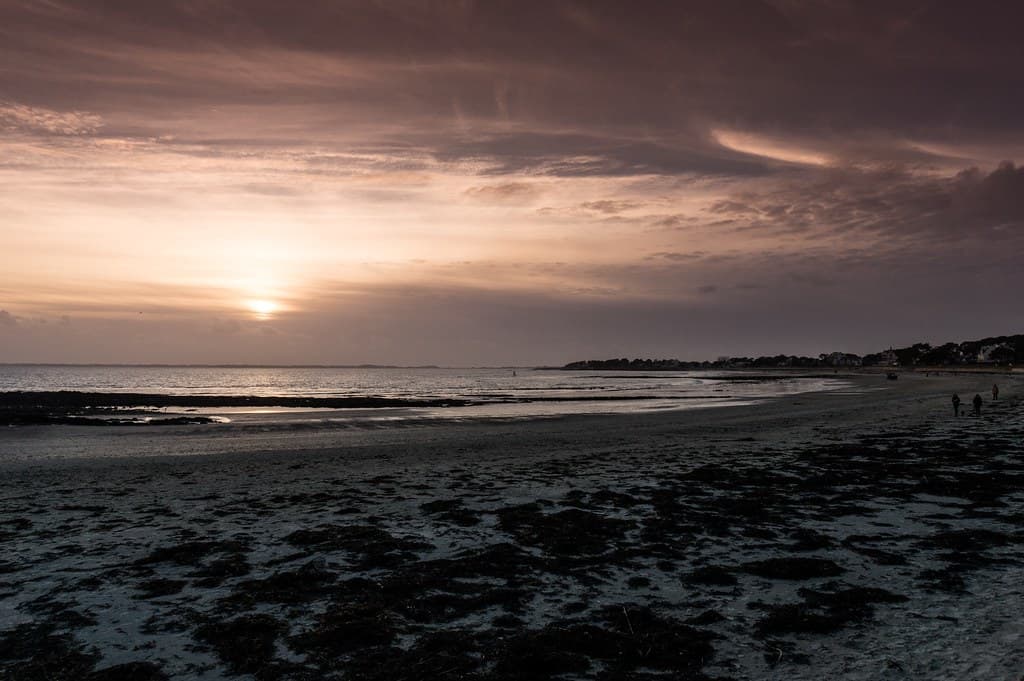
The approach tells you everything: a narrow lane bordered by stone walls and hydrangea, then suddenly the maritime pines part and you're looking across butter-soft sand toward the moored sailboats of Quiberon Bay. Plage de Kervillen occupies a sheltered pocket on La Trinité-sur-Mer's coastline, protected enough that the water stays calm even when Atlantic winds rake the outer peninsula. Families colonize the sand early, staking claim beneath the pines where fallen needles cushion bare feet and the air smells of warm resin. The beach itself runs no more than two hundred meters, hemmed by low dunes and the kind of unpretentious beachside villas that have hosted the same Breton families for generations. At low tide, the bay recedes to reveal expanses of ribbed sand and scattered rock pools where hermit crabs scuttle between kelp fronds. You'll wade fifty meters before the water reaches your waist—a geography that makes this shore ideal for tentative swimmers and tireless toddlers alike. Sunset transforms the modest crescent into something worth lingering for. The light turns honeyed, then rose, gilding the rigging of anchored yachts and casting long shadows from the pines. Couples unfold camp chairs. Someone opens a thermos of cidre. The ritual is unhurried, unshowy, and entirely sufficient—which is precisely how this corner of Morbihan prefers things.
Places, rentals, tours and events within walking and driving distance of Plage de Kervillen.
Photos
Plage de Kervillen is generally well-suited for families with children due to its sheltered bay location, which typically means calmer waters compared to ocean-facing beaches. The beach slopes gently into the water, making it easier for young swimmers. However, as with any beach, always supervise children closely and check local conditions before swimming. Tides in the Morbihan Gulf can be significant, so be aware of changing water depths. During summer months, the beach is popular with local families, though it doesn't have dedicated lifeguard supervision year-round.
Plage de Kervillen can be visited year-round, with each season offering different appeal. Summer (June-August) brings warmest weather and busiest conditions, ideal for swimming and sunbathing. Spring and autumn offer milder temperatures, fewer crowds, and pleasant conditions for beach walks. The beach is particularly renowned for stunning sunset views across the bay, best enjoyed during longer summer evenings. Winter visits appeal to those seeking peaceful coastal walks. The sheltered bay location means it's generally more protected from harsh winds than Atlantic-facing beaches, making shoulder seasons particularly enjoyable.
Plage de Kervillen is located just outside the centre of La Trinité-sur-Mer, accessible by car via local roads leading towards the Kervillen area. The beach has a small parking area nearby, though spaces can be limited during peak summer season, especially in July and August. Arriving early in the day is recommended during high season. La Trinité-sur-Mer itself is well-connected by road and located approximately 30 kilometres from Auray and 45 kilometres from Vannes. The town is compact enough to explore on foot or bicycle once you've parked.
Plage de Kervillen is a relatively quiet, natural beach with limited on-site facilities, so visitors should plan accordingly. The nearby town of La Trinité-sur-Mer, a short distance away, offers numerous restaurants, cafés, and shops, particularly around the marina area known for its sailing culture. You'll find fresh seafood restaurants, creperies, and bakeries for picnic supplies. The town has supermarkets for beach provisions. For accommodation, La Trinité-sur-Mer provides hotels, vacation rentals, and campsites. It's advisable to bring your own beach essentials, as the beach itself doesn't have commercial facilities directly on-site.
Plage de Kervillen's western orientation along the Baie de Quiberon makes it exceptional for sunset photography and evening relaxation. The bay's protected waters create calm reflections, while the surrounding coastline and occasional sailboats add picturesque foreground interest. The sheltered location means you can enjoy sunset views without the strong winds often found on open Atlantic beaches. The gentle beach setting allows you to comfortably settle in as the sun descends over the water. Many visitors and locals specifically time their beach visits for the golden hour, making it a beloved spot for romantic evening strolls or peaceful contemplation.