
Counting the waves…
Counting the waves…

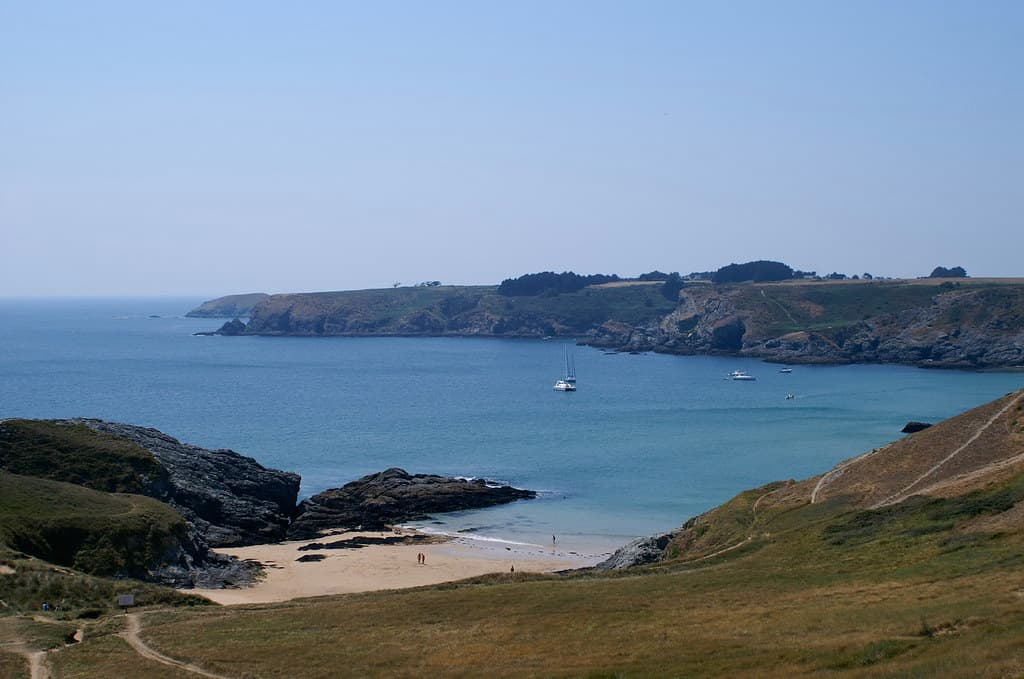
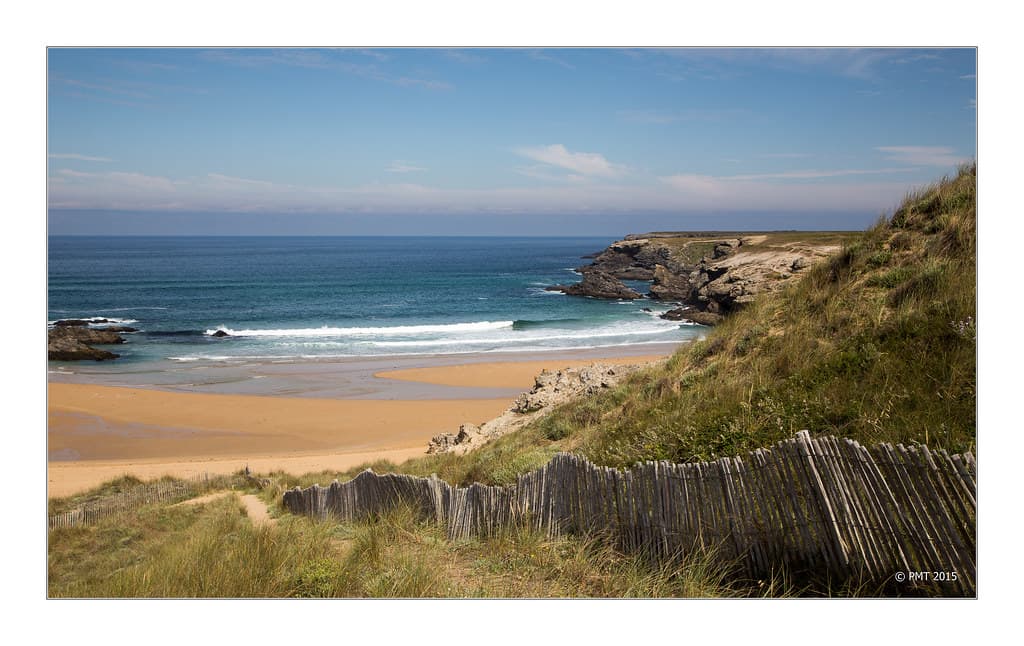
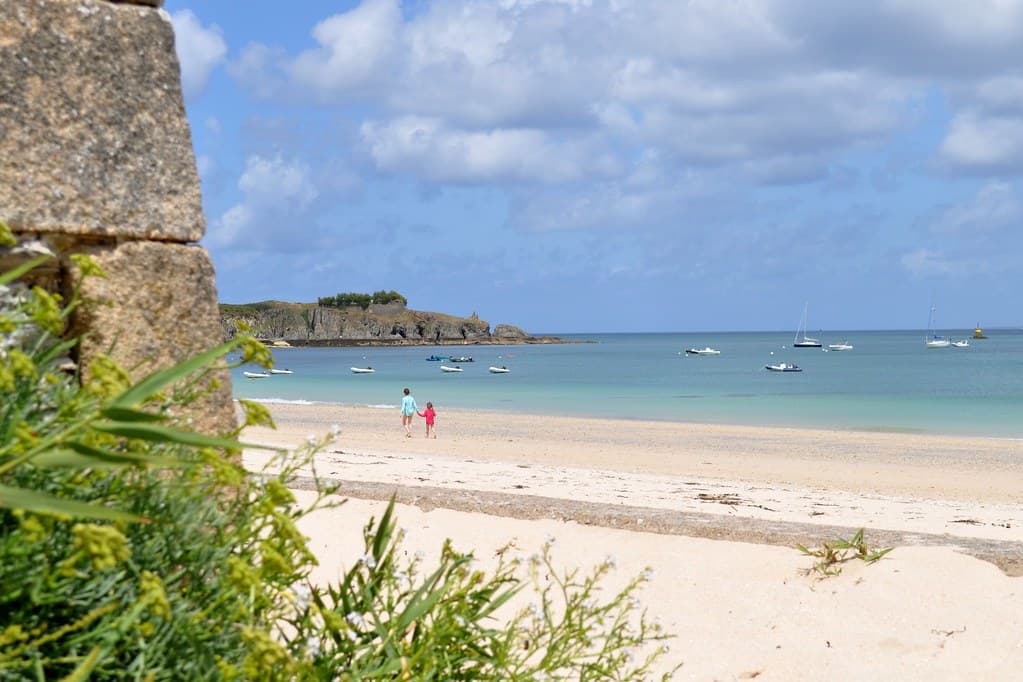
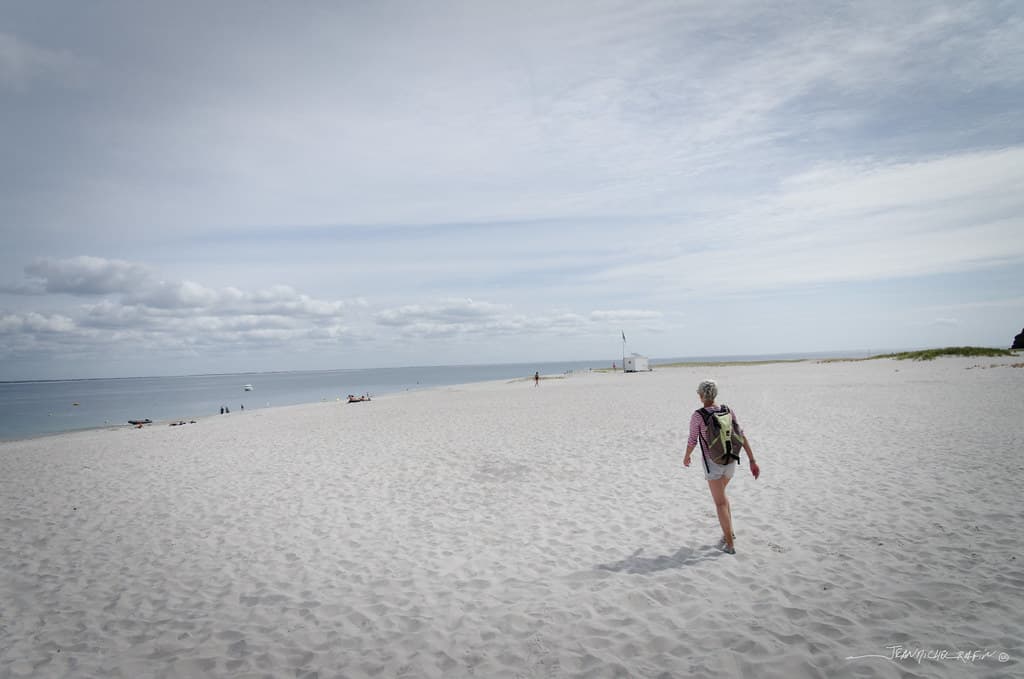
The ferry from Quiberon deposits you on Belle-Île, and a fifteen-minute cycle along the D190 brings you to Locmaria, where Plage des Grands Sables unfolds as the island's gentlest shoreline. Unlike the sheer cliffs that define most of Belle-Île's perimeter, this beach arcs outward in a convex crescent—geologists call it a tombolo—stretching nearly eight hundred meters of tawny, coarse-grained sand that crunches underfoot. The tidal range here exceeds four meters, so the beach you walk at noon becomes a memory by evening; locals set their beach umbrellas by consulting tide tables, not whim. You'll share the sand with Breton families who've summered here for generations, their striped windbreaks staked against the westerlies that sweep across the bay. The water warms to eighteen degrees Celsius by July—bracingly cool but swimmable—and the gradual slope makes it forgiving for children testing their sea legs. Sailing dinghies tack back and forth beyond the swimming buoys, their white sails catching the afternoon light. Stay past six o'clock and you'll understand why islanders call this the "double-sided beach." As the sun drops toward the Quiberon Peninsula, the convex geography lets you pivot from east-facing morning swims to west-facing aperitifs without moving your towel. The beach cafés serve galettes au sarrasin until eight, and the last ferry doesn't leave until nine-thirty, giving you time to watch the lighthouse on Pointe des Poulains blink to life across the darkening water.
Places, rentals, tours and events within walking and driving distance of Plage des Grands Sables.
Photos
Plage des Grands Sables is generally considered family-friendly with calm, shallow waters suitable for children. The beach is somewhat sheltered, making swimming conditions safer than more exposed Atlantic-facing beaches on Belle-Île. However, always check local conditions as currents and waves can vary. Lifeguard presence depends on the season, typically available during summer months. The sandy beach and gentle slope make it accessible for families. As with any Atlantic beach, supervise children closely and heed any posted warnings about tides or weather conditions.
Plage des Grands Sables can be enjoyed year-round, though summer (June-September) offers warmest weather and full amenities. July and August are busiest with peak temperatures around 20-24°C, ideal for swimming. Spring and autumn provide quieter visits with pleasant weather for walking and scenery, though water is cooler. The beach is particularly stunning at sunset throughout the year. Winter visits are peaceful but expect stronger winds and limited facilities. Belle-Île's island climate means weather can change quickly regardless of season, so pack layers.
To reach Plage des Grands Sables, you must first take a ferry to Belle-Île from Quiberon (45 minutes) or other mainland ports. Once on the island, the beach is near Locmaria village on the eastern coast. You can drive (rental cars and bikes available at the port), cycle, or take the island bus service. Parking is available near the beach, though spaces fill quickly in summer. The beach is approximately 14km from Le Palais, the main port town. Many visitors explore Belle-Île by bike as distances are manageable.
The nearby village of Locmaria offers restaurants, cafés, and basic shops within walking distance of Plage des Grands Sables. Accommodation options include hotels, vacation rentals, and campsites in Locmaria and surrounding areas, though booking ahead is essential in summer. The beach itself has seasonal facilities including toilets and beach huts. For wider dining and shopping choices, Le Palais and Sauzon offer more options. Belle-Île is well-equipped for tourism but maintains a quieter, authentic island atmosphere compared to mainland resorts.
Plage des Grands Sables is Belle-Île's only convex beach, meaning it curves outward rather than forming a typical bay. This unusual geographic feature is rare and creates distinctive sand movement patterns. The beach's name means "Large Sands," reflecting its generous sandy expanse uncommon on this rocky, cliff-dominated island. Its eastern position also provides spectacular sunset views across the ocean toward the mainland. The combination of golden sand, turquoise waters, and this unique curved formation makes it one of Belle-Île's most photographed and distinctive beaches.