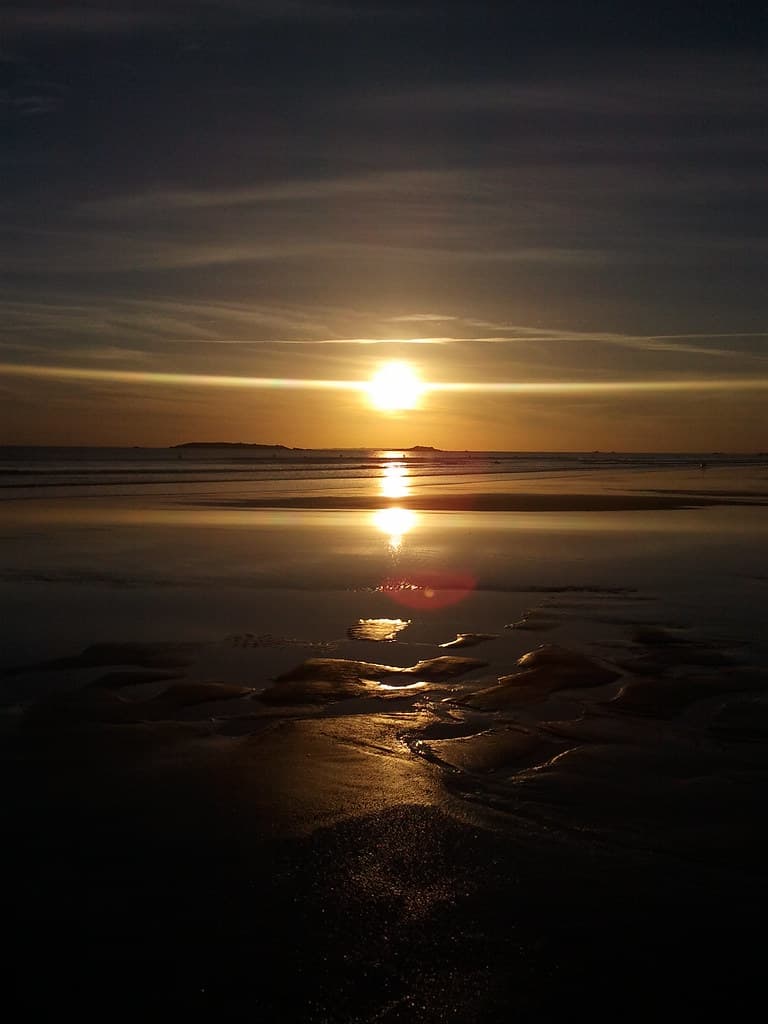
Counting the waves…
Counting the waves…
The drive into Plouhinec passes hedgerows thick with gorse and narrow lanes that dead-end at farmhouses, until you spot the small parking area above Kervegant. Below, the beach curves gently between granite headlands smoothed by centuries of storms, their surfaces patterned with lichen in shades of rust and silver. Families claim the pockets of sand sheltered by boulders; children wade into water that stays shallow for thirty meters out. At low tide, the beach doubles in size, revealing ridges of dark sand ribbed by currents and tide pools where crabs skitter beneath strands of kelp. The eastern exposure means mornings arrive bright and early, light bouncing off wet sand, while late afternoons grow golden as the sun arcs westward over the Blavet countryside. Locals arrive after five, when the day-trippers have packed up, walking the firm sand in bare feet with dogs ranging ahead. Unlike Magouëro's surf-pounded drama or Port-Blanc's marina buzz, Kervegant offers the Brittany that feels unchanged—a place where you spread a striped towel, crack open a jar of rillettes from the Plouhinec market, and watch fishing boats chug past the Île de Groix on the horizon. The water never gets truly warm, but on windless August afternoons, it's swimmable enough that you'll see grandmothers doing a brisk breaststroke parallel to shore.
Places, rentals, tours and events within walking and driving distance of Plage de Kervegant.
Photos
Plage de Kervegant is generally calm and family-friendly, making it safer for swimming than many Atlantic-facing beaches in Brittany. The beach has gentle waters, though conditions vary with tides and weather. There are no lifeguards on duty, so supervise children closely. The sandy beach and sheltered location make it ideal for young families. Check tide times before visiting, as the beach size changes significantly. Always exercise caution when swimming at unsupervised beaches and be aware of currents during incoming tides.
Plage de Kervegant can be enjoyed year-round, with each season offering different appeal. Summer (June-August) brings warmest weather for swimming, though the beach remains quieter than major Morbihan resorts. Spring and autumn offer pleasant temperatures for walking and fewer crowds. The beach faces west, making it excellent for sunset viewing throughout the year. Winter visits appeal to those seeking solitude and dramatic coastal scenery. July and August see the most visitors, but this hidden gem rarely feels overcrowded compared to nearby popular beaches.
Plage de Kervegant is located in Plouhinec, in southern Morbihan. By car, follow signs to Plouhinec, then look for local signage to Kervegant beach. Parking is available near the beach, though spaces are limited compared to larger resort beaches. The area is best accessed by car, as public transport options to this quieter beach are limited. From nearby towns like Lorient (approximately 30km) or Quiberon, driving takes 30-45 minutes. The beach's relative remoteness contributes to its peaceful atmosphere and lack of crowds.
Plage de Kervegant has minimal on-site amenities, reflecting its quieter, more natural character. You'll find basic facilities but no beach bars or restaurants directly on the sand. The village of Plouhinec, a short drive away, offers local shops, cafés, and restaurants serving traditional Breton cuisine. For accommodation, consider staying in Plouhinec or nearby coastal towns, where you'll find holiday rentals, chambres d'hôtes, and small hotels. Bring picnic supplies and drinks for a beach day, as amenities are limited compared to larger resort beaches.
Plage de Kervegant stands out as a hidden gem that avoids the crowds common at headline Morbihan beaches. Its location on Brittany's southern coast provides a more sheltered, intimate atmosphere compared to famous spots like Quiberon or Carnac. The beach offers authentic tranquility and beautiful sunset views without commercial development. It's particularly appealing for visitors seeking peaceful family time or romantic walks rather than resort amenities. This lesser-known beach represents traditional Breton coastal charm, where natural beauty takes precedence over tourist infrastructure, making it special for those who discover it.