Counting the waves…
Counting the waves…
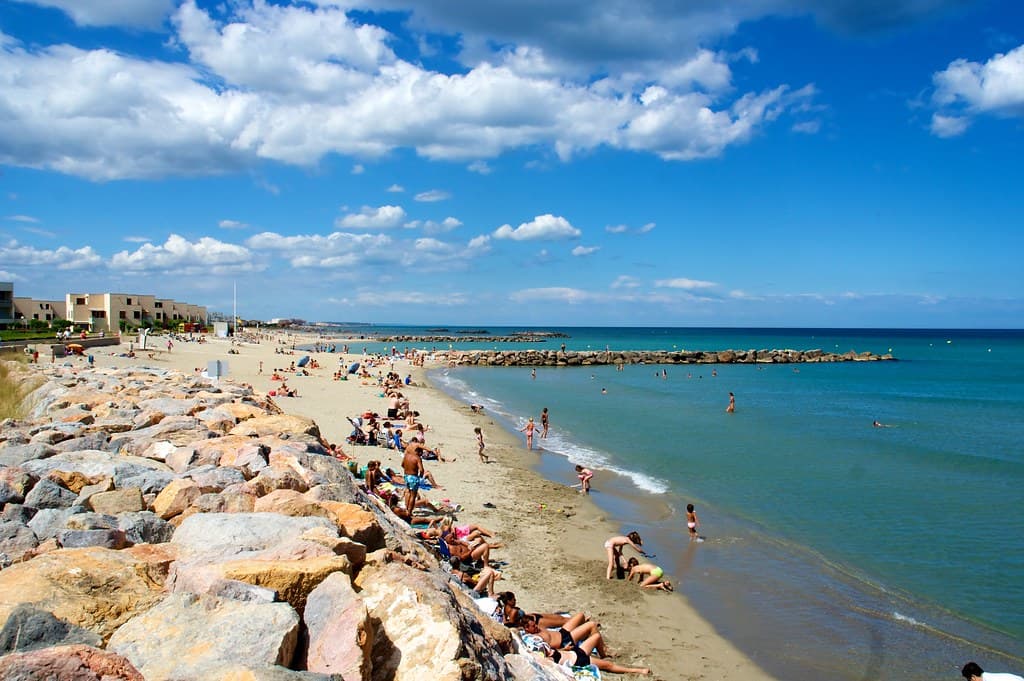
The approach tells you everything: no striped umbrellas in regimented rows, no Beach Club signage promising mojitos and DJ sets. Instead, a low-slung parking area opens onto a beach that stretches north and south in gentle, uncommitted curves, backed by dunes that ripple like frozen waves. The sand here holds the weight of your footprints only briefly before the wind erases them, and the Mediterranean laps rather than crashes, its surface a shifting palette of jade and pewter depending on the hour. You'll notice the families first—French holidaymakers from Perpignan and Toulouse who've been coming here for decades, armed with coolers and sun shelters, staking out patches near the dune line where the sand stays soft. Children dig moats that fill sluggishly with seawater. The occasional kite surfer appears in summer, their bright canopies pulling them across the shallows, but mostly the action here is horizontal: reading, dozing, wading out until the water finally reaches your waist. The surrounding village of Torreilles sits a kilometer inland, a place of shuttered squares and plane trees, its commercial ambitions limited to a Wednesday market and a few boulangeries. The beach feels like an extension of that modesty—a place that never decided to become a destination, and benefits daily from that indifference.
Places, rentals, tours and events within walking and driving distance of Plage de Torreilles.
Photos
Plage de Torreilles is generally safe for family swimming, with gently sloping sandy shores and typically calm waters. The beach is less crowded than nearby resorts, making it easier to supervise children. During summer months, lifeguards patrol designated swimming areas. However, always check local conditions and posted flags before entering the water. The natural setting means fewer immediate facilities, so bring necessary supplies. Wind can pick up in afternoons, creating small waves, but mornings usually offer the calmest conditions for young swimmers.
The ideal time to visit Plage de Torreilles is May through September for warm weather and swimming. July and August offer the hottest temperatures but more visitors. For a peaceful escape as the beach is known for, consider June or September when the weather remains pleasant but crowds thin significantly. Early mornings any time of year provide tranquil beach walks. Spring and autumn offer mild conditions perfect for exploring the natural dunes. The beach's less-developed character makes it enjoyable even during shoulder seasons when other beaches feel too quiet.
Plage de Torreilles is located in the Pyrénées-Orientales department of southern France. By car, take the D81 from Perpignan (about 15 kilometers north). The beach has parking areas near the shore. By train, the nearest station is Torreilles village, approximately 3 kilometers inland, requiring a taxi, bike, or walk to the beach. During summer, local shuttles may operate. Perpignan airport is the closest air hub, roughly 20 kilometers away. The beach is accessible from the main coastal road connecting Perpignan to other Mediterranean resorts.
Torreilles village, about 3 kilometers inland, offers restaurants, cafés, and small shops with local cuisine. Near the beach, you'll find seasonal beach bars and snack stands during summer months, though options are limited compared to larger resorts. Accommodation includes campgrounds near the shore, vacation rentals, and small hotels in Torreilles village. For more extensive dining and lodging choices, Perpignan and larger coastal towns like Canet-en-Roussillon are within easy driving distance. Book ahead during July and August when availability becomes limited.
Plage de Torreilles stands out for its natural, undeveloped character with preserved dune systems that are increasingly rare along the French Mediterranean coast. Unlike heavily built-up neighboring beaches, it maintains a wild, authentic atmosphere with minimal commercial development. The extensive sandy shores stretch for kilometers with plenty of space even in summer. The protected dunes provide ecological interest and natural beauty. This beach appeals to visitors seeking tranquility over amenities, offering a genuine connection with the coastal landscape rather than a resort experience.